

At 6 weeks pregnant, an ultrasound may show a gestational sac, yolk sac, and a small embryo or fetal pole. Cardiac activity may also be visible, particularly with a transvaginal ultrasound, but findings can vary when pregnancy is still this early.
A 6 week ultrasound is mainly used to confirm the location of the pregnancy, assess early development, and help determine gestational age. If a heartbeat or embryo is not seen, that does not automatically mean something is wrong-pregnancy dating can be off by several days, and a repeat ultrasound may be recommended.
What Can You See on a 6 Week Ultrasound?
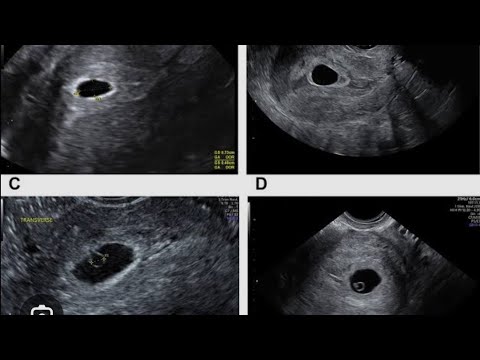
A 6 week ultrasound is an early pregnancy scan performed around six weeks of gestation, typically calculated from the first day of the last menstrual period. This imaging exam helps healthcare providers assess whether the pregnancy is intrauterine and progressing as expected.
Because the embryo is very small at this stage, most scans are performed using a transvaginal ultrasound approach. This method provides much clearer images compared to abdominal scanning in early pregnancy.
Why is a 6 week ultrasound performed
This scan is commonly recommended to confirm pregnancy viability, verify gestational age, and rule out conditions such as ectopic pregnancy. It may also be performed when patients experience symptoms like spotting, cramping, or when pregnancy dating is uncertain.
In some cases, individuals undergoing fertility treatments receive early ultrasounds to monitor implantation and development closely.
How is the ultrasound performed
Most 6 week ultrasounds are done transvaginally. During the exam, a small ultrasound probe is gently inserted into the vagina to capture high-resolution images of the uterus and developing pregnancy structures.
This technique allows the sonographer to visualize very small details that may not be detectable through abdominal scanning. The procedure is generally safe and typically causes minimal discomfort.
What can be seen at 6 weeks of pregnancy
At six weeks, ultrasound findings can vary depending on implantation timing, equipment quality, and individual biological differences. However, several early structures are commonly evaluated.
A gestational sac is usually visible. This fluid-filled structure is the first sign of early pregnancy within the uterus.
A yolk sac may also be detected. The yolk sac plays a critical role in nourishing the embryo during early development.
In many pregnancies, a fetal pole becomes visible. The fetal pole is an early form of the developing embryo.
Cardiac activity may sometimes be observed. At this stage, the heartbeat is typically seen as a subtle flicker rather than heard as an audible sound.
6 Week Ultrasound With No Heartbeat: Is It Normal?
Not seeing cardiac activity on an ultrasound at around 6 weeks does not necessarily mean that something is wrong. Pregnancy dating can be off by several days because ovulation and implantation do not always occur on the same day in every pregnancy. As a result, the pregnancy may be earlier than expected when the ultrasound is performed.
If cardiac activity is not seen, your healthcare provider may recommend a repeat ultrasound after an appropriate interval to check for normal development. A single early ultrasound should not be used on its own to diagnose a pregnancy loss when the findings are not definitive.
6 Week Ultrasound Shows Only a Gestational Sac: Is It Normal?
Seeing only a gestational sac on an ultrasound around 6 weeks does not necessarily mean that the pregnancy is not developing normally. Pregnancy dating can sometimes be off by several days, particularly when ovulation occurred later than expected.
What can be seen on an early ultrasound depends on the exact gestational age, the measurements obtained, and the type of ultrasound performed. If the findings are too early or inconclusive, your healthcare provider may recommend a repeat ultrasound to assess for the development of a yolk sac, embryo, or cardiac activity.
A single early ultrasound should not be used to assume pregnancy loss when the findings are not definitive.
What Does the Fetus Look Like at 6 Weeks?
At 6 weeks of pregnancy, the developing embryo is still very small and is usually measured in just a few millimeters. On ultrasound, it may appear as a small structure near the yolk sac, and the embryo may be measured using the crown-rump length (CRL) once it can be clearly identified.
At this stage, you should not expect to see detailed facial features, arms, legs, or other developed anatomy. A 6 week ultrasound is mainly focused on confirming the location and early development of the pregnancy rather than evaluating detailed fetal anatomy.
What can be seen at 6 weeks varies depending on the exact gestational age, the timing of ovulation and implantation, and the type of ultrasound performed.
Why Can 6 Week Ultrasound Results Vary?
6 week ultrasound findings can vary from one pregnancy to another, and this does not necessarily indicate a problem. The estimated gestational age may differ from the actual developmental age because ovulation and implantation do not always occur at the same time in every pregnancy.
Other factors can also affect what is visible, including the type of ultrasound, image quality, the measurements obtained, and the exact stage of early pregnancy. This is why one person may see an embryo or cardiac activity at 6 weeks while another may need a repeat scan a few days later.
When early ultrasound findings are uncertain, your healthcare provider may recommend follow-up imaging rather than drawing a conclusion from a single scan.
Can a 6 Week Ultrasound Determine Your Due Date?
A 6 week ultrasound can help estimate how far along a pregnancy is, especially when the embryo can be clearly seen and measured. In early pregnancy, the crown-rump length (CRL) is an important measurement used for estimating gestational age.
If the ultrasound-based dating differs from the date calculated from the last menstrual period, your healthcare provider may use the ultrasound measurements and other clinical information to determine the most appropriate estimated due date.
Because the embryo may be very small at 6 weeks, dating may become more reliable once a clear CRL measurement can be obtained.
Is a 6 week ultrasound safe?
Ultrasound is generally considered safe during pregnancy when it is performed by trained healthcare professionals for appropriate medical reasons. Unlike X-rays and CT scans, diagnostic ultrasound uses sound waves rather than ionizing radiation.
A 6 week ultrasound may be recommended to evaluate the location and early development of a pregnancy, particularly when there are symptoms or uncertainty about the pregnancy. The scan should be performed according to appropriate clinical guidance rather than repeated unnecessarily.
If you have concerns about how often you need an ultrasound, discuss the timing and purpose of the scan with your healthcare provider.
When Is a 6 Week Ultrasound Recommended?
An early pregnancy ultrasound may be recommended when there are symptoms or other reasons that require an earlier assessment. Common reasons can include vaginal bleeding, pelvic or abdominal pain, cramping, or uncertainty about how far along the pregnancy is.
An early scan may also be recommended for people with certain pregnancy risk factors or a previous ectopic pregnancy, depending on their medical history.
These symptoms do not necessarily mean that something is wrong. However, bleeding or significant pain during early pregnancy should be discussed with a healthcare professional so that appropriate evaluation can be provided.
Can Twins Be Seen on a 6 Week Ultrasound?
Yes, twins can sometimes be seen on a 6 week ultrasound. Depending on the stage of development, the scan may show two gestational sacs, two yolk sacs, or two developing embryos.
However, very early twin pregnancies can be difficult to assess clearly. What is visible may depend on the exact gestational age, the type of ultrasound, and the development of each pregnancy. In some cases, a follow-up ultrasound may be recommended to confirm the number of embryos and how the pregnancy is developing.
If twins are suspected during an early scan, your healthcare provider can explain what was seen and whether another ultrasound is needed.
6 Week Ultrasound Shows Nothing: What Does It Mean?
If nothing is seen on an ultrasound around 6 weeks, it does not necessarily mean that the pregnancy is not developing normally. The pregnancy may be earlier than expected because ovulation or implantation occurred later than estimated, or the scan may not yet provide enough information to confirm early development.
Your healthcare provider may recommend a repeat ultrasound and, depending on the situation, blood tests such as serial hCG measurements to help assess how the pregnancy is progressing.
A single early ultrasound is not always enough to determine whether a pregnancy is viable. The interpretation depends on the ultrasound findings, measurements, symptoms, and follow-up results.
How to Prepare for a 6 Week Ultrasound
Preparation for a 6 week ultrasound depends on the type of scan and your clinic’s instructions. If the ultrasound is performed transvaginally, a full bladder is generally not required. For an abdominal ultrasound, your healthcare provider or imaging center may give different instructions about bladder preparation.
Wear comfortable clothing that allows easy access to the lower abdomen or pelvic area. Before the scan, let your healthcare provider or sonographer know about any pain, bleeding, previous pregnancy concerns, or questions you may have.
Always follow the specific preparation instructions provided by your ultrasound clinic, as they can vary depending on the type of examination and local protocol.
How Long Does a 6 Week Ultrasound Take?
A 6 week ultrasound may take around 10 to 20 minutes, although the exact duration can vary depending on the type of scan, image quality, and what needs to be evaluated.
An early pregnancy scan may take longer if additional measurements or images are needed, or if the healthcare provider needs to clarify an uncertain finding.
When is a follow-up scan needed
Repeat ultrasounds are common if early structures are not clearly visible or if cardiac activity has not yet been detected. This approach allows providers to confirm normal progression.
Also Read : Pregnancy Ultrasound Cost Without Insurance in the United States
Follow-up imaging does not automatically indicate a complication.
Key takeaway for expectant parents
A 6 week ultrasound is an important early assessment tool, but expectations should remain realistic. Variations in findings are common, and many pregnancies require time for clear visualization of all structures.

