
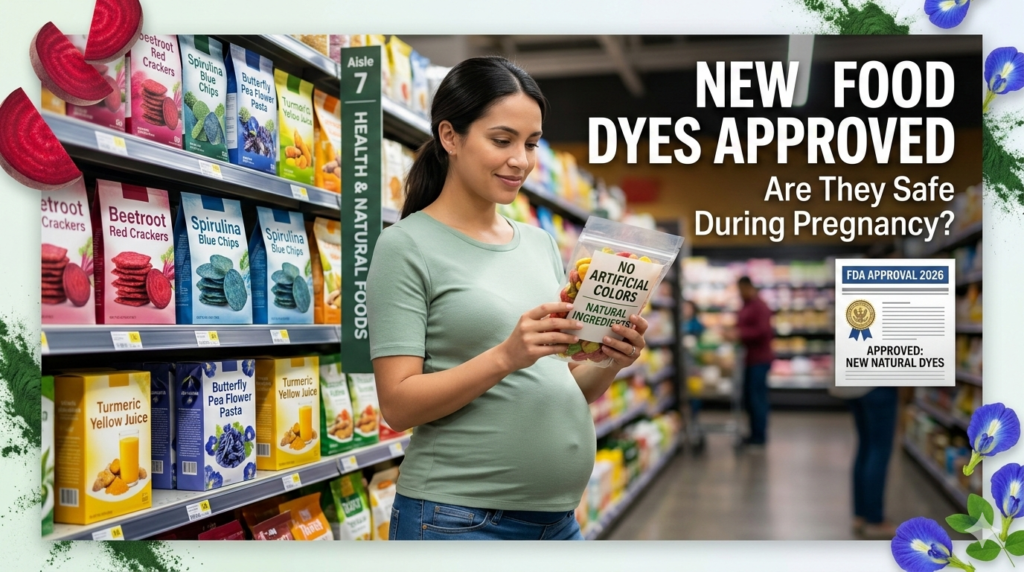
News Update – February 2026: The FDA has approved two new natural food dyes – beetroot red and expanded use of spirulina extract – as part of a nationwide push to eliminate petroleum-based synthetic colors from the US food supply by end of 2026.
If you have been pregnant recently or are currently expecting, you have probably heard a lot of conflicting information about food dyes – what is safe, what is not, and whether the colorful foods you see at every grocery store checkout are doing you or your baby any harm. The FDA just made a significant move that changes the picture, and it is worth understanding exactly what happened and what it means for you.
In early February 2026, the US Food and Drug Administration approved beetroot red as a new natural food color additive and expanded the approved uses of spirulina extract – both derived from natural plant and algae sources. This brings the total number of newly approved natural food color options to six since the current administration began pushing to phase out petroleum-based synthetic dyes.
This is not just a labeling change. It is part of a much larger shift in how the US food supply is colored – and if you are pregnant or planning to become pregnant, understanding the difference between natural and synthetic dyes matters.
What the FDA Just Approved – And Why It Matters
The FDA’s announcement on February 6, 2026 covered two specific approvals. First, beetroot red – a color derived from beets and developed by Israeli startup Phytolon – was granted approval as a color additive for use in food products. This gives manufacturers a natural red and pink coloring option to replace synthetic alternatives like Red Dye No. 40, which has been under increasing scrutiny.
Second, the FDA expanded the approved uses of spirulina extract, a blue-green color derived from algae that was already allowed in limited food applications. The expanded approval opens it up for use in a wider range of products.
The FDA also changed its labeling rules. Previously, a food product could only claim “no artificial colors” if it contained absolutely no added color of any kind. Now, products that use natural dyes – including beetroot red and spirulina – can carry the “no artificial colors” label. This is a meaningful change for consumers trying to navigate grocery store shelves.
What this means practically: When you see “no artificial colors” on a food package going forward, it may still contain color additives – just ones derived from natural sources like beets, algae, or flowers rather than petroleum.
The Bigger Picture – Why the FDA Is Banning Synthetic Dyes
This approval does not happen in a vacuum. Since April 2025, the FDA and the Department of Health and Human Services have been on an aggressive timeline to eliminate petroleum-based synthetic food dyes from the US food supply entirely by the end of 2026.
The FDA has already banned Red Dye No. 3, citing cancer concerns, and has announced plans to phase out six additional synthetic dyes including FD&C Green No. 3. States like California have already passed their own restrictions on certain dyes in school lunches.
The concern driving all of this is not just theoretical. Research has raised questions about synthetic food dyes and their effects on human health – particularly in children and pregnant women. A study published in the journal PMC found that exposure levels to certain artificial food colors exceeded safe daily intake thresholds for pregnant women at the 95th percentile of consumption. In plain terms – women who ate a lot of artificially colored foods during pregnancy were consuming more synthetic dye than guidelines suggest is safe.
HHS Secretary Robert F. Kennedy Jr. has been a vocal advocate for this transition, calling it a step toward the administration’s “Make America Healthy Again” initiative.
Are the New Natural Food Dyes Safe During Pregnancy?
This is the question most pregnant women and parents are asking, and the honest answer is: the newly approved natural dyes are considered significantly safer than the petroleum-based alternatives they are replacing – but “natural” does not automatically mean risk-free for everyone.
Beetroot Red
Beetroot red is derived from fermented beet pigments. Beets themselves are not only safe during pregnancy – they are considered beneficial, providing folate, iron, and fiber. The extracted pigment used as a food dye goes through a different processing pathway, but it is still derived from a vegetable source with no known harmful effects. No studies to date have shown beetroot red to be harmful during pregnancy, and the FDA’s approval process requires safety data before any additive is cleared for use.
Spirulina Extract
Spirulina is a type of blue-green algae that has been used as a food supplement for decades. It is rich in protein and antioxidants. The extract used as a food color is derived from this same source. While high-dose spirulina supplements are sometimes cautioned against during pregnancy due to the potential for contamination in some products, the trace amounts used as a food coloring are not considered a concern at typical consumption levels.
Also Read : Placenta Grade 3 in Pregnancy – Is It Dangerous?
Previously Approved Natural Colors
The four other natural dyes approved before February 2026 include galdieria extract blue (from red algae), butterfly pea flower extract, calcium phosphate (white), and others. These are all plant or mineral-derived and considered safe for general population consumption including pregnant women at levels found in food.
Bottom line on safety: The newly approved natural food dyes are not a pregnancy concern at the levels present in food products. They represent a genuine improvement over the synthetic petroleum-based dyes they are replacing.
What About the Synthetic Dyes Still in Use?
Here is the part that is worth paying attention to if you are currently pregnant. The FDA’s phase-out of synthetic dyes is a voluntary industry transition with a target deadline of end of 2026 – it is not an immediate mandatory ban. That means Red Dye No. 40, Yellow No. 5, Yellow No. 6, and others are still legally present in many foods you can buy right now.
The research on these dyes and pregnancy is not definitive, but several studies have raised enough questions that many healthcare providers recommend limiting highly processed, artificially colored foods during pregnancy as a precaution. The reasoning is straightforward – these foods offer little nutritional value and the dyes themselves have no benefit, so reducing exposure is a low-risk choice with potential upside.
Foods Commonly Containing Synthetic Dyes
- Brightly colored candies, gummies, and fruit snacks
- Artificially colored cereals and breakfast bars
- Colored sports drinks and sodas
- Packaged macaroni and cheese with orange powder
- Colored frosting and cake mixes
- Some flavored chips and snack crackers
- Colored gelatin desserts
Practical advice for pregnancy: You do not need to panic about having eaten artificially colored food before reading this. Occasional exposure is not the same as harm. But if you are looking for easy ways to improve your diet during pregnancy, shifting away from heavily processed, artificially colored foods is a reasonable step – and the FDA’s new approvals mean you will increasingly be able to find natural alternatives.
How to Read Food Labels Now
With the new FDA labeling rules in place, here is a quick guide to understanding what you will see on packaging going forward.
| Label Says | What It Means | Pregnancy Concern? |
|---|---|---|
| No artificial colors | May contain natural dyes like beetroot red | Low concern |
| No added colors | No color additives of any kind | No concern |
| Red 40, Yellow 5, Blue 1 listed | Petroleum-based synthetic dyes still present | Limit where possible |
| Colored with beet juice / spirulina | Natural plant or algae-based color | Low concern |
Frequently Asked Questions
1. Is beetroot red food dye safe during pregnancy?
Based on available evidence, yes. Beetroot red is derived from fermented beet pigment – a vegetable source with no known harmful effects during pregnancy. The FDA requires safety data before approving any food additive, and beetroot red passed that review. At the levels used in food products, it is not considered a pregnancy risk.
2. Should I avoid all food dyes during pregnancy?
Completely avoiding all food dyes during pregnancy is difficult and probably unnecessary. The more practical approach is to limit highly processed foods that rely heavily on synthetic petroleum-based dyes – things like brightly colored candy, artificially colored cereals, and colored snack foods. Shifting toward whole foods naturally reduces dye exposure without requiring strict avoidance of every packaged item.
3. When will artificial dyes be completely removed from US food?
The FDA’s current target for industry to voluntarily phase out petroleum-based synthetic dyes is the end of 2026. However, this is a voluntary timeline – not a mandatory ban – so the actual transition will vary by manufacturer. Red Dye No. 3 has already been officially banned. Other synthetic dyes may remain in some products even after 2026 if the timeline slips or if manufacturers do not comply.
4. Are natural food dyes better than synthetic ones for my baby?
The emerging scientific and regulatory consensus is yes – natural dyes derived from plant and algae sources are preferable to petroleum-derived synthetic alternatives. This does not mean synthetic dyes at typical consumption levels are immediately dangerous, but the precautionary principle supports preferring natural sources when alternatives are available and affordable.
5. Does this affect prenatal vitamins?
Prenatal vitamins sometimes use color coatings on tablets. If yours contains FD&C dyes and this concerns you, look for a dye-free or naturally colored alternative. Many prenatal vitamin brands already use natural colorings or clear coatings, and your pharmacist can help you identify dye-free options.
The Bottom Line
The FDA’s approval of beetroot red and expanded use of spirulina extract in February 2026 is a meaningful step toward a cleaner US food supply. For pregnant women, these new natural dyes are not a concern – they represent an improvement over what they replace.
The bigger takeaway is that the food you eat during pregnancy does not need to be perfectly free of every additive to support a healthy pregnancy. What matters most is an overall pattern of eating – plenty of whole foods, adequate protein, iron, folate, and hydration – alongside routine prenatal care and monitoring.
Staying informed about changes like this FDA update helps you make better choices without unnecessary anxiety. When in doubt about a specific food or ingredient during your pregnancy, your OB or midwife is always your best resource.
Stay updated on the latest pregnancy and health news at usgreport.com – written in plain language for real patients.
Sources: US Food and Drug Administration (FDA.gov) | US Department of Health and Human Services (HHS.gov) | PMC – National Institutes of Health | CNN Health | Food Dive

