
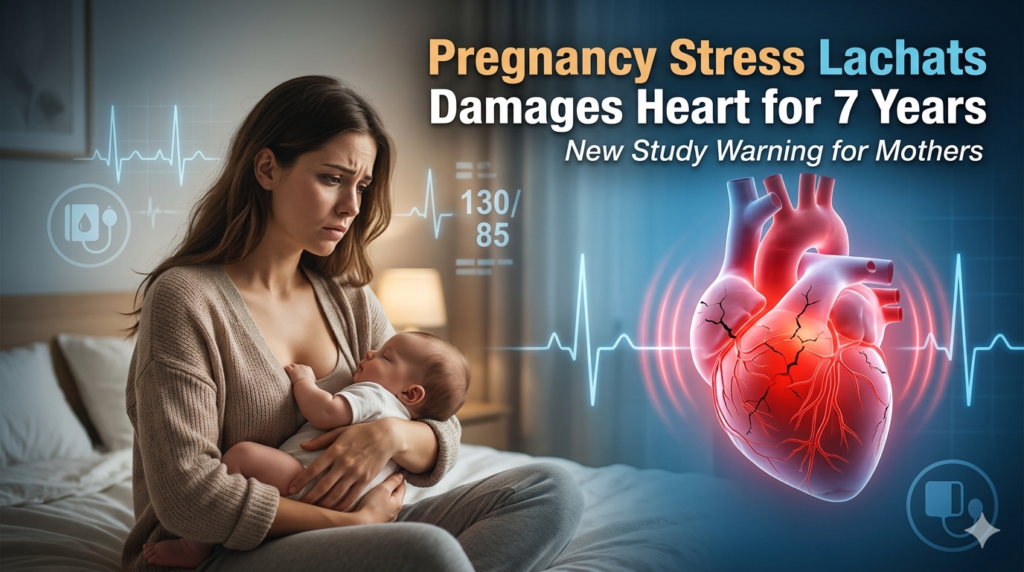
Breaking Study – March 9, 2026: A new study published in the American Heart Association journal Hypertension warns that pregnancy stress can damage your heart health for up to 7 years after delivery – especially if you had complications during pregnancy.
If you had a difficult pregnancy – preeclampsia, preterm birth, or a baby that was smaller than expected – a major new study is saying something you need to hear. The pregnancy stress and heart damage after delivery connection is far more serious and far longer-lasting than most doctors have been telling patients. Research published just days ago on March 9, 2026 in the journal Hypertension found that stress during and after pregnancy can elevate your blood pressure for 2 to 7 years after you deliver – but only if you experienced complications during your pregnancy.
This is not a study about feeling tired or anxious. This is about measurable cardiovascular damage – elevated blood pressure in young women in their mid-twenties – that may silently be increasing their risk of heart disease for years after they thought their pregnancy was behind them.
What the New Study Found About Pregnancy Stress and Heart Damage
The research comes from the nuMoM2b Heart Health Study – one of the largest and most rigorous studies of pregnancy outcomes and long-term cardiovascular health ever conducted in the United States. Researchers from the University of Delaware tracked over 3,000 women through their first pregnancy and then followed them for 2 to 7 years after delivery.
Lead researcher Virginia Nuckols, Ph.D., a postdoctoral fellow at the University of Delaware’s Department of Kinesiology and Applied Physiology, summed up the findings clearly. Women who had pregnancy complications and reported higher stress levels showed elevated blood pressure levels 2 to 7 years after delivery – something that was not seen in women who had uncomplicated pregnancies, even when those women also reported high stress.
The key finding: pregnancy stress causes heart damage after delivery specifically in women who had adverse pregnancy outcomes. High stress in a woman with a smooth, uncomplicated pregnancy did not show the same long-term cardiovascular impact. But for women who experienced complications, ongoing stress acted like a multiplier – pushing blood pressure higher and keeping it elevated for years.
Key number: Women with adverse pregnancy outcomes and high stress showed blood pressure readings about 2 mm Hg higher than those with low stress – measured in women averaging just 25 to 27 years of age. Even modest blood pressure increases at this young age can meaningfully raise heart disease risk over a lifetime.
Which Pregnancy Complications Put You at Risk for Stress-Driven Heart Damage?
The study focused specifically on what researchers call “adverse pregnancy outcomes” – a medical term for complications that occur during pregnancy or delivery. If you experienced any of the following in a past pregnancy, this research applies directly to you:
| Pregnancy Complication | What It Means | Heart Risk Level |
|---|---|---|
| Preeclampsia | High blood pressure + organ damage in pregnancy | High |
| Preterm Birth | Baby born before 37 weeks | High |
| Small for Gestational Age (SGA) | Baby smaller than expected for weeks | Moderate-High |
| Stillbirth | Loss of baby after 20 weeks | High |
If you had any of these complications and have been living with high or moderate stress since your delivery – whether from raising a child, work pressure, financial stress, or relationship difficulties – your heart may be silently bearing the cost.
Why Does Pregnancy Stress Cause Heart Damage Years After Delivery?
The researchers were honest: they do not yet know exactly why stress drives blood pressure higher in women who had pregnancy complications specifically, and not in women who had uncomplicated pregnancies. There are likely several biological mechanisms working together.
Also Read : FDA Approves New Natural Food Dyes in 2026 – Are They Safe During Pregnancy?
The Stress-Blood Pressure Pathway
Chronic stress triggers the release of cortisol and adrenaline – hormones that raise blood pressure by constricting blood vessels and increasing heart rate. In healthy individuals, this response normalizes after the stressor passes. But for women whose cardiovascular systems were already strained by a difficult pregnancy, the system may not reset as easily. The placenta and the cardiovascular strain of pregnancy complications may leave lasting changes in blood vessel function that make these women more sensitive to stress-driven pressure spikes.
The Compounding Effect
Pregnancy complications themselves already raise the long-term cardiovascular risk. Preeclampsia, for example, is a well-established risk factor for future heart disease, stroke, and kidney disease. What this new study adds is that stress is not just an emotional burden on top of that – it is an active biological multiplier that pushes those existing cardiovascular risks even higher.
Young Age Makes It More Concerning
The women in this study were on average just 25 to 27 years old when their elevated blood pressure was measured. Blood pressure differences of 2 mm Hg sound small in isolation – but in women this young, small differences compound over decades. What starts as a modest elevation at 27 can translate into significantly higher heart disease risk by age 45 or 50 if the underlying stress and blood pressure remain unaddressed.
Warning Signs Your Pregnancy Stress Is Affecting Your Heart
Most women who have elevated blood pressure from stress do not feel it – high blood pressure is famously called the “silent killer” precisely because it rarely causes obvious symptoms. However, there are signs that your cardiovascular health may need attention after a complicated pregnancy:
Frequent headaches – particularly at the back of the head – can be an indicator of elevated blood pressure. Feeling unusually tired even with adequate sleep is another sign. Shortness of breath during mild activity, chest tightness or discomfort, heart palpitations, and dizziness when standing up quickly are all symptoms worth discussing with your doctor. Swelling in your legs or ankles that does not go away is another signal that your cardiovascular system may be under stress.
Important: If you had pregnancy complications and it has been 1 to 7 years since your delivery, ask your doctor specifically about checking your blood pressure and discussing your long-term cardiovascular risk – even if you feel fine. This study confirms that the risk window extends much longer than most postpartum care addresses.
How to Protect Your Heart After a Complicated Pregnancy
The good news from this research is that stress is a modifiable factor. Unlike your genetic risk or the complications that already happened, stress levels can be actively managed. The researchers specifically noted that reducing and managing stress could be an important strategy for protecting long-term heart health in women who have had adverse pregnancy outcomes.
Monitor Your Blood Pressure Regularly
Home blood pressure monitors are inexpensive and widely available. If you had pregnancy complications, checking your blood pressure at home weekly gives you early warning of any concerning trends. A normal reading is below 120/80 mm Hg. Consistent readings above 130/80 mm Hg warrant a conversation with your doctor.
Prioritize Stress Management as a Medical Priority
This means treating stress reduction not as a luxury but as a health necessity – in the same category as eating well and exercising. Mindfulness-based stress reduction, regular aerobic exercise, adequate sleep, limiting social media exposure, and having reliable social support have all been shown in research to meaningfully lower cortisol levels and reduce blood pressure over time.
Tell Your Doctor About Your Pregnancy History
Many women see a new primary care doctor or gynecologist years after a difficult pregnancy without mentioning what happened. This study is a strong reason to make sure your current healthcare provider knows your full pregnancy history – including any complications. The current American Heart Association guidelines already recommend blood pressure monitoring after adverse pregnancy events, and this study suggests that stress assessment should be added to that standard of care.
Diet and Exercise Still Matter
A heart-healthy diet rich in vegetables, fruits, whole grains, lean protein, and healthy fats supports blood pressure regulation. Regular physical activity – even 30 minutes of brisk walking five days a week – significantly reduces cardiovascular risk. These are not new recommendations, but the context matters: for women with a history of pregnancy complications, these lifestyle factors interact directly with stress to shape their long-term heart health.
Frequently Asked Questions
1. Can pregnancy stress really cause heart damage years after delivery?
Yes, according to the March 2026 study published in Hypertension. Pregnancy stress and heart damage after delivery is a real, measurable connection – specifically in women who experienced adverse pregnancy outcomes like preeclampsia, preterm birth, or stillbirth. The elevated blood pressure linked to ongoing stress was detectable 2 to 7 years after delivery in this group.
2. I had a normal pregnancy with no complications. Am I still at risk?
According to this study, the stress-driven blood pressure elevation was specifically found in women who had pregnancy complications – not in women with uncomplicated pregnancies who also reported high stress. If your pregnancy was uncomplicated, your cardiovascular risk from stress follows the general population pattern, which is still worth managing but is not the elevated risk documented in this study.
3. How long after delivery does this heart risk last?
The study measured elevated blood pressure in women 2 to 7 years after delivery. The researchers did not track beyond 7 years, so the upper limit of this risk window is not yet clear. What is known is that the risk persists well into the postpartum years – far longer than the standard 6-week postpartum checkup addresses.
4. What stress level is dangerous for heart health after pregnancy complications?
The study used the Perceived Stress Scale – a standardized questionnaire measuring how often people feel situations are uncontrollable, unpredictable, or overwhelming. Moderate to high stress scores, sustained over time from pregnancy through the postpartum years, were associated with the elevated blood pressure findings. Occasional acute stress is different from chronic, persistent stress – it is the ongoing, unrelieved stress over months and years that drives cardiovascular risk.
5. What should I do if I had pregnancy complications and feel very stressed now?
Start by scheduling a visit with your primary care doctor or OB-GYN to have your blood pressure checked and discuss your pregnancy history and current stress levels. Ask specifically about your long-term cardiovascular risk given your pregnancy complications. From there, work with your healthcare team on a stress management plan – which may include counseling, lifestyle changes, or in some cases, blood pressure medication if your readings are consistently elevated.
The Bottom Line
The connection between pregnancy stress and heart damage after delivery is now backed by one of the most comprehensive studies of maternal cardiovascular health ever conducted. If you had a complicated pregnancy, managing your stress is not just about feeling better – it is about protecting your heart for decades to come.
The postpartum period in most healthcare systems ends at 6 weeks. But this research makes clear that cardiovascular monitoring and stress support for women with adverse pregnancy outcomes needs to extend years beyond that. Talk to your doctor, monitor your blood pressure, and take stress management as seriously as you take any other aspect of your health.
Stay updated on the latest pregnancy health research at usgreport.com – breaking health news explained in plain language for real patients.
Sources: American Heart Association journal Hypertension (March 9, 2026) – Nuckols et al. nuMoM2b-HHS Study | University of Delaware Department of Kinesiology and Applied Physiology | American Heart Association newsroom | National Heart, Lung and Blood Institute (NHLBI) | HealthDay News

