
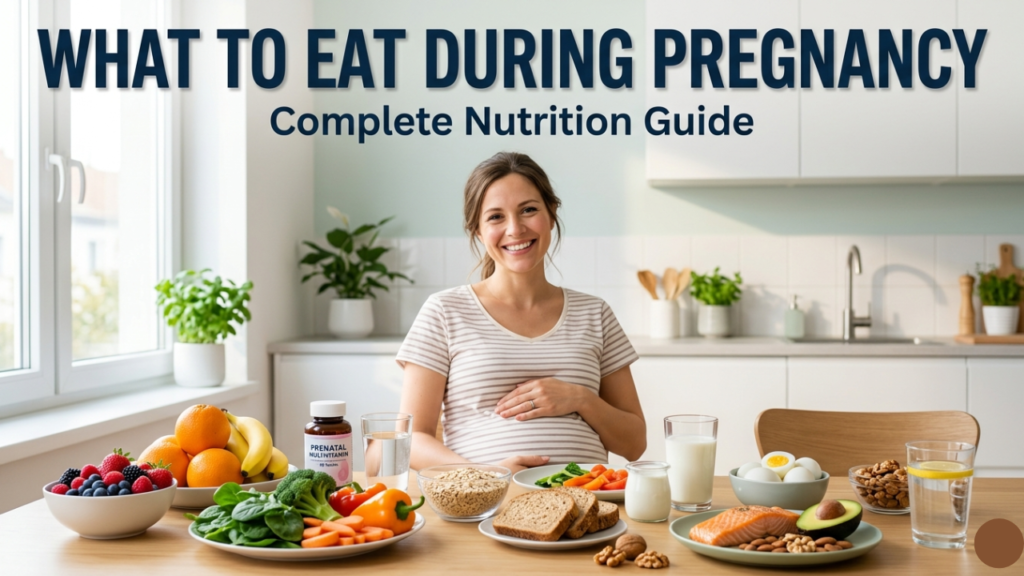
Quick Summary: During pregnancy, you need more folate, iron, calcium, vitamin D, protein, and omega-3s than at any other time in your life. This guide tells you exactly what to eat during pregnancy, which nutrients matter most, and what to avoid – based on the latest guidelines from ACOG, Mayo Clinic, and the FDA.
Figuring out what to eat during pregnancy can feel overwhelming. Every week seems to bring a new list of foods you should eat more of, foods you need to avoid, and supplements you should be taking. The reality is that a healthy pregnancy diet does not need to be complicated. It comes down to a few key nutrients, a wide variety of whole foods, and some specific foods to avoid for safety reasons.
This complete pregnancy nutrition guide gives you a clear, practical breakdown of everything you need to know – from the nutrients that matter most, to the best foods to eat each trimester, to the specific foods that should stay off your plate entirely.
Key Nutrients You Need More of During Pregnancy
Pregnancy changes your nutritional needs dramatically. Your body is building a baby’s brain, bones, organs, and nervous system from scratch, and it needs specific nutrients in higher amounts than usual to do that job properly. Folic acid, iron, calcium, vitamin D, choline, omega-3 fatty acids, B vitamins, vitamin C, and many other nutrients are all needed to support you and your baby during pregnancy. Here is what each of the most critical ones does and where to get them.
Folic acid is the single most important nutrient to get right in early pregnancy. Folic acid may help prevent major birth defects of the fetus’s brain and spine called neural tube defects. You need 400 micrograms per day before becoming pregnant, and 600 to 1,000 micrograms per day throughout pregnancy. The best food sources include dark leafy greens like spinach, fortified cereals, lentils, beans, and avocado. Most prenatal vitamins contain the recommended amount.
Iron is the next priority. During pregnancy, you need double the amount of iron that people who aren’t pregnant need. Your body needs this iron to make more blood to supply oxygen to the fetus. If you don’t get enough iron during pregnancy, that can raise your risk of iron deficiency anemia, premature birth, and low birth weight. Lean beef, chicken, turkey, beans, lentils, and fortified cereals are excellent iron sources. Pairing them with vitamin C-rich foods like orange juice or bell peppers helps your body absorb iron more effectively.
Calcium builds your baby’s bones and teeth while protecting your own bone density. You and your baby need 1,000 milligrams of calcium per day; pregnant teenagers need 1,300 mg per day. The body absorbs calcium best from dairy products, though other sources include broccoli, kale, and fortified fruit juices. If you are dairy-free, fortified plant milks like soy or almond milk are good alternatives.
Also Read : Pregnancy Stress Damages Your Heart for 7 Years – New Study
Omega-3 fatty acids, specifically DHA, are essential for your baby’s brain and eye development. Fatty fish like salmon, sardines, and trout are the best food sources. The Dietary Guidelines for Americans advises pregnant people to eat 8 to 12 ounces of seafood per week, choosing low-mercury options. If you do not eat fish regularly, a DHA supplement derived from algae is a safe alternative.
Vitamin D works alongside calcium to support bone development and immune function. Many Americans are deficient in vitamin D even before pregnancy. Fatty fish, egg yolks, and fortified dairy products provide vitamin D through diet, but most pregnant women need a supplement to reach the recommended 600 IU per day.
What to Eat During Pregnancy – Best Foods by Category
A practical pregnancy nutrition guide focuses on real foods you can find at any grocery store. To get the nutrients you need during pregnancy, choose a mix of healthy foods including whole fruits, vegetables, whole grains, proteins, and low-fat or fat-free dairy. Here is a breakdown of the best choices in each category.
For vegetables, carrots, sweet potatoes, pumpkin, spinach, cooked greens, tomatoes, and red sweet peppers are particularly beneficial for vitamin A and potassium. Aim for at least 2 to 3 cups of vegetables daily, mixing colors to cover a range of vitamins and antioxidants. Dark green and orange vegetables are especially valuable for folate and beta-carotene.
For fruits, cantaloupe, honeydew, mangoes, prunes, bananas, apricots, oranges, and red or pink grapefruit are excellent for potassium. Berries – blueberries, strawberries, raspberries – are outstanding for antioxidants and vitamin C. Fresh, frozen, and canned fruits without added sugar are all good options. Aim for 1.5 to 2 cups daily.
For whole grains, oats, barley, quinoa, brown rice, and bulgur are all whole grains. When planning meals, aim to make half of your grain servings whole grains. Whole grains provide sustained energy, B vitamins, and fiber, which helps with one of the most common pregnancy complaints – constipation. Oatmeal is an especially versatile and nutrient-dense choice.
For protein, lean meats, poultry, eggs, beans, lentils, tofu, nuts, and seeds are all excellent sources. Your developing baby needs plenty of protein, especially in the second and third trimesters. Lean beef, chicken, lamb, turkey, and veal are good options. You should consume at least 3 servings of protein daily. Eggs are a particularly valuable pregnancy food because they provide protein, choline, and vitamin D all in one package.
For dairy, fat-free or low-fat yogurt, skim or 1% milk, and fortified soy milk are beneficial for calcium, potassium, and vitamins A and D. Greek yogurt deserves special mention – it has more protein than regular yogurt and is an excellent source of probiotics, which support digestive health during pregnancy.
How Many Extra Calories Do You Need?
One of the most persistent myths about pregnancy nutrition is that you need to “eat for two.” The reality is more nuanced. Most women with a healthy pre-pregnancy weight need no extra calories in the first trimester, about 340 extra calories a day in the second trimester, and about 450 extra calories a day in the last trimester. That is roughly the equivalent of an apple with a tablespoon of peanut butter, or a small bowl of oatmeal. The quality of those additional calories matters far more than the quantity.
Weight gain during pregnancy is normal and healthy, but the appropriate amount depends on your starting weight. Women with a normal BMI before pregnancy are typically advised to gain 25 to 35 pounds total. Your OB-GYN or midwife will give you personalized guidance based on your specific situation.
Foods to Avoid During Pregnancy
Knowing what to eat during pregnancy also means knowing what to leave out. Some foods carry risks of bacterial contamination, mercury exposure, or other hazards that are particularly dangerous during pregnancy when your immune system is naturally suppressed.
Raw and undercooked foods are the first category to eliminate. Avoid raw and undercooked seafood, eggs, and meat. Do not eat sushi made with raw fish – cooked sushi is safe. Raw sprouts, unpasteurized juices, and raw cookie dough also fall into this category due to listeria and salmonella risks.
Also Read : 8 Food Dyes Banned by 2026 – Safe During Pregnancy?
High-mercury fish should be avoided entirely. The FDA advises pregnant women not to eat bigeye tuna, king mackerel, and orange roughy, among others, due to high mercury levels that can damage the baby’s developing nervous system. Stick to low-mercury options like salmon, shrimp, canned light tuna, tilapia, and catfish.
Unpasteurized dairy poses a listeria risk. Avoid unpasteurized milk and foods made with unpasteurized milk, including soft cheeses like feta, queso blanco and fresco, Camembert, brie, and blue-veined cheeses unless labeled “made with pasteurized milk.” Hard cheeses and pasteurized soft cheeses are safe.
Alcohol has no safe level during pregnancy. There is no known amount of alcohol that is safe for a woman to drink during pregnancy. All types, including wine and beer, should be avoided throughout all three trimesters.
Caffeine should be limited but does not need to be eliminated completely. Most guidelines recommend staying below 200 mg per day – roughly one 12-ounce cup of coffee. Higher amounts have been associated with a slightly increased risk of miscarriage and low birth weight.
Prenatal Vitamins – What They Cover and What They Don’t
Even the most carefully planned pregnancy diet can have gaps. Taking a daily prenatal supplement can help fill any gaps. Your healthcare professional may recommend special supplements if you follow a strict vegetarian diet or have a long-term health condition. Look for a prenatal vitamin that contains at least 400 to 800 mcg of folic acid, 27 mg of iron, 1,000 mg of calcium, 600 IU of vitamin D, and DHA.
One important note: prenatal vitamins are a supplement to good nutrition, not a substitute for it. Vitamins alone aren’t a cure-all. They need support from good nutrition in order to be absorbed into the body. Taking your prenatal vitamin with food improves absorption and reduces the nausea that some women experience with iron-containing supplements.
Hydration During Pregnancy
Water is easy to overlook in a nutrition discussion, but it is critically important during pregnancy. Your blood volume increases by nearly 50 percent during pregnancy, and amniotic fluid needs constant replenishment. Aim for 8 to 12 cups of water a day during pregnancy. Drink throughout the day, not just when you are thirsty. If plain water feels unappealing during the first trimester, adding a slice of lemon, cucumber, or fresh mint can make it easier to stay hydrated. Coconut water, diluted fruit juice, and herbal teas that are pregnancy-safe are also good options.
Frequently Asked Questions
1. What is the most important thing to eat during pregnancy?
If you had to pick one food group to prioritize, dark leafy greens and folate-rich foods are the most critical in early pregnancy for preventing neural tube defects. Overall, a varied whole-foods diet that covers fruits, vegetables, lean proteins, whole grains, and dairy gives your baby the broadest nutritional foundation. A daily prenatal vitamin fills the gaps.
2. Can I eat salmon during pregnancy?
Yes – salmon is one of the best foods you can eat during pregnancy. It is low in mercury and high in DHA omega-3s, which support your baby’s brain and eye development. Aim for 2 to 3 servings per week as part of your recommended 8 to 12 ounces of low-mercury seafood.
3. How do I manage nausea and still eat well in the first trimester?
Eating small, frequent meals every 2 to 3 hours helps manage nausea better than three large meals. Bland, easy-to-digest foods like crackers, toast, bananas, and rice are typically well tolerated. Cold foods often cause less nausea than hot ones. Ginger – in tea, ginger ale, or ginger candies – has solid research support for reducing pregnancy-related nausea.
4. Do I need to eat differently in each trimester?
Your caloric needs increase gradually through pregnancy, with the most additional calories needed in the third trimester. But the types of foods you should eat – whole foods, lean protein, plenty of fruits and vegetables – remain consistent throughout. The main adjustment is quantity, not quality. In the third trimester, some women find smaller, more frequent meals more comfortable as the baby takes up more abdominal space.
5. Is it safe to eat deli meat during pregnancy?
Deli meats carry a risk of listeria contamination, which is particularly dangerous during pregnancy and can cause miscarriage, stillbirth, or serious illness in newborns. The safest approach is to avoid cold deli meats entirely. If you do eat them, heat them to steaming hot – at least 165 degrees Fahrenheit – before eating to eliminate listeria risk.
Getting pregnancy nutrition right does not require perfection at every meal. It requires consistent, informed choices – prioritizing whole foods, covering your key nutrients, taking your prenatal vitamin, staying hydrated, and avoiding the specific high-risk foods outlined above. When in doubt, your OB-GYN or a registered dietitian can give you personalized guidance based on your individual health history and pregnancy needs.
For more pregnancy health guides written in plain language, visit usgreport.com – your complete resource for understanding pregnancy tests, ultrasound reports, and what they mean for you and your baby.
Sources: American College of Obstetricians and Gynecologists (ACOG) – March 2026 | Mayo Clinic Pregnancy Nutrition Guide | Johns Hopkins Medicine | US FDA Dietary Advice During Pregnancy | MedlinePlus – Pregnancy and Nutrition | American Pregnancy Association
