
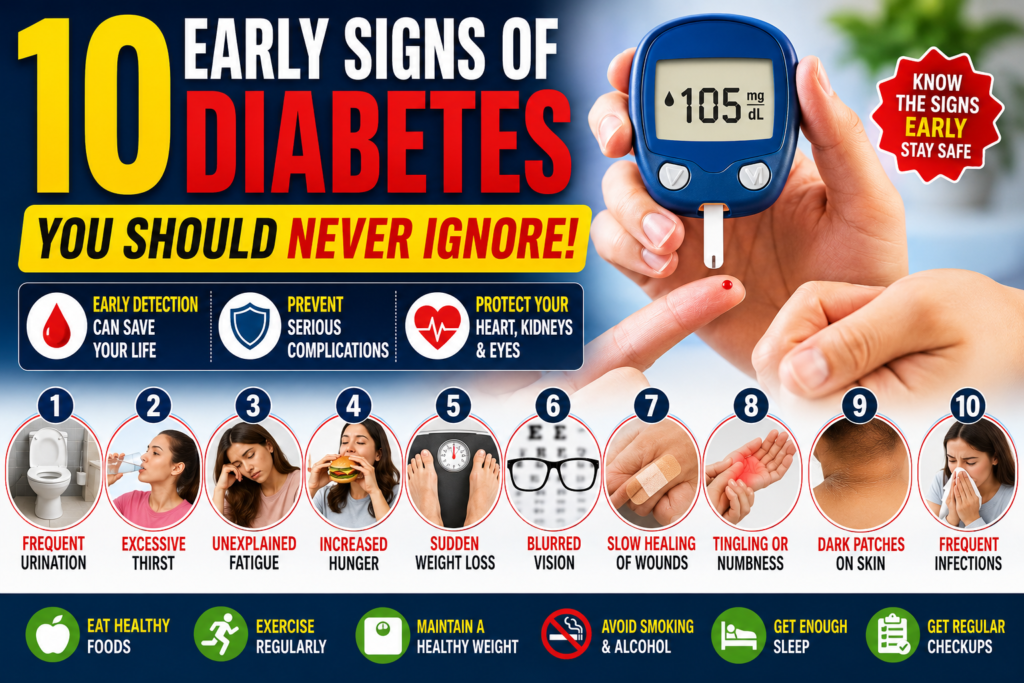
Diabetes is one of the fastest-growing health conditions in the world, affecting millions of people every year. Many individuals develop diabetes slowly over time and may not notice the warning signs in the beginning. Unfortunately, ignoring early symptoms can lead to serious health complications involving the heart, kidneys, eyes, nerves, and blood vessels.
The dangerous part about diabetes is that its early symptoms often appear mild and are commonly mistaken for stress, fatigue, aging, or poor lifestyle habits. Recognizing these warning signs early can help people seek timely medical attention, control blood sugar levels, and prevent long-term complications.
Diabetes occurs when the body either does not produce enough insulin or cannot use insulin properly. Insulin is a hormone that helps glucose enter the body’s cells to provide energy. When this process fails, sugar builds up in the bloodstream, leading to high blood sugar levels.
Understanding the early signs of diabetes is extremely important because early diagnosis and treatment can significantly improve long-term health outcomes.
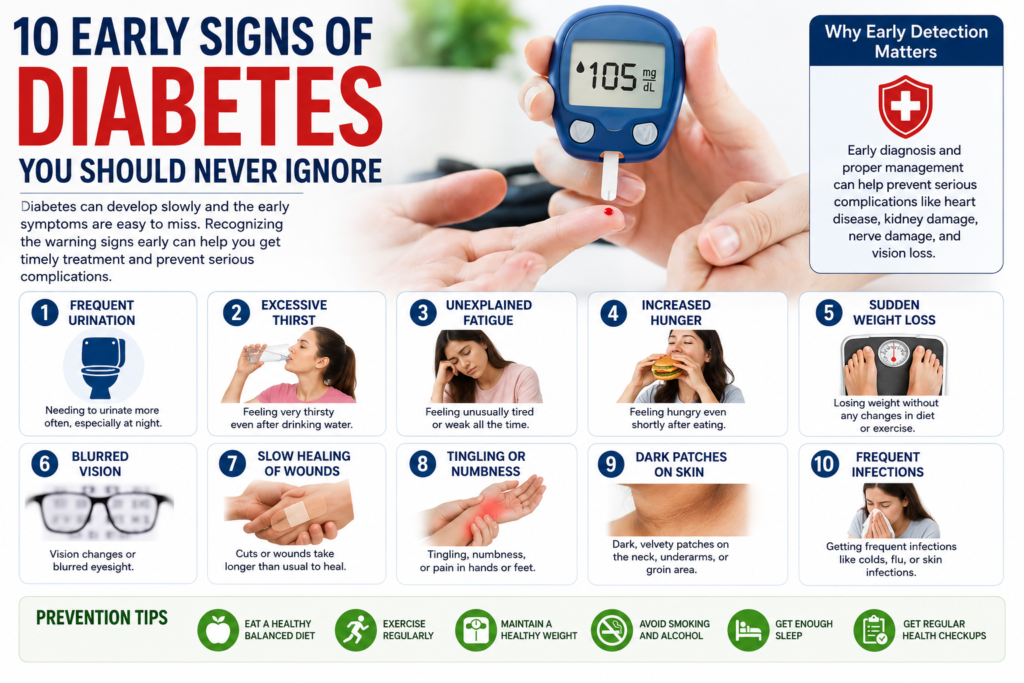
Frequent Urination
One of the earliest and most common signs of diabetes is frequent urination, especially during the night. High blood sugar levels force the kidneys to work harder to remove excess glucose from the blood. As a result, the body produces more urine to flush out the extra sugar.
People with diabetes may notice:
- Increased bathroom visits
- Waking up multiple times at night to urinate
- Sudden changes in urinary habits
Frequent urination can gradually lead to dehydration if fluid loss is not replaced properly.
Excessive Thirst
Constant thirst often develops alongside frequent urination. Since the body loses large amounts of water through urine, dehydration occurs more quickly.
Many people with early diabetes feel thirsty even after drinking water regularly. This symptom may become more noticeable during hot weather or physical activity.
Persistent thirst should never be ignored, especially when combined with other diabetes symptoms.
Unexplained Fatigue
Feeling tired all the time is another major warning sign. In diabetes, the body cannot effectively use glucose for energy because insulin is either insufficient or not functioning properly.
Also Read : Low Lying Placenta in Pregnancy – Symptoms, Risks & Normal Delivery Chances
As a result, cells do not receive enough energy, causing:
- Constant tiredness
- Weakness
- Difficulty concentrating
- Lack of motivation
Fatigue caused by diabetes often continues even after proper sleep and rest.
Increased Hunger
People with diabetes may experience excessive hunger, even shortly after eating meals. This happens because the body’s cells are unable to absorb glucose properly.
When cells cannot access energy from food, the brain continues sending hunger signals, leading to:
- Frequent cravings
- Increased appetite
- Constant snacking
This symptom is especially common in uncontrolled diabetes.
Sudden Weight Loss
Unexpected weight loss can occur in people with type 1 diabetes and sometimes in type 2 diabetes as well.
When the body cannot use glucose effectively, it starts breaking down fat and muscle for energy. This can result in noticeable weight loss without changes in diet or exercise.
Unintentional weight loss should always be medically evaluated.
Blurred Vision
High blood sugar levels can affect the tiny blood vessels in the eyes, leading to blurred vision.
In early diabetes, fluctuating blood sugar levels may temporarily change the shape of the eye lens, making vision appear blurry.
Some people notice:
- Difficulty focusing
- Blurry reading vision
- Frequent changes in eyesight
If left untreated, diabetes can eventually damage the retina and increase the risk of vision loss.
Slow Healing of Wounds
Diabetes can reduce blood circulation and damage nerves, slowing down the body’s natural healing process.
Small cuts, bruises, or wounds may take much longer to heal than usual. Infections may also occur more frequently.
Slow wound healing is especially dangerous in the feet because untreated infections can become serious over time.
Tingling or Numbness in Hands and Feet
High blood sugar levels can damage nerves, a condition known as diabetic neuropathy.
Early nerve damage symptoms may include:
- Tingling sensation
- Burning pain
- Numbness
- Pins and needles feeling
These symptoms commonly affect the hands, feet, and legs first.
Ignoring nerve-related symptoms may lead to permanent nerve damage over time.
Dark Patches on the Skin
Some individuals develop dark, velvety skin patches around the neck, underarms, or groin area. This condition is called acanthosis nigricans and is often linked to insulin resistance.
Also Read : Vitamin D Deficiency Symptoms and Best Treatment Options
These skin changes may appear before diabetes is officially diagnosed and are considered an important early warning sign.
Frequent Infections
People with diabetes are more prone to infections because high blood sugar weakens the immune system.
Common infections include:
- Skin infections
- Gum infections
- Urinary tract infections
- Fungal infections
Women may also experience recurring yeast infections.
Frequent infections that keep returning should not be ignored.
What Causes Diabetes?
Several factors can increase the risk of developing diabetes.
Common Risk Factors
- Obesity
- Lack of physical activity
- Family history of diabetes
- Poor diet
- High blood pressure
- Hormonal disorders
- Smoking
- Stress
Type 2 diabetes is strongly associated with lifestyle factors, while type 1 diabetes is usually related to autoimmune causes.
Types of Diabetes
Type 1 Diabetes
Type 1 diabetes occurs when the immune system attacks insulin-producing cells in the pancreas. It often develops during childhood or adolescence.
People with type 1 diabetes require lifelong insulin therapy.
Type 2 Diabetes
Type 2 diabetes is the most common form and usually develops gradually. It is mainly linked to insulin resistance and lifestyle habits.
Many cases can be managed through diet, exercise, medications, and weight control.
Gestational Diabetes
This type develops during pregnancy and usually disappears after childbirth. However, it increases the risk of developing type 2 diabetes later in life.
How Diabetes Is Diagnosed
Doctors use several tests to diagnose diabetes.
Common Diabetes Tests
- Fasting blood sugar test
- HbA1c test
- Oral glucose tolerance test
- Random blood sugar test
Normal blood sugar levels vary depending on the type of test used.
Best Ways to Prevent Diabetes
Although not all cases can be prevented, healthy lifestyle habits greatly reduce the risk of type 2 diabetes.
Healthy Prevention Tips
- Maintain a healthy body weight
- Exercise regularly
- Reduce sugar intake
- Eat fiber-rich foods
- Avoid processed foods
- Drink enough water
- Get proper sleep
- Avoid smoking
Even small lifestyle changes can significantly improve blood sugar control.
Best Treatment Options
Treatment depends on the type and severity of diabetes.
Lifestyle Changes
Healthy eating and regular exercise are the foundation of diabetes management.
Medications
Doctors may prescribe oral medications to help lower blood sugar levels.
Insulin Therapy
Some people require insulin injections to maintain proper glucose control.
Regular Monitoring
Monitoring blood sugar regularly helps prevent complications and improves treatment effectiveness.
Complications of Untreated Diabetes
Ignoring diabetes symptoms can lead to serious health problems over time.
Possible Complications
- Heart disease
- Kidney damage
- Nerve damage
- Vision loss
- Stroke
- Foot ulcers
- Poor circulation
Early diagnosis greatly reduces these risks.
Conclusion
Diabetes often develops silently, but the body usually gives warning signs before the condition becomes severe. Symptoms such as frequent urination, excessive thirst, fatigue, blurred vision, slow wound healing, numbness, and unexplained weight loss should never be ignored.
Early diagnosis and proper treatment can help control blood sugar levels and prevent dangerous complications. Maintaining a healthy lifestyle, staying active, eating nutritious foods, and getting regular medical checkups are essential steps toward long-term health and diabetes prevention.