

During pregnancy, the placenta plays a vital role in supplying oxygen and nutrients to the growing baby. It develops inside the uterus and remains attached to the uterine wall throughout pregnancy. In some women, the placenta attaches lower than usual and comes close to the cervix. This condition is known as a Low Lying Placenta.
Many pregnant women become worried after seeing terms like “Low Lying Placenta,” “Placenta Previa,” or “Posterior Low Lying Placenta” in their ultrasound reports. However, in many cases, the placenta moves upward naturally as the uterus expands during pregnancy.
In this article, we’ll explain what a low lying placenta means, its symptoms, causes, risks, treatment options, and whether normal delivery is possible.
What is a Low Lying Placenta?
A low lying placenta means that the placenta is located in the lower part of the uterus and is close to the cervix. The cervix is the opening through which the baby passes during delivery.
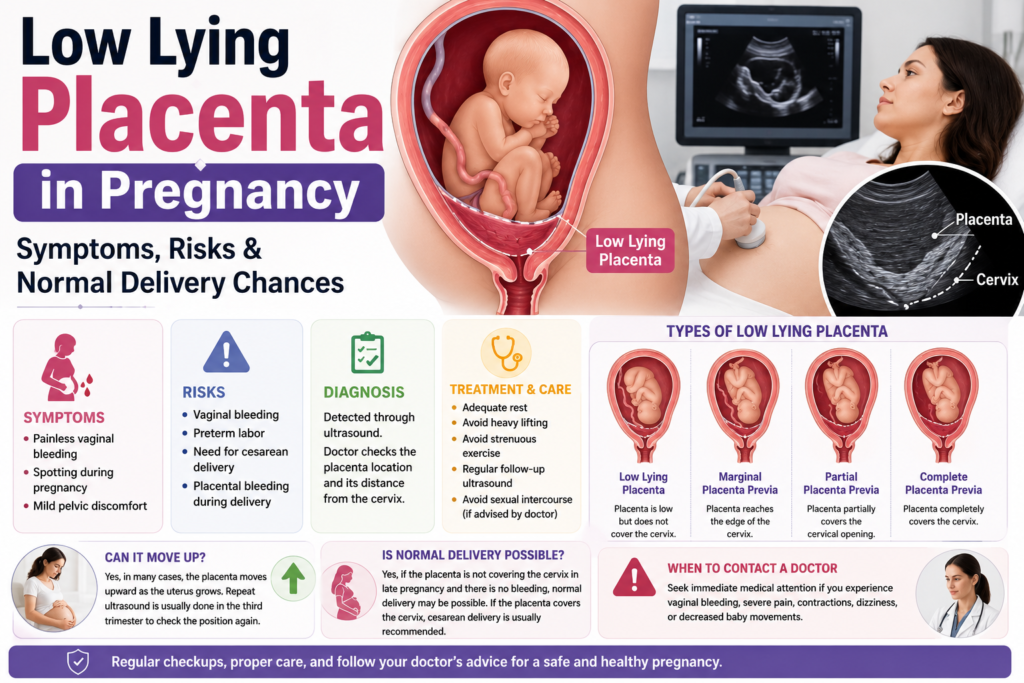
Normally, the placenta attaches higher in the uterus. But in some pregnancies, especially during early scans, the placenta may appear low. Doctors usually diagnose this condition through ultrasound.
If the placenta partially or completely covers the cervix, the condition may be called Placenta Previa.
Is Low Lying Placenta Common?
Yes, low lying placenta is relatively common during the second trimester of pregnancy. Many women are diagnosed with it during their anomaly scan or level 2 ultrasound around 18–22 weeks.
Also Read : 6 Week Ultrasound – What Should You Expect?
In most cases, the placenta gradually moves upward as pregnancy progresses and the uterus grows. By the third trimester, many women no longer have a low lying placenta.
Causes of Low Lying Placenta
The exact reason is not always known, but certain factors may increase the risk of developing a low lying placenta.
Possible causes and risk factors include:
- Previous cesarean delivery
- Multiple pregnancies
- Previous uterine surgery
- Pregnancy at older maternal age
- Smoking during pregnancy
- IVF pregnancy
- Placenta abnormalities in earlier pregnancies
Sometimes, it may occur without any specific risk factor.
Symptoms of Low Lying Placenta
Some women may not experience any symptoms, and the condition is detected only during routine ultrasound scans.
However, possible symptoms may include:
- Painless vaginal bleeding during pregnancy
- Mild pelvic discomfort
- Bleeding after physical activity
- Bleeding during the third trimester
Any bleeding during pregnancy should always be evaluated by a doctor immediately.
Types of Low Lying Placenta
Doctors classify the condition based on how close the placenta is to the cervix.
Marginal Placenta Previa
The placenta reaches the edge of the cervix but does not cover it completely.
Partial Placenta Previa
The placenta partially covers the cervical opening.
Complete Placenta Previa
The placenta completely covers the cervix and may require cesarean delivery.
Low Lying Placenta
The placenta is low but does not cover the cervix.
Can Low Lying Placenta Move Up Naturally?
Yes, in many pregnancies, the placenta moves upward naturally as the uterus expands.
This is especially common when low lying placenta is diagnosed during the second trimester. Repeat ultrasounds are usually recommended around 28–32 weeks to check the placenta position again.
Also Read : When is the First Ultrasound During Pregnancy?
Many women diagnosed early in pregnancy later have a normal placenta position.
Risks of Low Lying Placenta
The risks depend on how low the placenta is and whether it covers the cervix.
Possible complications may include:
- Vaginal bleeding
- Preterm labor
- Placental bleeding during delivery
- Need for cesarean section
- Fetal distress in severe cases
However, mild low lying placenta without bleeding often causes no serious problems.
How is Low Lying Placenta Diagnosed?
Doctors diagnose low lying placenta through ultrasound examination.
The scan helps determine:
- Placenta location
- Distance from cervix
- Baby growth
- Amniotic fluid level
- Placenta condition
Sometimes, a transvaginal ultrasound may be recommended for a more accurate assessment.
Treatment and Precautions
There is no direct medicine that moves the placenta upward. Management mainly focuses on monitoring and preventing complications.
Doctors may recommend:
- Adequate rest
- Avoiding heavy lifting
- Avoiding strenuous exercise
- Avoiding sexual intercourse in some cases
- Regular follow-up ultrasounds
If bleeding occurs, immediate medical care may be necessary.
Is Normal Delivery Possible?
Yes, normal delivery may still be possible in many mild cases where the placenta is not covering the cervix.
The chances of vaginal delivery depend on:
- Placenta position in late pregnancy
- Distance from cervix
- Presence of bleeding
- Baby’s condition
If the placenta continues to cover the cervix near delivery time, cesarean section is usually recommended for safety.
When Should You Contact a Doctor?
Immediate medical attention is needed if:
- Vaginal bleeding occurs
- Severe abdominal pain develops
- Baby movements decrease
- Dizziness or weakness appears
- Contractions begin early
Pregnancy bleeding should never be ignored.
Can Low Lying Placenta Affect the Baby?
In many mild cases, the baby remains completely healthy. However, severe placenta previa may increase the risk of premature birth or bleeding complications if not monitored properly.
Regular prenatal care and ultrasound follow-up are important to ensure a healthy pregnancy outcome.

