
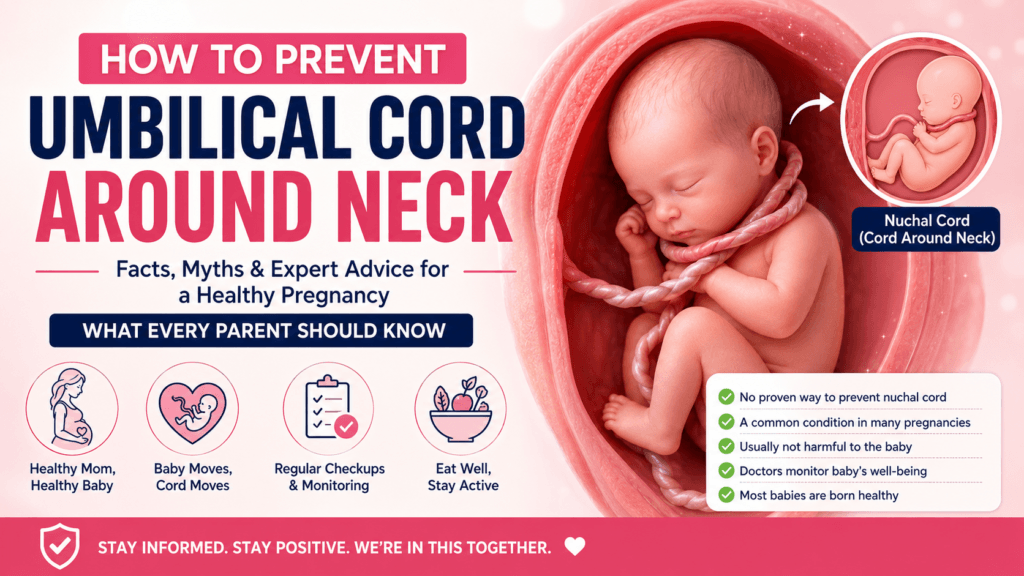
Umbilical cord around neck: Hearing that your baby’s umbilical cord is wrapped around the neck can be frightening. Many expecting parents immediately search online asking, “How can I prevent the umbilical cord from wrapping around my baby’s neck?” or “Can sleeping position or exercise prevent a nuchal cord?”
The good news is that in most pregnancies, an umbilical cord around the baby’s neck—known medically as a nuchal cord—is a common finding and usually does not cause serious problems. In fact, doctors estimate that about 20% to 30% of babies have a nuchal cord at the time of delivery. Most babies are born healthy without complications.
One of the biggest misconceptions is that mothers can prevent the umbilical cord from wrapping around the baby’s neck through specific sleeping positions, exercises, or diet. Unfortunately, there is no scientifically proven method to prevent a nuchal cord. It usually happens because babies naturally move, roll, stretch, and change positions inside the uterus throughout pregnancy.
Instead of worrying about myths, understanding why a nuchal cord happens and knowing when medical attention is needed can help you feel more confident during pregnancy.
What Is a Nuchal Cord?
A nuchal cord occurs when the umbilical cord wraps around the baby’s neck one or more times before birth.
The umbilical cord is the baby’s lifeline. It carries oxygen and nutrients from the placenta to the baby while removing waste products. The cord is protected by a soft, jelly-like substance called Wharton’s jelly, which helps prevent it from being compressed during normal fetal movements.
A nuchal cord may be:
- Single loop around the neck
- Double loop
- Triple loop (less common)
- Loose loop
- Tight loop
Most nuchal cords are loose and do not interfere with blood flow or oxygen delivery.
Can You Prevent the Umbilical Cord From Wrapping Around the Neck?
The simple answer is No.
There is currently no medical evidence that a pregnant woman can prevent a nuchal cord from developing.
Many popular internet tips claim that certain sleeping positions, yoga exercises, stretching routines, or dietary changes can stop the cord from wrapping around the baby’s neck. These claims are not supported by scientific research.
The baby’s movements inside the uterus are natural and unpredictable. Since the baby and umbilical cord move together in the amniotic fluid, loops can form and disappear throughout pregnancy.
Even if an ultrasound shows a nuchal cord today, the baby may move again and unwrap the cord before delivery.
Why Does the Umbilical Cord Wrap Around the Baby’s Neck?
Several natural factors can increase the chance of a nuchal cord, but none are caused by anything the mother did wrong.
Common reasons include:
Active Baby Movements
Babies constantly move, kick, roll, stretch, and change positions during pregnancy. As they move, the umbilical cord may naturally pass around the neck or body.
Long Umbilical Cord
Some babies naturally have longer umbilical cords than others. A longer cord provides more room for loops to develop.
Excess Amniotic Fluid
When there is more amniotic fluid, the baby has greater freedom to move, increasing the possibility of the cord looping around the neck.
Smaller Baby Size
Earlier in pregnancy, babies have more space to move freely inside the uterus. This is one reason nuchal cords may form during the second or third trimester.
Common Myths About Preventing a Nuchal Cord
Many myths continue to circulate online and within families. Understanding the facts can help reduce unnecessary anxiety. umbilical cord around neck
Myth: Sleeping on Your Left Side Prevents a Nuchal Cord
Sleeping on the left side is generally recommended during pregnancy because it may improve blood flow to the uterus and kidneys. However, it does not prevent the umbilical cord from wrapping around the baby’s neck.
Myth: Raising Your Arms Above Your Head Causes the Cord to Wrap Around the Neck : umbilical cord around neck
There is no scientific evidence that lifting your arms, hanging clothes, reaching overhead, or stretching causes a nuchal cord.
Myth: Walking Too Much Causes Cord Loops, umbilical cord around neck
Regular walking is considered a healthy form of exercise during most pregnancies. It does not increase the risk of a nuchal cord.
Myth: Eating Certain Foods Prevents Cord Problems
No specific food, vitamin, or supplement has been shown to prevent the umbilical cord from wrapping around the baby’s neck.
ALSO READ : Placenta Grade 3 During Pregnancy: Risks, Symptoms, and Delivery Options
Maintaining a balanced diet supports overall pregnancy health but cannot control fetal movements or cord position.
What Can You Actually Do During Pregnancy?
Although you cannot prevent a nuchal cord, you can take several important steps to support a healthy pregnancy.
Attend all scheduled prenatal appointments so your healthcare provider can monitor your baby’s growth and well-being. Pay attention to your baby’s movement patterns, especially during the third trimester. If you notice a significant decrease in fetal movement, contact your healthcare provider promptly rather than waiting until your next appointment.
Maintaining healthy blood pressure, managing diabetes if present, eating a nutritious diet, staying hydrated, and avoiding smoking and alcohol all contribute to a healthier pregnancy. While these habits cannot prevent a nuchal cord, they help reduce other pregnancy complications and support your baby’s overall health.
How Is a Nuchal Cord Diagnosed?
A nuchal cord is sometimes detected during a routine pregnancy ultrasound, especially during the third trimester. However, not every nuchal cord is visible on ultrasound because the baby’s position, the amount of amniotic fluid, and the location of the umbilical cord can affect visibility. umbilical cord around neck
Even when a nuchal cord is identified before birth, it does not necessarily mean your baby will experience complications. In fact, many babies move frequently during pregnancy, and the cord may wrap around or unwrap from the neck multiple times before labor begins. This is why healthcare providers usually focus more on the baby’s overall well-being than on the presence of a single cord loop. umbilical cord around neck
If there are concerns about the baby’s health, your healthcare provider may recommend additional monitoring, such as a non-stress test (NST), biophysical profile (BPP), or Doppler ultrasound to assess blood flow through the umbilical cord and placenta. umbilical cord around neck
Can a Baby Be Born Safely With the Umbilical Cord Around the Neck?
Yes. The vast majority of babies with a nuchal cord are born completely healthy.
During labor, your healthcare provider carefully monitors the baby’s heart rate. If the cord is loosely wrapped around the neck, it can often be slipped over the baby’s head during delivery. In some cases, the provider may gently loosen the cord after the baby’s head is delivered before the rest of the body is born. umbilical cord around neck
Many parents are surprised to learn that a nuchal cord is one of the most common findings during childbirth. Experienced obstetricians and midwives manage this situation regularly, and in most cases, it does not require a cesarean section.
The umbilical cord is specially designed to protect blood flow. It contains a thick, jelly-like substance called Wharton’s jelly, which cushions the blood vessels inside the cord and helps prevent compression during normal pregnancy and delivery.
Can a Tight Nuchal Cord Cause Problems?
Although most nuchal cords are harmless, a very tight cord around the neck may occasionally reduce blood flow during labor.
Possible complications are uncommon but may include: umbilical cord around neck
- Temporary changes in the baby’s heart rate
- Reduced oxygen delivery during contractions
- Fetal distress
- Emergency cesarean delivery in some situations
These complications are relatively rare because healthcare providers continuously monitor the baby’s heart rate during labor. If signs of distress develop, immediate medical intervention can help ensure the safest possible delivery.
Does a Nuchal Cord Mean a Cesarean Section Is Necessary?
Not usually.
A nuchal cord by itself is not considered an indication for a cesarean section.
Most women with babies who have a single nuchal cord deliver vaginally without complications. The decision to perform a cesarean section depends on many factors, including labor progress, fetal heart rate patterns, the baby’s position, and the mother’s overall health—not simply the presence of a cord around the neck.
When Should You Contact Your Healthcare Provider?
Although a nuchal cord itself is usually not dangerous, you should contact your healthcare provider immediately if you experience any warning signs during pregnancy.
Seek medical care if you notice:
- A significant decrease in your baby’s movements
- Vaginal bleeding
- Leaking of amniotic fluid
- Severe abdominal pain
- Regular contractions before 37 weeks of pregnancy
- Persistent severe headache or vision changes
- Sudden swelling of the face or hands
These symptoms may indicate pregnancy complications unrelated to a nuchal cord and should always be evaluated promptly.
How to Support a Healthy Pregnancy
While you cannot control the position of the umbilical cord, you can support your baby’s health by following healthy pregnancy habits. umbilical cord around neck
Eat a balanced diet rich in fruits, vegetables, whole grains, lean proteins, and iron-rich foods. Stay hydrated throughout the day, attend every prenatal appointment, take prenatal vitamins as prescribed, and engage in pregnancy-safe physical activity if approved by your healthcare provider.
Avoid smoking, alcohol, and recreational drugs, as these substances increase the risk of serious pregnancy complications. Getting adequate sleep and managing stress can also contribute to a healthier pregnancy.
Most importantly, learn your baby’s normal movement patterns during the third trimester. If you ever notice a significant reduction in movement, contact your healthcare provider immediately.

