When people think about iron deficiency, they usually associate it with fatigue or feeling tired all the time. While tiredness is one of the most common symptoms, iron deficiency can also cause several unusual signs that many people don’t recognize. These hidden symptoms often develop gradually and may be mistaken for stress, lack of sleep, or other health conditions.
Iron is an essential mineral that helps your body produce hemoglobin, a protein in red blood cells responsible for carrying oxygen throughout the body. When iron levels become too low, your organs and tissues receive less oxygen, leading to a wide range of symptoms. Some are obvious, while others are surprisingly unusual.
In this article, we’ll explain the uncommon symptoms of iron deficiency, why they occur, and when you should speak with a healthcare provider.
What Is Iron Deficiency?
Iron deficiency occurs when your body does not have enough iron to produce healthy red blood cells. If left untreated, it can progress to iron deficiency anemia.
Common causes include:
- Heavy menstrual bleeding
- Pregnancy
- Poor dietary intake
- Blood loss from the digestive tract
- Frequent blood donation
- Certain digestive disorders that reduce iron absorption
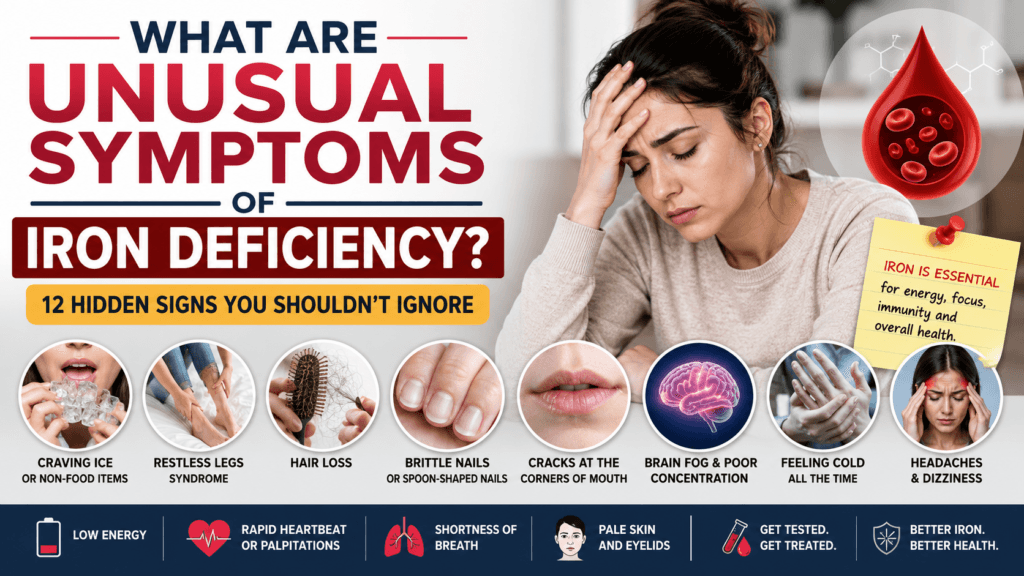
1. Craving Ice, Dirt, or Chalk (Pica)
One of the strangest symptoms of iron deficiency is a condition called pica, which causes cravings for non-food items.
People may crave:
- Ice cubes
- Chalk
- Clay
- Dirt
- Paper
- Cornstarch
Among these, craving ice (pagophagia) is especially common in iron deficiency. Experts don’t fully understand why this happens, but the symptom often improves once iron levels return to normal.
2. Restless Legs Syndrome
Many people don’t realize that iron deficiency is strongly linked to Restless Legs Syndrome (RLS).
Symptoms include:
- An uncontrollable urge to move the legs
- Tingling sensations
- Crawling feelings under the skin
- Symptoms worsening at night
- Difficulty sleeping
Low iron levels affect dopamine function in the brain, which plays an important role in muscle movement.
3. Hair Loss
If you’re losing more hair than usual, low iron could be one of the reasons.
Iron helps deliver oxygen to hair follicles. Without enough oxygen, hair growth slows and excessive shedding may occur.
Hair loss related to iron deficiency is often:
- Diffuse (spread across the scalp)
- Gradual
- More noticeable while brushing or washing hair
4. Brittle or Spoon-Shaped Nails
Iron deficiency can affect nail health.
Signs include:
- Thin nails
- Easily broken nails
- Vertical ridges
- Spoon-shaped nails (Koilonychia)
This unusual nail change is more common in long-term iron deficiency.
5. Cracks at the Corners of the Mouth
Painful cracks at the corners of the mouth, known as angular cheilitis, may occur due to iron deficiency.
These cracks may:
- Bleed
- Become sore
- Make eating uncomfortable
- Keep returning despite treatment
6. Brain Fog and Poor Concentration
Iron helps the brain receive oxygen.
When iron levels are low, some people experience:
- Difficulty concentrating
- Forgetfulness
- Slower thinking
- Trouble focusing at work
- Poor memory
Many adults mistake these symptoms for stress or aging.
7. Feeling Cold All the Time
Do your hands and feet always feel cold—even when everyone else feels comfortable?
Iron deficiency reduces oxygen delivery throughout the body, making it harder to maintain body temperature.
You may notice:
- Cold fingers
- Cold toes
- Chills
- Increased sensitivity to cold weather
8. Frequent Headaches and Dizziness
Reduced oxygen delivery to the brain can cause:
- Frequent headaches
- Lightheadedness
- Dizziness when standing
- Feeling faint
These symptoms become more common as iron deficiency becomes more severe.
9. Shortness of Breath During Simple Activities
If climbing stairs suddenly leaves you out of breath, iron deficiency may be contributing.
Low hemoglobin means your muscles receive less oxygen, making physical activity feel much harder than usual.
10. Rapid Heartbeat
Your heart works harder to compensate for low oxygen levels.
Also Read : Placenta Maturity Grades 0,1,2 & 3 Explained: How Each Stage Affects Your Baby
Possible symptoms include:
- Fast heartbeat
- Heart palpitations
- Feeling your heart pounding
- Chest discomfort during exercise
These symptoms should always be evaluated by a healthcare professional.
11. Pale Skin and Pale Eyelids
Paleness is a classic but often overlooked sign.
You may notice:
- Pale face
- Pale gums
- Pale inner eyelids
- Pale nail beds
These changes happen because there are fewer healthy red blood cells carrying oxygen.
12. Constant Fatigue That Doesn’t Improve
Although fatigue is common, persistent exhaustion despite getting enough sleep should never be ignored.
Iron deficiency fatigue often includes:
- Low energy all day
- Difficulty exercising
- Feeling weak
- Reduced productivity
- Needing frequent naps
Unlike normal tiredness, rest alone usually doesn’t solve the problem.
Who Is Most at Risk?
Certain people have a higher risk of iron deficiency, including:
- Women with heavy menstrual periods
- Pregnant women
- Teenagers during growth spurts
- Frequent blood donors
- Vegetarians and vegans
- Adults over age 65
- People with digestive diseases like celiac disease or inflammatory bowel disease
How Is Iron Deficiency Diagnosed?
A healthcare provider may recommend blood tests such as:
- Complete Blood Count (CBC)
- Serum Ferritin
- Serum Iron
- Total Iron Binding Capacity (TIBC)
- Transferrin Saturation
Ferritin is often one of the earliest indicators of low iron stores.
How Is Iron Deficiency Treated?
Treatment depends on the underlying cause but may include:
- Iron-rich foods such as lean meat, beans, spinach, and lentils
- Oral iron supplements
- Vitamin C to improve iron absorption
- Treating the source of blood loss
- Intravenous iron therapy in severe cases
Never start iron supplements without medical advice, as too much iron can also be harmful.
Final Thoughts
Iron deficiency doesn’t always present with obvious symptoms. In addition to fatigue, unusual signs such as ice cravings, restless legs, brittle nails, hair loss, brain fog, dizziness, and persistent cold hands or feet may all indicate low iron levels. Recognizing these hidden symptoms early can help prevent iron deficiency from progressing to anemia. If you experience several of these symptoms, consult a healthcare provider for proper testing and treatment rather than self-diagnosing.
Medical Disclaimer: This article is for educational purposes only and should not replace professional medical advice, diagnosis, or treatment. If you have persistent symptoms or concerns about iron deficiency, consult a qualified healthcare professional.