
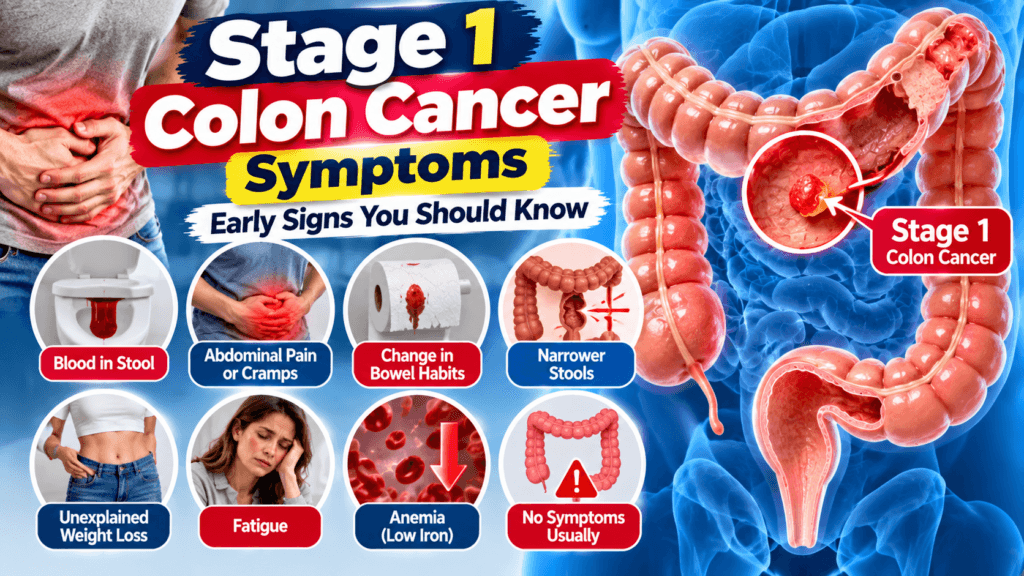
Stage 1 colon cancer is an early form of colon cancer that is still localized within the layers of the colon wall. Because early tumors can be small, some people have no noticeable symptoms at all. Others may experience changes in bowel habits, blood in the stool, abdominal discomfort, unexplained weight loss, fatigue, or other digestive changes.
The important point is that symptoms alone cannot tell you whether you have stage 1 colon cancer. Many of the same symptoms can occur with hemorrhoids, constipation, infections, inflammatory bowel disease, polyps, and other non-cancerous conditions. Testing, particularly colonoscopy with tissue biopsy when a suspicious lesion is found, is needed to determine the cause.
What Is Stage 1 Colon Cancer?
Stage 1 colon cancer means cancer has grown beyond the innermost lining of the colon into deeper layers of the colon wall but has not spread to nearby lymph nodes or distant organs. NCI describes stage I colon cancer as cancer that has spread from the mucosa into the submucosa or muscle layer of the colon wall.
Because stage 1 colon cancer is still localized, it is considered an early stage. However, the stage is determined by pathology and other diagnostic information rather than by symptoms. A person cannot determine the stage of colon cancer based on how mild or severe their symptoms are.
What Are the Symptoms of Stage 1 Colon Cancer?
There is no single symptom that specifically identifies stage 1 colon cancer. Some people may not notice anything unusual, while others may develop digestive or general symptoms. The CDC lists changes in bowel habits, blood in or on the stool, diarrhea, constipation, incomplete bowel emptying, abdominal pain or cramps, unexplained weight loss, and anemia among possible colorectal cancer symptoms.
Changes in Bowel Habits
A persistent change in your normal bowel pattern can be one possible warning sign. This may include constipation, diarrhea, alternating constipation and diarrhea, or stools that look different from your usual bowel movements. NCI also notes that some people may notice narrower or differently shaped stools.
A temporary change in bowel habits is common and does not automatically mean cancer. The concern is greater when a change is persistent, unexplained, or occurs together with other symptoms such as bleeding, abdominal pain, anemia, or unexplained weight loss.
Blood in or on the Stool
Blood in the stool is another possible symptom of colorectal cancer. Depending on the location and amount of bleeding, blood may be visible or may only be detected through stool testing. NCI notes that colon cancer can cause either bright red or very dark blood in the stool.
However, blood in the stool does not automatically mean colon cancer. Hemorrhoids, anal fissures, polyps, inflammatory bowel disease, and other conditions can also cause rectal bleeding. Persistent or unexplained blood should still be evaluated by a healthcare professional.
Abdominal Pain, Cramps or Discomfort
Some people with colon cancer may experience abdominal discomfort, gas pains, bloating, fullness, or cramps. These symptoms are not specific to cancer and are commonly caused by many digestive conditions.
If abdominal symptoms are persistent, worsening, or associated with bowel changes or bleeding, medical evaluation is appropriate.
Unexplained Weight Loss
Unintentional weight loss can occur with colorectal cancer and is considered a possible warning sign. However, many other conditions can also cause unexplained weight loss. If you are losing weight without intentionally changing your diet or activity level, it is important to discuss it with a healthcare professional.
Fatigue or Anemia
Colon cancer can cause blood loss that may not always be visible. Over time, this can contribute to anemia, which may cause fatigue, weakness, shortness of breath, or reduced exercise tolerance. The CDC lists low levels of iron in the blood, or anemia, as a possible colorectal cancer finding.
Also Read : GLP-1 Weight Loss: How It Works, Benefits, Side Effects & What to Know
Can Stage 1 Colon Cancer Have No Symptoms?
Yes. Stage 1 colon cancer can have no noticeable symptoms. Early tumors may be small and may not interfere significantly with the movement of stool through the colon or cause obvious bleeding.
The CDC specifically notes that colorectal cancer and precancerous polyps do not always cause symptoms. This is why waiting for symptoms is not a reliable strategy for detecting colorectal cancer early.
Screening can identify colorectal cancer or precancerous polyps before symptoms develop. For average-risk adults in the United States, the USPSTF recommends colorectal cancer screening beginning at age 45.
Early Warning Signs of Colon Cancer
The most important symptoms to pay attention to include a persistent change in bowel habits, blood in or on the stool, ongoing abdominal discomfort or cramps, unexplained weight loss, unusual fatigue, and anemia.
These symptoms should not be interpreted as proof of cancer. The same symptoms can occur with many other conditions. However, persistent or unexplained symptoms deserve medical evaluation rather than being ignored.
Stage 1 Colon Cancer Symptoms in Men and Women
The possible symptoms of colon cancer are generally similar in men and women. Both may experience changes in bowel habits, blood in the stool, abdominal discomfort, unexplained weight loss, fatigue, or anemia.
There is no separate symptom pattern that reliably identifies stage 1 colon cancer specifically in men versus women. Because colorectal cancer can occur without symptoms, screening recommendations and individual risk factors are important for both sexes.
What Does Colon Cancer Blood in Stool Look Like?
Blood associated with colorectal disease can look different depending on where bleeding occurs and how much blood is present. It may appear as bright red blood on or in the stool, or it may be darker and less obvious. NCI lists both bright-red and very dark blood among possible signs of colon cancer.
You should not try to determine the cause of blood in your stool based on appearance alone. Hemorrhoids and other gastrointestinal conditions can also cause visible bleeding. A healthcare professional may recommend an examination, stool testing, colonoscopy, or other evaluation depending on your symptoms and risk factors.
How Is Stage 1 Colon Cancer Diagnosed?
Symptoms can raise suspicion, but they cannot diagnose colon cancer or determine its stage. Doctors may begin with a medical history and physical examination and then recommend tests based on the person’s symptoms and risk factors.
Colonoscopy is an important diagnostic test because it allows a doctor to examine the lining of the colon and remove suspicious polyps or obtain tissue samples for pathology. If cancer is confirmed, additional tests may be used to determine the stage and whether the disease has spread.
Stage 1 is ultimately determined from information about how deeply the cancer has invaded the colon wall and whether there is evidence of spread. NCI notes that colon cancer staging generally uses the TNM system.
When Should You See a Doctor?
You should talk with a healthcare professional if you notice blood in your stool, a persistent change in bowel habits, ongoing abdominal pain or cramps, unexplained weight loss, or symptoms suggestive of anemia.
You should not wait for symptoms to become severe before seeking evaluation. Colorectal cancer can sometimes be present without obvious symptoms, which is why age-appropriate screening is important.
If you have significant rectal bleeding, severe abdominal pain, fainting, marked weakness, or other concerning symptoms, seek prompt medical attention.
Can Colon Cancer Be Prevented or Detected Early?
Not every case of colon cancer can be prevented, but screening can help detect colorectal cancer earlier and can also identify precancerous polyps that can be removed before they become cancerous.
For average-risk adults in the United States, the USPSTF recommends colorectal cancer screening from ages 45 to 75. Screening options include stool-based tests, colonoscopy, CT colonography, and flexible sigmoidoscopy, with different tests performed at different intervals.
People with a personal or family history of colorectal cancer, certain inherited syndromes, inflammatory bowel disease, or other increased-risk factors may need a different screening approach and should discuss timing with their healthcare professional.
Stage 1 Colon Cancer Prognosis and Treatment
Stage 1 colon cancer is localized, and NCI describes it as having a high cure rate. The standard treatment for stage 1 colon cancer generally involves surgical removal of the cancer with an appropriate margin of healthy colon and reconnection of the bowel, known as resection and anastomosis.
The exact treatment plan depends on the tumor’s location, pathology, surgical considerations, the patient’s overall health, and other clinical factors. Treatment decisions should be made with a qualified cancer care team rather than based on symptoms alone.
This article is for educational and informational purposes only and is not a substitute for professional medical advice, diagnosis, or treatment. Always consult a qualified healthcare professional for advice about your individual health.
