
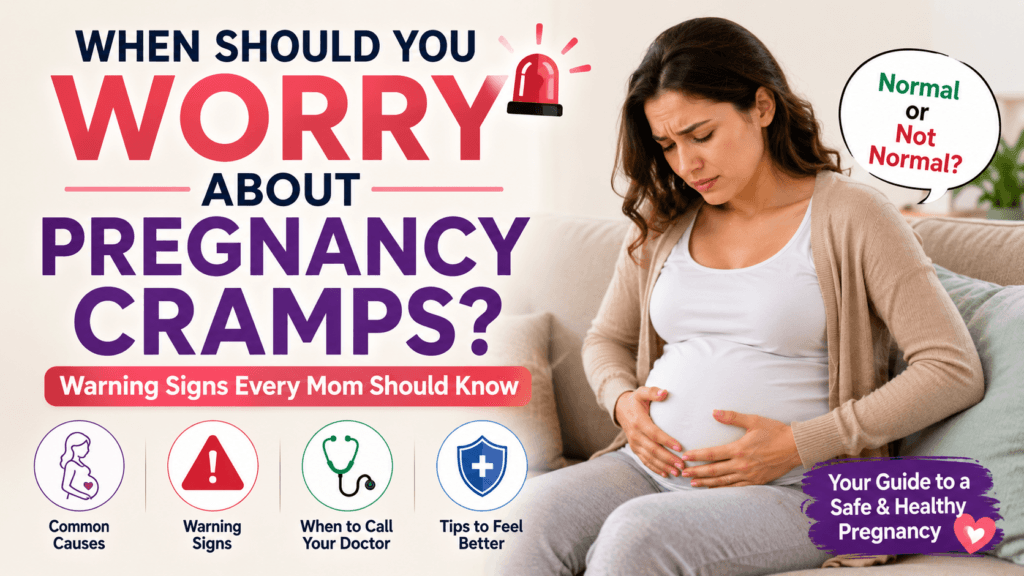
Experiencing cramps during pregnancy can be frightening, especially if you’re not sure whether they’re normal or a sign of a problem. The good news is that mild cramping is common during pregnancy and is often caused by the natural changes happening in your body.
However, some pregnancy cramps can indicate a serious condition that requires immediate medical attention. Understanding the difference between normal and concerning cramps can help you protect both your health and your baby’s well-being.
In this article, we’ll explain when pregnancy cramps are normal, when you should worry, and the warning signs every pregnant woman should know.
Are Pregnancy Cramps Normal?
Yes, mild pregnancy cramps are usually normal.
As your uterus expands and your body adjusts to support your growing baby, you may experience occasional cramping or discomfort. Many women notice mild cramps during the first trimester and throughout pregnancy.
Normal pregnancy cramps are usually:
- Mild in intensity
- Short-lasting
- Occasional rather than constant
- Not accompanied by heavy bleeding
These cramps often improve with rest, hydration, or changing positions.
Why Do Pregnancy Cramps Happen?
Pregnancy causes many physical changes that can lead to mild abdominal discomfort.
Implantation Cramping
During very early pregnancy, some women experience implantation cramps when the fertilized egg attaches to the uterine lining.
These cramps are usually mild and may occur around the same time as implantation bleeding.
Uterus Expansion
As your baby grows, your uterus stretches to accommodate the pregnancy.
This stretching can cause mild cramping sensations, especially during the first and second trimesters.
Round Ligament Pain
Round ligament pain is one of the most common causes of pregnancy discomfort.
The ligaments supporting the uterus stretch as pregnancy progresses, causing sharp or pulling sensations in the lower abdomen.
Gas and Bloating
Hormonal changes slow digestion during pregnancy, increasing the likelihood of:
- Gas
- Bloating
- Constipation
These digestive issues can sometimes feel similar to menstrual cramps.
Dehydration
Not drinking enough water may trigger uterine irritability and mild cramping.
Staying hydrated is essential throughout pregnancy.
Normal Pregnancy Cramps vs. Concerning Cramps
Understanding the difference between normal and abnormal cramps is important.
Also Read : Why Am I So Tired During Pregnancy? Causes, Symptoms, and Ways to Boost Your Energy
Signs of Normal Pregnancy Cramps
Normal cramps are usually:
- Mild and brief
- Occasional
- Relieved by rest
- Not associated with heavy bleeding
- Not worsening over time
Signs You Should Not Ignore
Contact your healthcare provider if you experience:
- Severe abdominal pain
- Heavy vaginal bleeding
- Persistent cramping
- Fever or chills
- Dizziness or fainting
- Pain in one side of the abdomen
- Painful urination
These symptoms may indicate a complication that requires medical evaluation.
When Should You Worry About Pregnancy Cramps in the First Trimester?
While mild cramping is common in early pregnancy, severe pain should never be ignored.
Possible Miscarriage Symptoms
Miscarriage may cause:
- Moderate to severe cramping
- Vaginal bleeding
- Passage of tissue
- Lower back pain
Not all bleeding means miscarriage, but any significant bleeding should be discussed with your doctor.
Ectopic Pregnancy Warning Signs
An ectopic pregnancy occurs when the fertilized egg implants outside the uterus.
Warning signs may include:
- Sharp one-sided abdominal pain
- Shoulder pain
- Dizziness
- Fainting
- Vaginal bleeding
An ectopic pregnancy is a medical emergency and requires immediate treatment.
When Should You Worry About Pregnancy Cramps in the Second Trimester?
Most second-trimester cramps are harmless, but persistent pain should be evaluated.
Cervical Changes
Some women may experience cervical shortening or cervical insufficiency, which can increase the risk of preterm birth.
Placental Problems
Placental complications may occasionally cause abdominal discomfort or cramping.
Persistent Abdominal Pain
Pain that becomes severe, frequent, or progressively worse should always be assessed by a healthcare professional.
When Should You Worry About Pregnancy Cramps in the Third Trimester?
As delivery approaches, cramping becomes more common.
Braxton Hicks Contractions
Braxton Hicks contractions are often called “practice contractions.”
They are usually:
- Irregular
- Mild
- Temporary
- Relieved by hydration or rest
Preterm Labor Signs
Contact your doctor if you experience:
- Regular contractions before 37 weeks
- Pelvic pressure
- Lower back pain
- Vaginal discharge changes
These symptoms may indicate preterm labor.
Placental Abruption
Placental abruption occurs when the placenta separates from the uterus before delivery.
Symptoms may include:
- Severe abdominal pain
- Vaginal bleeding
- Continuous uterine tenderness
This condition requires immediate medical attention.
Warning Signs That Require Immediate Medical Attention
Seek urgent medical care if you experience:
- Heavy vaginal bleeding
- Severe abdominal pain
- Strong contractions before 37 weeks
- Fever above 100.4°F (38°C)
- Severe dizziness
- Fainting
- Reduced baby movements
- Fluid leaking from the vagina
These symptoms may indicate a serious pregnancy complication.
How to Relieve Mild Pregnancy Cramps Safely
Most mild pregnancy cramps can be managed at home.
Drink More Water
Dehydration is a common cause of cramping.
Aim to drink water regularly throughout the day.
Get Adequate Rest
Overexertion can worsen cramping.
Taking breaks and getting enough sleep may help reduce discomfort.
Change Positions Slowly
Sudden movements can trigger round ligament pain.
Move slowly when standing or changing positions.
Gentle Walking
Light physical activity may help improve circulation and reduce discomfort.
Warm Bath
A warm (not hot) bath can relax muscles and provide relief from mild cramps.
How Doctors Evaluate Pregnancy Cramps
If your doctor is concerned about your symptoms, they may recommend:
Physical Examination
A medical examination helps identify possible causes of pain.
Ultrasound Scan
An ultrasound can assess:
- Baby’s well-being
- Placental position
- Cervical length
- Pregnancy location
Blood Tests
Blood tests may help identify infection or pregnancy-related complications.
Urine Testing
Urine tests can detect urinary tract infections, which sometimes cause cramping.
Can Pregnancy Cramps Be a Sign of a Healthy Pregnancy?
Yes.
Many pregnancy cramps occur because your body is adapting to support your growing baby.
Early Pregnancy Changes
Implantation and hormonal changes can cause mild cramping.
Growing Uterus
The expanding uterus places pressure on surrounding tissues and ligaments.
Round Ligament Stretching
Stretching ligaments are a normal part of pregnancy and commonly cause brief discomfort.
Final Thoughts
Most pregnancy cramps are harmless and occur because your body is adjusting to support your growing baby. Mild cramping, especially during early pregnancy, is often a normal part of the process.
However, severe pain, heavy bleeding, fever, dizziness, or persistent cramping should never be ignored. If you are unsure whether your cramps are normal, contact your healthcare provider for guidance and reassurance.
Understanding the warning signs can help you seek timely medical care and enjoy a healthier, safer pregnancy journey.

