

A 6 week ultrasound is often one of the most emotional and important milestones during early pregnancy. For many parents, this is the very first chance to see the baby developing inside the womb. Even though the embryo is still extremely tiny at six weeks, this ultrasound can provide valuable information about the pregnancy’s health, location, and progress. Many women undergo a 6 week ultrasound after getting a positive pregnancy test, especially if they are experiencing symptoms like cramping, spotting, or irregular cycles. Doctors may also recommend it for women with a history of miscarriage, fertility treatments, or high-risk pregnancies.
Baby Development at 6 Weeks Pregnant
At six weeks pregnant, the baby is still in the earliest stages of development. The embryo is usually about the size of a lentil, but incredible changes are already happening inside the body. During this stage, the neural tube begins forming, which later develops into the brain and spinal cord. Tiny buds that will become arms and legs also start appearing. Although the baby is too small to look like a newborn yet, the heartbeat may already be detectable on ultrasound in many pregnancies.
Why a Transvaginal Ultrasound Is Common at 6 Weeks
Most 6 week ultrasounds are performed using a transvaginal ultrasound rather than an abdominal scan. This method provides a much clearer and more detailed image during early pregnancy because the embryo is still very small. In a transvaginal ultrasound, a thin ultrasound probe is gently inserted into the vagina to capture images of the uterus and developing pregnancy. While some women feel nervous before the procedure, it is generally painless and safe for both mother and baby.
Main Purpose of a 6 Week Ultrasound
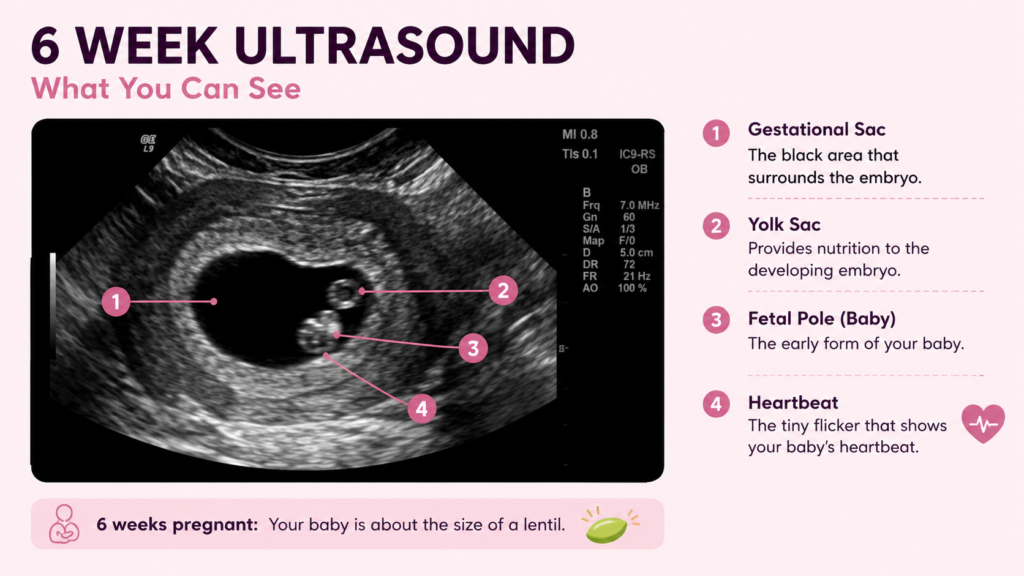
One of the primary goals of a 6 week ultrasound is to confirm that the pregnancy is located inside the uterus. This is important because an ectopic pregnancy, where the embryo implants outside the uterus, can be dangerous if not diagnosed early. The ultrasound helps doctors identify the gestational sac, yolk sac, and possibly the fetal pole. These structures are key indicators of a developing intrauterine pregnancy.
What Can Be Seen on a 6 Week Ultrasound
The gestational sac is usually the first visible sign of pregnancy on ultrasound. At six weeks, it appears as a small fluid-filled structure inside the uterus. The yolk sac may also be visible and plays a crucial role in nourishing the embryo during early development. The fetal pole, which later develops into the baby, may appear as a tiny thickening next to the yolk sac. In many cases, the heartbeat can also be detected around this time.
Can You Hear the Baby’s Heartbeat at 6 Weeks?
Hearing or seeing the heartbeat during a 6 week ultrasound is often a deeply emotional moment for expectant parents. The fetal heartbeat at six weeks is typically between 90 and 120 beats per minute. However, not hearing a heartbeat at exactly six weeks does not always mean something is wrong. Pregnancy dating can sometimes be inaccurate, especially for women with irregular menstrual cycles or uncertain ovulation dates. In some situations, the pregnancy may simply be earlier than expected, and a follow-up ultrasound may be scheduled after one or two weeks.
Also Read : Low Amniotic Fluid Levels(AFI)- Causes, Normal Range, and Treatment
Is It Normal if Less Is Visible on the Scan?
A common concern during a 6 week ultrasound is whether everything appears normal for gestational age. It is important to remember that early pregnancy development varies from person to person. Some women may clearly see a fetal pole and heartbeat, while others may only see a gestational sac. Differences in ovulation timing can significantly affect ultrasound findings during this stage. Doctors often rely on both ultrasound results and blood hCG levels to assess pregnancy progress more accurately.
Understanding 6 Week Ultrasound Images
Many women search online for “what should I see on a 6 week ultrasound” because they want reassurance about their pregnancy. Typically, the ultrasound may show a small black gestational sac, a circular yolk sac, and possibly a tiny embryo. The images can sometimes appear unclear to someone unfamiliar with ultrasounds, but trained healthcare professionals can interpret these structures carefully. Even though the baby may only measure a few millimeters, every tiny structure provides important information about the pregnancy.
How a 6 Week Ultrasound Helps Estimate Due Date
A 6 week ultrasound can also help estimate the due date more accurately. During early pregnancy, ultrasound measurements are considered highly reliable for determining gestational age. The crown-rump length, which measures the embryo from head to bottom, helps doctors calculate how far along the pregnancy is. This estimated due date may sometimes differ from calculations based on the last menstrual period, especially in women with irregular cycles.
Spotting or Cramping Before the Ultrasound
Some women experience spotting or mild cramping before their 6 week ultrasound and become extremely anxious about miscarriage. While bleeding during pregnancy can be frightening, light spotting does not always indicate pregnancy loss. The ultrasound helps doctors evaluate whether the pregnancy is developing normally and whether the cervix appears closed. However, if severe pain, heavy bleeding, or dizziness occurs, immediate medical attention is important.
Can a 6 Week Ultrasound Detect Twins?
In some cases, a 6 week ultrasound may reveal a multiple pregnancy such as twins. If two gestational sacs or embryos are visible, the doctor may confirm a twin pregnancy early on. This can be exciting news for parents, although twin pregnancies usually require closer monitoring throughout pregnancy.
Importance of a 6 Week Ultrasound After IVF
Women undergoing fertility treatments like IVF often receive a 6 week ultrasound as part of routine monitoring. Since the exact embryo transfer date is known in IVF pregnancies, doctors can more accurately assess whether the pregnancy is progressing as expected. These ultrasounds provide reassurance and help detect any early complications.
How to Prepare for a 6 Week Ultrasound
Preparing for a 6 week ultrasound is generally simple. If the scan is abdominal, the doctor may ask the patient to drink water beforehand so the bladder is full, which helps improve image quality. For transvaginal ultrasounds, a full bladder is usually not necessary. Wearing comfortable clothing and staying relaxed can make the experience easier.
What Happens After the Ultrasound?
After the ultrasound, the doctor or sonographer will discuss the findings. If everything looks normal, the next prenatal appointment may be scheduled a few weeks later. If the ultrasound findings are uncertain, a repeat scan may be recommended. This waiting period can feel stressful, but repeat ultrasounds are very common in early pregnancy because development changes rapidly from week to week.
Avoid Comparing Your Pregnancy With Others
One important thing to understand is that every pregnancy develops differently. Comparing ultrasound images or heartbeat timing with someone else’s pregnancy can create unnecessary anxiety. Some healthy pregnancies show a heartbeat earlier, while others take more time. Medical professionals consider many factors before making conclusions about pregnancy viability.
Emotional Experience of a 6 Week Ultrasound
The emotional impact of a 6 week ultrasound is significant for many families. For some, it marks the beginning of feeling truly connected to the pregnancy. Seeing the first signs of life can make the experience feel more real and exciting. For others, especially those with previous pregnancy loss, the appointment may bring both hope and fear. Emotional support from partners, family members, and healthcare providers can make this experience more comforting.
Modern Ultrasound Technology in Early Pregnancy
Technology has greatly improved the accuracy of early pregnancy ultrasounds over the years. Modern ultrasound machines can detect tiny developmental structures much earlier than before. This helps doctors identify complications sooner and provide better prenatal care. However, it also means that very early scans sometimes create confusion if performed before enough development is visible. Timing plays a major role in what can be seen on ultrasound.
Healthy Pregnancy Tips After a 6 Week Ultrasound
A healthy lifestyle remains extremely important after a 6 week ultrasound. Pregnant women should continue taking prenatal vitamins with folic acid, stay hydrated, eat nutritious foods, avoid smoking and alcohol, and attend regular prenatal appointments. Early pregnancy is a critical time for fetal development, and proper care supports both maternal and baby health.
Final Thoughts on a 6 Week Ultrasound
For many parents, the 6 week ultrasound becomes a memory they never forget. Whether it is seeing the tiny heartbeat for the first time or simply confirming the pregnancy is progressing normally, this early scan often brings reassurance, excitement, and emotional connection. Although the embryo is still incredibly small at six weeks, the journey toward parenthood has already begun in an amazing way.
Understanding what happens during a 6 week ultrasound can reduce anxiety and help expectant parents feel more prepared. Every pregnancy experience is unique, and ultrasound findings can vary depending on timing and individual factors. Staying informed, communicating openly with healthcare providers, and focusing on overall health can help make early pregnancy a more positive and confident experience.

