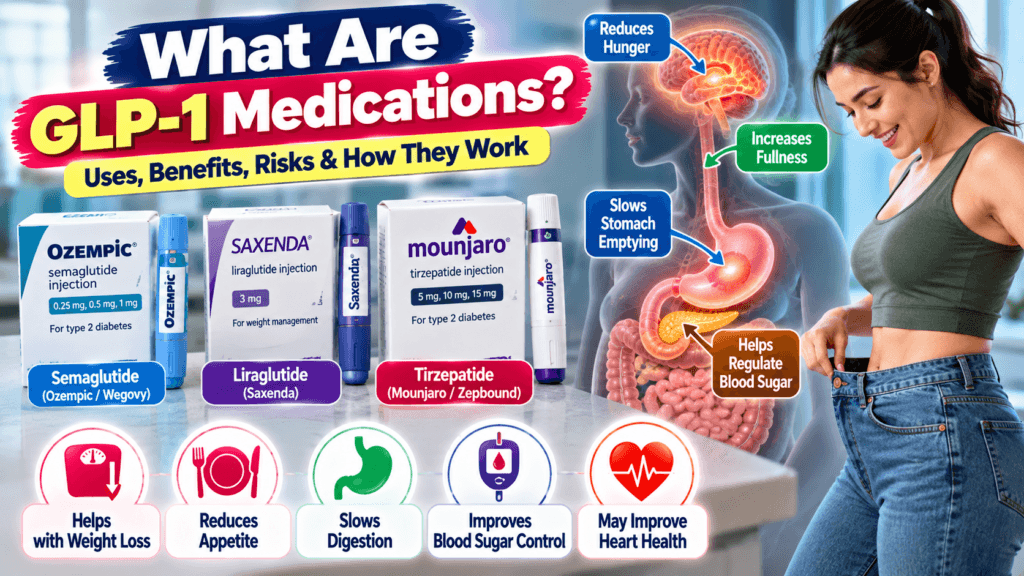

GLP-1 weight loss medications have become an important treatment option for people struggling with overweight and obesity. These medications can reduce appetite, increase feelings of fullness, and help people eat less over time.
Some of the best-known medications in this category include semaglutide and tirzepatide. In the United States, prescription medications such as Wegovy and Zepbound are approved for chronic weight management in eligible adults.
However, GLP-1 medications are not a quick fix or a substitute for healthy eating and physical activity. They are prescription treatments that should be used under the guidance of a qualified healthcare professional.
Quick Answer
GLP-1 medications can help with weight loss by affecting appetite, food intake, and digestion. Semaglutide is a GLP-1 receptor agonist, while tirzepatide activates both GIP and GLP-1 receptors.
These medications may be considered for adults with obesity or for people who are overweight and have certain weight-related health conditions. Weight loss varies from person to person and depends on the medication, dose, lifestyle, medical history, and how long treatment is continued.
Common side effects include nausea, vomiting, diarrhea, constipation, abdominal discomfort, and decreased appetite.
What Are GLP-1 Weight Loss Medications?
GLP-1 stands for glucagon-like peptide-1, a hormone involved in appetite regulation, digestion, and blood sugar control.
GLP-1-based medications can mimic or activate the effects of this hormone. They can help people feel full sooner and stay full longer, which may reduce overall food intake.
Some medications are specifically approved for chronic weight management, while others are approved for type 2 diabetes under different brand names and indications.
Also Read : Vitamin D Deficiency Symptoms and Best Treatment Options
The medications should not be viewed as interchangeable. The appropriate medication depends on a person’s health, medical history, treatment goals, and other factors.
How Do GLP-1 Medications Help With Weight Loss?
GLP-1-based medications can support weight loss through several effects:
1. They Reduce Appetite
One of the major effects is appetite regulation. Many people experience less hunger and fewer food cravings while taking these medications.
2. They Increase Feelings of Fullness
GLP-1 activity can help people feel satisfied after eating smaller amounts of food. This can make it easier to reduce calorie intake.
3. They Affect Stomach Emptying
Some GLP-1 medications slow stomach emptying, which can contribute to a longer-lasting feeling of fullness.
4. They Affect Blood Sugar Regulation
GLP-1 medications can improve glucose regulation, particularly in people with type 2 diabetes. This is one reason these medications are also used in diabetes treatment.
Weight loss primarily occurs because people tend to consume fewer calories as appetite and food intake decrease.
Common GLP-1 Medications for Weight Management
Several medications are associated with GLP-1-based weight management.
Semaglutide
Semaglutide is a GLP-1 receptor agonist. In the United States, Wegovy is approved for chronic weight management in eligible patients.
Semaglutide is generally administered once weekly when used as an injectable weight-management medication.
Tirzepatide
Tirzepatide is slightly different because it activates both GIP and GLP-1 receptors. Zepbound is FDA-approved for chronic weight management in eligible adults.
Clinical studies have demonstrated substantial weight loss with tirzepatide, although individual results vary.
Liraglutide
Liraglutide is another GLP-1 receptor agonist used for chronic weight management under the brand name Saxenda. Unlike weekly semaglutide and tirzepatide injections, liraglutide is administered daily.
Who May Qualify for GLP-1 Weight Loss Medication?
Weight-loss medications are not appropriate for everyone.
Healthcare professionals may consider prescription weight-management medication for adults with:
- A BMI of 30 or higher, or
- A BMI of 27 or higher with at least one weight-related health condition
Examples of weight-related conditions can include high blood pressure, type 2 diabetes, or abnormal cholesterol levels.
BMI is only one part of the medical evaluation. A healthcare professional may also consider medications, medical conditions, previous weight-loss attempts, lifestyle factors, and potential contraindications.
How Much Weight Can You Lose With GLP-1 Medications?
There is no single amount of weight that everyone will lose.
Research shows that semaglutide and tirzepatide can produce substantial weight reduction in adults with overweight or obesity when combined with lifestyle changes.
In clinical studies, average weight loss has differed according to the medication, dose, treatment duration, and study population.
Tirzepatide has generally produced greater average weight reduction than semaglutide in direct comparative studies, but that does not mean it is automatically the right medication for every person.
The goal of treatment should be discussed with a healthcare professional rather than based on another person’s results.
Common Side Effects of GLP-1 Medications
Digestive side effects are among the most common problems reported with GLP-1-based medications.
Possible side effects include:
- Nausea
- Vomiting
- Diarrhea
- Constipation
- Abdominal pain or discomfort
- Bloating
- Indigestion
- Decreased appetite
These effects can be more noticeable when treatment is started or when the dose is increased.
A healthcare professional may gradually increase the dose to help the body adjust and improve tolerability.
Serious Risks and Precautions
Although GLP-1 medications can be effective, they are not risk-free.
Some serious or potentially serious concerns may include:
- Pancreatitis
- Gallbladder problems
- Severe gastrointestinal symptoms
- Dehydration and kidney problems related to vomiting or diarrhea
- Certain allergic reactions
- Low blood sugar when used with certain diabetes medications
Semaglutide and some other GLP-1 medications carry a boxed warning concerning thyroid C-cell tumors based on findings in rodents. They should not be used by people with a personal or family history of medullary thyroid carcinoma or by people with multiple endocrine neoplasia syndrome type 2, according to prescribing information.
Anyone considering these medications should review their medical history and current medications with a healthcare professional.
What Happens When You Stop GLP-1 Medication?
GLP-1 treatment is often considered a long-term approach to weight management rather than a short course.
When treatment is stopped, appetite can return and some people regain a significant amount of the weight they previously lost.
This is one reason healthcare professionals may recommend continuing effective weight-management medication when the benefits outweigh the risks.
Stopping medication should be discussed with the prescribing clinician rather than done independently.
GLP-1 Medications and Diet
GLP-1 medication works best as part of an overall weight-management plan.
A healthy eating pattern can help provide adequate protein, fiber, vitamins, minerals, and other nutrients while calorie intake is reduced.
People taking GLP-1 medication may find that large meals become uncomfortable. Smaller meals and slower eating may be easier to tolerate.
A balanced diet can include:
- Lean protein
- Vegetables
- Fruits
- Whole grains
- Beans and legumes
- Healthy fats
- Adequate fluids
A registered dietitian can help create an eating plan based on individual nutritional needs.
Can GLP-1 Medications Cause Muscle Loss?
Weight loss can include both fat and lean mass.
Because GLP-1 medications can produce significant weight reduction, maintaining muscle becomes an important part of healthy weight management.
Resistance training, adequate protein intake, appropriate calorie intake, and regular physical activity may help support muscle health during weight loss.
People with significant muscle loss concerns should discuss nutrition and exercise strategies with a healthcare professional.
Are Compounded GLP-1 Medications Safe?
Compounded versions of semaglutide or tirzepatide are not the same as FDA-approved products.
The FDA has warned about risks associated with unapproved GLP-1 products, including concerns related to quality, safety, dosing, and product authenticity.
Patients should obtain prescription medications from legitimate, state-licensed pharmacies and discuss treatment options with a qualified healthcare professional.
Avoid purchasing injectable weight-loss medications from unknown websites or sources that cannot verify the product.