
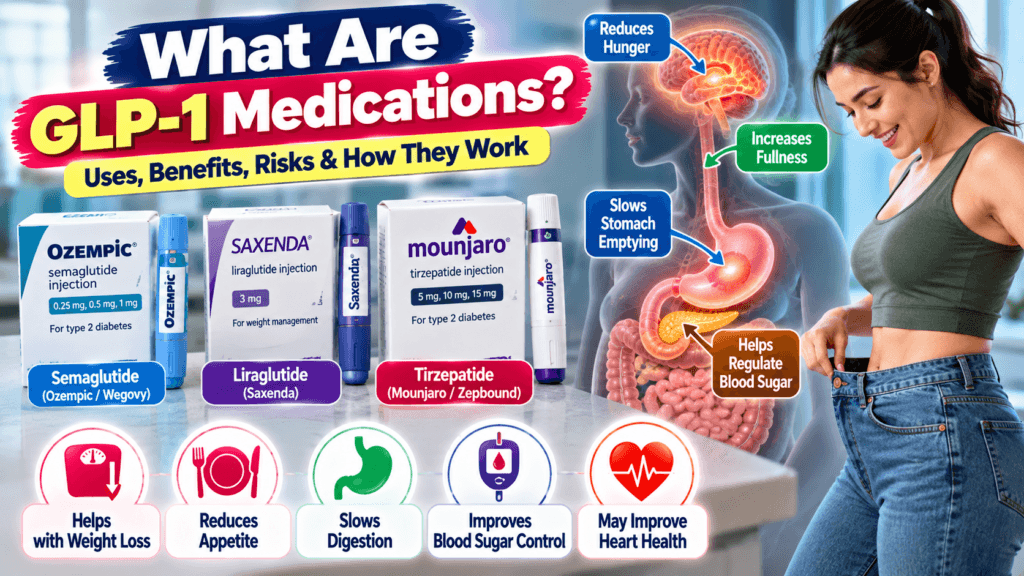
GLP-1 medications are prescription drugs that mimic or act on hormones involved in appetite, blood sugar regulation, digestion, and feelings of fullness. The term “GLP-1 medications” usually refers to glucagon-like peptide-1 receptor agonists, a class of medicines originally developed to treat type 2 diabetes and now widely used in the treatment of obesity and overweight in eligible patients.
Some of the best-known medications in this group include semaglutide and liraglutide. Tirzepatide is also commonly discussed alongside GLP-1 medications, although it works on two hormone pathways: GLP-1 and GIP.
These medications can reduce hunger, increase feelings of fullness, slow stomach emptying, and improve blood sugar control. When prescribed for obesity, they are generally used together with healthy eating and physical activity rather than as a replacement for lifestyle changes.
What Does GLP-1 Mean?
GLP-1 stands for glucagon-like peptide-1.
It is a hormone produced naturally in the body, particularly in the digestive system after eating. GLP-1 plays a role in regulating blood glucose, appetite, digestion, and feelings of fullness.
GLP-1 receptor agonist medications are designed to mimic some of the effects of this natural hormone.
When GLP-1 receptors are activated, several things can happen, including increased insulin release when blood glucose is elevated, reduced appetite, and slower movement of food through the stomach. These effects can contribute to improved blood sugar control and weight loss.
How Do GLP-1 Medications Work?
GLP-1 medications affect several processes involved in appetite and metabolism.
They Can Reduce Hunger
One of the most important effects for weight management is appetite reduction.
Also Read : GLP-1 Weight Loss: How It Works, Benefits, Side Effects & What to Know
GLP-1 receptor activation affects areas of the brain involved in appetite and food intake. This can make some people feel less hungry and may reduce the amount of food they eat.
They Can Increase Fullness
GLP-1 medications can make a person feel full sooner and stay full longer.
This may make it easier to reduce calorie intake without experiencing the same level of hunger that can occur during dieting alone.
They Slow Stomach Emptying
Some GLP-1 medications slow the movement of food from the stomach into the small intestine.
This can contribute to a longer-lasting feeling of fullness. The degree of this effect can vary depending on the medication and the individual.
They Help Regulate Blood Sugar
GLP-1 receptor agonists can improve glucose control by stimulating insulin secretion in response to food intake and elevated blood glucose.
This is one reason the medications have been used for years in the treatment of type 2 diabetes.
What Are the Common GLP-1 Medications?
Several medications work through the GLP-1 pathway.
Semaglutide
Semaglutide is a GLP-1 receptor agonist available under different brand names and doses for different medical indications.
Wegovy is approved for chronic weight management in eligible patients, while Ozempic is approved for type 2 diabetes at specific doses. The same active ingredient can therefore be used for different conditions depending on the product and dose.
In March 2026, the FDA approved a higher-dose 7.2 mg version of Wegovy, called Wegovy HD, for certain adults with obesity or overweight with at least one weight-related condition.
Liraglutide
Liraglutide is another GLP-1 receptor agonist.
Saxenda is approved for chronic weight management, while Victoza uses the same active ingredient for type 2 diabetes at different dosing. Liraglutide is administered by injection and is generally taken more frequently than weekly semaglutide.
Tirzepatide
Tirzepatide is often grouped with GLP-1 medications because it produces similar appetite and weight-management effects, but technically it is a dual GIP and GLP-1 receptor agonist.
Zepbound is approved for chronic weight management in eligible adults, while Mounjaro is approved for type 2 diabetes.
Are GLP-1 Medications the Same as Weight-Loss Drugs?
Not exactly.
GLP-1 medications were initially developed primarily around blood sugar regulation and diabetes treatment. Some medications in this class are now specifically approved at particular doses for chronic weight management.
Weight-management medications are generally prescribed as part of a broader treatment plan that can include nutrition, physical activity, behavioral changes, and management of obesity-related health conditions.
The goal is not simply to reduce a number on the scale. Weight management can also help improve health conditions associated with excess weight.
Who May Be Eligible for GLP-1 Weight-Loss Medication?
Weight-loss medications are not appropriate for everyone.
According to the National Institute of Diabetes and Digestive and Kidney Diseases, healthcare professionals may consider prescription weight-management medication for adults who have:
- A BMI of 30 or greater, or
- A BMI of 27 or greater along with weight-related health problems such as high blood pressure or type 2 diabetes.
BMI is only one part of the clinical assessment. A healthcare professional may also consider medical history, current medications, other health conditions, previous weight-management attempts, potential benefits, side effects, and cost.
What Are the Benefits of GLP-1 Medications?
For eligible patients, GLP-1-based medications can provide several potential benefits.
Weight Loss
These medications can reduce appetite and food intake, helping some people achieve meaningful weight loss when combined with lifestyle changes.
The amount of weight lost varies considerably between medications and individuals.
Better Blood Sugar Control
GLP-1 receptor agonists can improve blood glucose control and are widely used in type 2 diabetes treatment.
Potential Improvement in Weight-Related Health Problems
Weight loss itself may improve conditions associated with excess weight, including high blood pressure, abnormal blood lipid levels, joint problems, and sleep apnea.
Some GLP-1-based medications also have additional FDA-approved indications or evidence related to cardiovascular, kidney, or other health outcomes depending on the specific drug and patient population.
What Are the Common Side Effects?
Digestive side effects are among the most common problems reported with GLP-1-based medications.
Possible side effects include:
- Nausea
- Vomiting
- Diarrhea
- Constipation
- Abdominal discomfort
- Reduced appetite
- Feeling full quickly
Side effects can be more noticeable when treatment is started or when the dose is increased.
Because individual responses vary, dosing is generally adjusted according to the specific medication and the healthcare professional’s instructions.
Are GLP-1 Medications Safe?
GLP-1 medications can be appropriate and effective for many eligible patients, but they are not risk-free.
The safety profile depends on the specific medication, dose, medical history, and other medicines being taken.
Some medications in this group carry important warnings and contraindications. For example, certain GLP-1-based products should not be used by people with a personal or family history of medullary thyroid carcinoma or multiple endocrine neoplasia syndrome type 2.
Serious adverse effects can occur, although they are less common than mild gastrointestinal side effects.
Patients should review the medication’s prescribing information and discuss their individual risks with their healthcare professional.
Can You Stop GLP-1 Medication After Losing Weight?
Stopping treatment may lead to weight regain.
Obesity is considered a chronic disease, and weight management often requires long-term treatment. NIDDK notes that people will probably regain some weight after stopping weight-management medication, although the amount varies between individuals.
This does not mean everyone must remain on the same medication indefinitely. Treatment duration should be reassessed with a healthcare professional based on benefits, side effects, health goals, and other available options.
GLP-1 Medications and Pregnancy
Weight-loss medications should not be used during pregnancy because intentional weight loss is not recommended during pregnancy and these medications may pose risks to the fetus.
NIDDK advises people who are pregnant or planning pregnancy not to take weight-management medications and to discuss medication plans with their healthcare professional.
Anyone taking a GLP-1-based medication who becomes pregnant or is planning pregnancy should contact their healthcare professional for individualized guidance.
GLP-1 vs GIP/GLP-1 Medications
The terms can be confusing.
GLP-1 receptor agonist:
These medications primarily activate the GLP-1 receptor. Semaglutide and liraglutide are examples.
GIP/GLP-1 receptor agonist:
These medications activate two hormone pathways. Tirzepatide activates both the GIP and GLP-1 receptors.
Both approaches can affect appetite, food intake, blood sugar, and body weight, but they are not pharmacologically identical.
Are Compounded GLP-1 Medications the Same as FDA-Approved Products?
No.
Compounded medications are not the same as FDA-approved drug products. Patients considering compounded versions should discuss the risks and benefits with a licensed healthcare professional and obtain medications through appropriate, legitimate sources.
Because demand for GLP-1-based medications has increased significantly, patients should be cautious about purchasing products from unverified websites, social media sellers, or other unauthorized sources.
Medical Disclaimer
Medical Disclaimer: This article is for educational and informational purposes only and is not a substitute for professional medical advice, diagnosis, or treatment. Always consult a qualified healthcare professional before starting, stopping, or changing any prescription medication.