
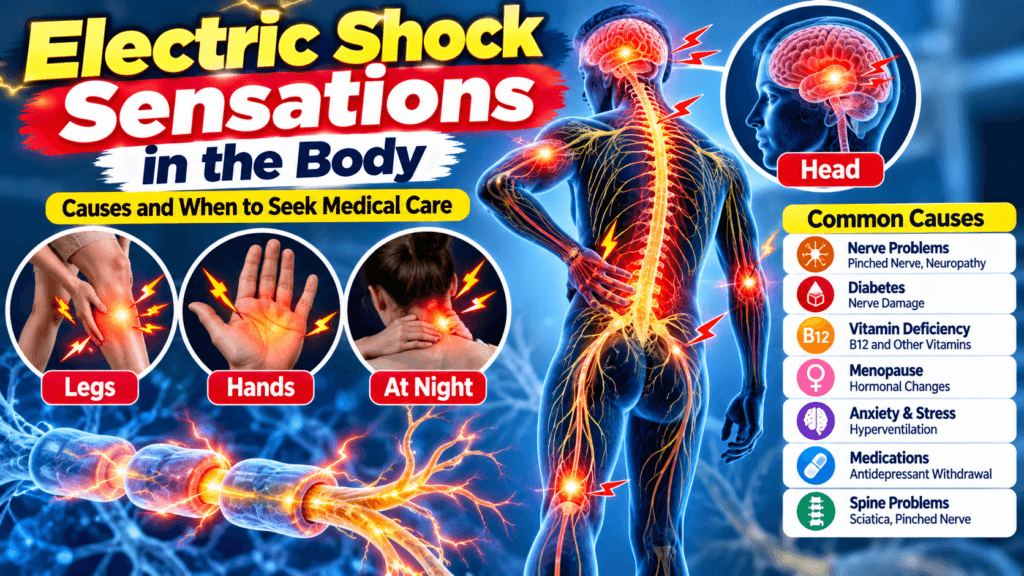
Have you ever felt a sudden sensation that seemed like a tiny electric shock traveling through your body? You may describe it as a zap, jolt, buzzing feeling, shock-like pain, or a brief electrical sensation under the skin.
These sensations are often related to abnormal nerve signals and may fall under a group of symptoms called paresthesia. Paresthesia can include tingling, burning, prickling, numbness, pins-and-needles, or electric shock-like sensations.
In many cases, an occasional electric shock sensation is temporary and harmless. For example, pressure on a nerve from sitting or sleeping in one position can cause a brief sensation that disappears after you move.
However, frequent or persistent electric shock sensations can sometimes be associated with nerve compression, peripheral neuropathy, vitamin deficiencies, diabetes, migraine, hormonal changes, medication withdrawal, or neurological conditions.
This guide explains what electric shock sensations may feel like, common causes, where they can occur, and when you should talk with a healthcare professional.
What Are Electric Shock Sensations?
Electric shock sensations are unusual feelings that may seem like a brief electrical jolt, zap, spark, vibration, or current moving through part of the body.
The medical term paresthesia describes abnormal sensations such as tingling, prickling, burning, numbness, pins and needles, or similar sensations. Electric shock-like pain can also occur with neuropathic pain, which develops when nerves are irritated or damaged.
The sensation does not necessarily mean that your body has actually been exposed to electricity.
This distinction is important. A person who feels an unexplained “electric shock” inside the body is experiencing a sensory symptom. That is different from an actual electrical injury caused by touching a live wire, outlet, appliance, lightning, or another electrical source. Actual electrical injuries can damage the heart, muscles, nerves, and other tissues and require appropriate medical evaluation.
What Do Electric Shock Sensations Feel Like?
People describe these sensations in different ways.
You might experience:
- A sudden zap or jolt
- A brief electrical pulse
- Burning or prickling
- Pins and needles
- Buzzing or vibrating
- Shooting pain
- A sensation that travels along an arm or leg
- A quick shock-like feeling in the head
- Numbness followed by tingling
- Repeated brief “zaps”
The sensation may last only a few seconds or may occur repeatedly.
The location and pattern can provide clues about the underlying cause.
For example, a shock-like sensation traveling from the lower back into the leg may occur with an irritated nerve or sciatica, while electric shock-like facial pain can occur with trigeminal neuralgia.
What Causes Electric Shock Sensations in the Body?
There are many possible causes of electric shock sensations in the body. Some are temporary and relatively harmless, while others require medical evaluation.
Temporary Nerve Compression
One of the most common explanations for temporary tingling or shock-like sensations is pressure on a nerve.
Sitting on a leg, crossing your legs for a long time, sleeping on your arm, or maintaining an awkward position can temporarily interfere with nerve signaling.
The sensation usually improves after you change position and restore normal pressure and circulation.
Pinched Nerve
A compressed or irritated nerve can produce shooting, burning, tingling, numbness, or electric shock-like sensations.
A pinched nerve in the neck may cause symptoms traveling into the shoulder, arm, or hand. A nerve problem in the lower back can cause sensations extending into the buttock, thigh, calf, or foot.
Sciatica
Sciatica occurs when nerves or nerve roots in the lower back become irritated.
Some people experience burning pain, pins and needles, numbness, or electric shock-type sensations that travel down the leg.
Peripheral Neuropathy
Peripheral neuropathy occurs when nerves outside the brain and spinal cord become damaged or dysfunctional.
Symptoms can include:
- Tingling
- Numbness
- Burning
- Stabbing pain
- Electric shock-like pain
- Muscle weakness
- Balance problems
Diabetes is one of the most common causes of peripheral neuropathy, but many other conditions can also damage peripheral nerves.
Vitamin Deficiency
Certain vitamin deficiencies can contribute to abnormal nerve sensations.
Vitamin B12 deficiency is one recognized cause of numbness and tingling. Other B-vitamin deficiencies can also affect the nervous system.
If unexplained sensations continue, a healthcare professional may consider whether nutritional deficiencies or other metabolic problems should be investigated.
Electrolyte Problems
Abnormal levels of minerals such as calcium, potassium, or sodium can cause abnormal sensations, including tingling and numbness.
Diabetes
High blood sugar over time can damage peripheral nerves.
Diabetic neuropathy commonly affects the feet and legs first, although other nerves can also be affected. Electric shock-like pain, burning, tingling, and numbness can occur.
Migraine
Migraine can sometimes be associated with sensory disturbances, including tingling or other unusual sensations.
If sensory symptoms are new, severe, prolonged, or different from your usual migraine pattern, medical evaluation may be appropriate.
Anxiety and Hyperventilation
Anxiety can cause physical symptoms, including tingling and numbness.
During anxiety or panic, some people begin breathing rapidly or deeply. Hyperventilation can lower carbon dioxide levels and contribute to dizziness, numbness, tingling, and muscle spasms, particularly around the mouth and in the hands and feet.
This does not mean that every electric shock sensation is caused by anxiety. New or persistent symptoms should not automatically be attributed to stress without considering other possible causes.
Electric Shock Sensations and Nerve Problems
Nerve problems are an important cause of electric shock sensations.
Healthy nerves carry electrical signals between the body and brain. When a nerve is compressed, irritated, inflamed, or damaged, its signaling can become abnormal.
This can create sensations that feel like:
- Electric shocks
- Burning
- Shooting pain
- Tingling
- Pins and needles
- Numbness
Peripheral neuropathy, radiculopathy, neuralgia, and other nerve disorders can produce these symptoms.
Persistent paresthesia should be evaluated, especially when it occurs frequently or is accompanied by weakness, balance problems, or loss of function.
Electric Shock Sensations in Legs
Electric shock sensations in the legs can have several causes.
Possible explanations include:
- Sciatica
- Pinched nerves in the lower back
- Peripheral neuropathy
- Diabetes-related nerve damage
- Vitamin deficiencies
- Electrolyte abnormalities
- Temporary nerve compression
- Spinal conditions
A sensation that travels from the lower back or buttock down the leg may suggest irritation of a nerve root or the sciatic nerve.
Leg symptoms should be evaluated sooner if they are associated with significant weakness, difficulty walking, loss of bladder or bowel control, or numbness around the groin or buttocks.
Electric Shock Sensations in Hands
Electric shock sensations in the hands can occur when nerves in the wrist, elbow, neck, or arm are irritated or compressed.
Potential causes include:
- Carpal tunnel syndrome
- Cubital tunnel syndrome
- Cervical nerve compression
- Peripheral neuropathy
- Diabetes
- Vitamin deficiencies
- Temporary pressure on a nerve
If symptoms repeatedly affect the same fingers or occur with hand weakness or dropping objects, a healthcare professional may need to evaluate the nerves supplying the hand.
Electric Shock Sensations in Head
Electric shock sensations in the head can have several possible explanations.
Some people describe brief head “zaps” during antidepressant withdrawal. NICE lists altered sensations, including electric shock sensations, among possible antidepressant withdrawal symptoms, particularly when medication is stopped abruptly or doses are missed.
Other neurological conditions can also produce shock-like sensations.
For example, trigeminal neuralgia causes sudden, severe electric-shock-like pain affecting areas of the face supplied by the trigeminal nerve.
A new or severe shock-like sensation in the head accompanied by weakness, speech problems, vision changes, confusion, or a sudden severe headache requires urgent medical assessment.
Electric Shock Sensations at Night
Some people notice electric shock sensations more often at night.
Possible reasons include:
- Sleeping in a position that compresses a nerve
- Back or neck positioning
- Restless or irritated nerves
- Peripheral neuropathy
- Medication effects or withdrawal
- Anxiety
- Menopausal symptoms
- Increased awareness of sensations when the body is quiet
If the sensation repeatedly wakes you from sleep, becomes more frequent, or occurs with numbness or weakness, discuss it with a healthcare professional.
Electric Shock Sensations and Menopause
Hormonal changes during perimenopause and menopause can be associated with unusual sensory symptoms.
Some people report brief electric-shock-like sensations, sometimes described as a quick snapping or buzzing feeling beneath the skin. Menopause is also listed among conditions that can be associated with paresthesia.
These sensations may occur alongside other menopause symptoms such as hot flashes, night sweats, sleep changes, and menstrual changes.
However, menopause should not automatically be assumed to be the cause of new neurological symptoms. Persistent or unusual symptoms should be discussed with a healthcare professional.
Can Anxiety Cause Electric Shock Sensations?
Yes, anxiety can contribute to abnormal sensations, particularly when it causes rapid breathing or hyperventilation.
Hyperventilation can cause numbness and tingling in the hands, feet, or around the mouth. Panic attacks can also produce tingling or numbness.
However, anxiety is only one possible explanation.
If electric shock sensations are persistent, occur without an obvious trigger, or are accompanied by weakness, balance problems, significant numbness, or other neurological symptoms, it is important to have the symptoms evaluated rather than assuming anxiety is responsible.
Brain Zaps and Antidepressant Withdrawal
“Brain zaps” are a common informal term for brief electric shock-like sensations in the head or body.
They can occur during antidepressant withdrawal, particularly when an antidepressant is stopped suddenly, doses are missed, or the dose is reduced too quickly.
Also Read : GLP-1 Weight Loss: How It Works, Benefits, Side Effects & What to Know
NICE specifically lists electric shock sensations as a possible antidepressant withdrawal symptom. The NHS also describes an electric-shock feeling in the head as a possible withdrawal symptom.
If you want to stop an antidepressant, do not stop it abruptly without discussing the plan with the prescriber. NICE recommends gradual dose reduction for many antidepressants.
Fibromyalgia and Electric Shock Sensations
People with fibromyalgia may experience widespread pain and unusual sensory symptoms.
Electric shock-like pain is not specific to fibromyalgia, however. Similar sensations can occur with peripheral neuropathy, nerve compression, migraine, vitamin deficiencies, anxiety, medication withdrawal, and several neurological conditions.
Therefore, persistent electric shock sensations should not automatically be attributed to fibromyalgia without appropriate clinical evaluation.
How Are Electric Shock Sensations Diagnosed?
There is no single test that explains every electric shock sensation.
A healthcare professional will usually start by asking about:
- Where the sensation occurs
- How long it lasts
- How frequently it happens
- Whether it travels along a specific path
- Whether there is numbness or weakness
- Whether back or neck pain is present
- Current medications
- Diabetes history
- Vitamin or nutritional issues
- Alcohol or substance exposure
- Recent injuries
- Other neurological symptoms
Depending on the symptoms, testing may include blood tests, neurological examination, imaging such as MRI, or nerve conduction studies and electromyography.
Nerve conduction studies are commonly used to evaluate nerve damage or disorders affecting nerves and muscles.
Treatment for Electric Shock Sensations
Treatment depends on the underlying cause.
For temporary symptoms caused by body position, changing position and removing pressure from the affected nerve may be enough.
When symptoms are caused by a medical condition, treatment may involve addressing that condition.
Examples include:
- Improving blood sugar control in diabetes
- Treating vitamin deficiencies
- Managing nerve compression
- Treating underlying neurological conditions
- Adjusting medications when medically appropriate
- Treating migraine
- Addressing anxiety or hyperventilation
- Using medications specifically prescribed for neuropathic pain when appropriate
There is no single treatment that works for every cause of electric shock sensations.
When Should You Seek Medical Care?
Make an appointment with a healthcare professional if electric shock sensations:
- Keep coming back
- Become more frequent
- Last for a long time
- Affect the same area repeatedly
- Interfere with sleep or daily activities
- Occur with numbness
- Occur with muscle weakness
- Affect your balance
- Are associated with persistent pain
Persistent paresthesia can sometimes indicate an underlying nerve, metabolic, circulatory, or neurological problem.
When Is an Electric Shock Sensation an Emergency?
Seek emergency medical care if the sensation occurs suddenly with symptoms such as:
- Sudden weakness or numbness on one side of the body
- Facial drooping
- Difficulty speaking or understanding speech
- Sudden vision loss or major vision changes
- Severe sudden headache
- Loss of coordination
- Severe difficulty walking
- New loss of bladder or bowel control
- Severe rapidly worsening weakness
Sudden facial weakness, arm weakness or numbness, and speech problems can be signs of stroke and require emergency evaluation.
If the sensation occurred after actual contact with electricity, that is a different situation. Electrical injuries can cause internal damage even when the skin injury appears minor, so medical assessment may be necessary.
