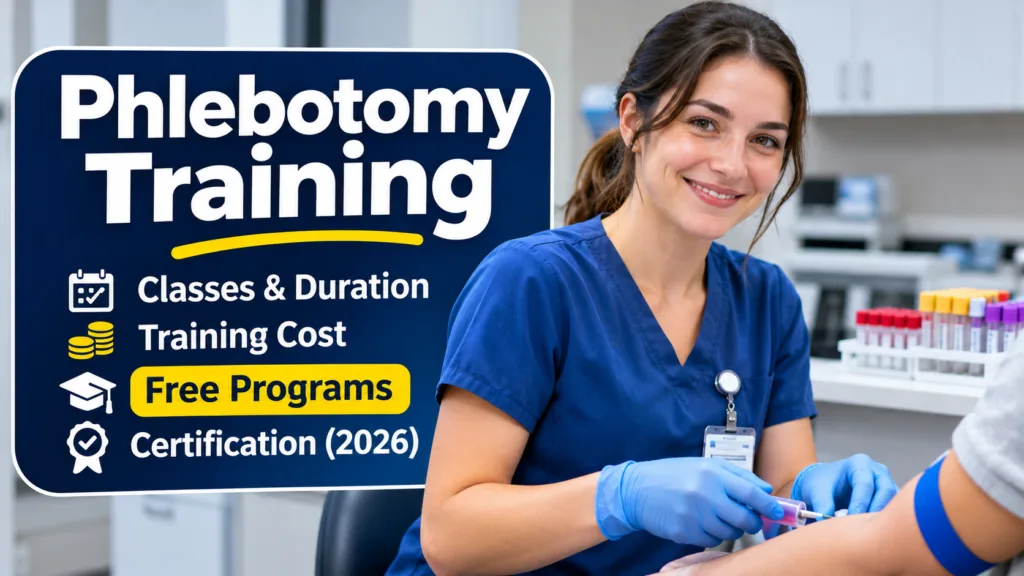
Phlebotomy training is a popular entry point for people who want to start a healthcare career without spending several years in college. Phlebotomists are trained professionals who collect blood samples from patients for medical testing, transfusions, and laboratory analysis. Most training programs combine classroom lessons, practical skills, and supervised clinical experience to prepare students for entry-level positions. If you are searching for phlebotomy training near me, free phlebotomy training, or online phlebotomy courses, understanding program requirements, tuition costs, and certification options can help you choose the right path. This guide explains how to become a phlebotomist in the United States in 2026.
What Is Phlebotomy Training?
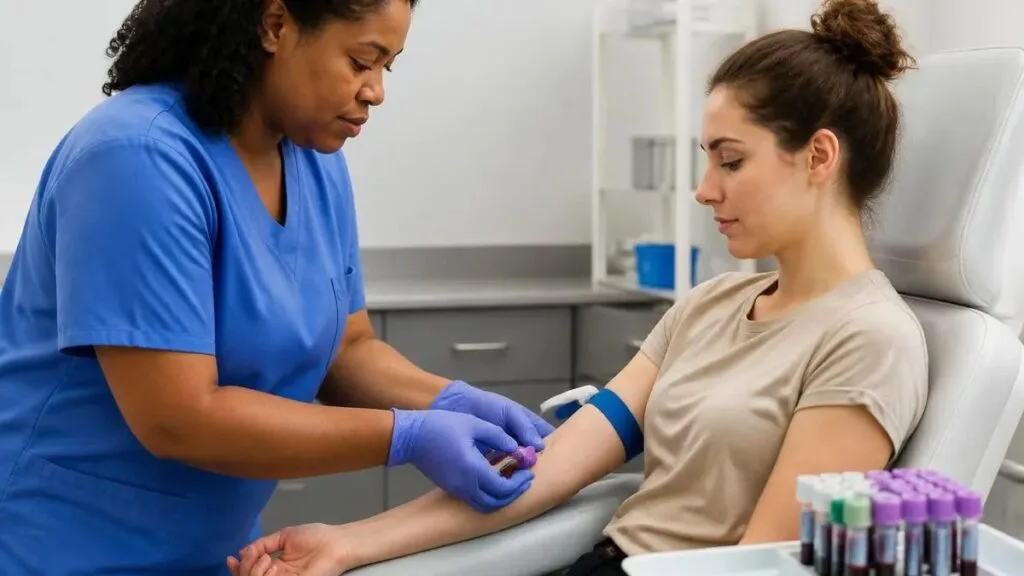
Phlebotomy training is a healthcare education program that teaches students how to safely collect, handle, label, and process blood specimens. Students learn proper venipuncture techniques, patient identification, infection prevention, and blood collection procedures under professional supervision. These skills are important because accurate blood collection helps laboratories produce reliable test results and supports medical diagnosis. After completing an appropriate training program, graduates may qualify to pursue a professional certification examination, depending on the requirements of their state and chosen credentialing organization.
How Long Is Phlebotomy Training?
One of the most common questions from prospective students is, how long is phlebotomy training? Most certificate programs can be completed in a few weeks to several months, depending on the school, class schedule, and clinical requirements. Full-time programs generally take less time than evening or weekend courses, while some community colleges offer longer programs with additional laboratory instruction. There is no single nationwide training duration because states and employers may have different educational and practical experience requirements.
| Training Format | Typical Duration |
|---|---|
| Accelerated phlebotomy classes | A few weeks |
| Full-time training program | Approximately 4–12 weeks |
| Part-time training | Approximately 2–6 months |
| Community college certificate | Varies by institution |
| Online theory with in-person practice | Depends on the program |
For example, MaineHealth’s NorDx Phlebotomy School offers a six-week training program, while Central Alabama Community College offers a 10-week certificate program. These examples show how program duration can differ between training providers. Always check the current schedule and clinical requirements before enrolling.
Phlebotomy Training Requirements: Who Can Enroll?
Phlebotomy training requirements vary by state and educational institution, but many entry-level programs are designed for people with little or no previous healthcare experience. Applicants may need a high school diploma or GED, meet a minimum age requirement, and complete a background check or health screening. Some schools also require immunization records, drug screening, and basic English communication skills. Before applying, contact the training provider to confirm its admission criteria and whether completing the course makes you eligible for a recognized certification examination.
Common admission requirements may include:
- High school diploma or GED, if required by the program.
- Minimum age requirement, often 18 years.
- Government-issued identification.
- Criminal background check.
- Drug screening, if required.
- Health screening or immunization records.
- Basic reading, writing, and communication skills.
What Do You Learn in a Phlebotomy Training Program?
A phlebotomy training program combines classroom education with practical instruction to prepare students for real patient-care situations. Students learn how the circulatory system works, how to identify suitable blood collection sites, and how to select appropriate collection equipment. They also practice patient communication, specimen labeling, infection control, and safe needle disposal. Clinical experience is particularly important because students need to develop confidence and demonstrate proper blood collection techniques before entering the workforce.
Radiology Technician Salary in the US: Pay by State, Specialty, and Setting (2026)
| Training Subject | What You Learn |
|---|---|
| Human anatomy | Circulatory system and blood vessels |
| Venipuncture | Collecting blood from veins |
| Capillary puncture | Collecting blood through skin punctures |
| Patient identification | Confirming patient identity and test information |
| Infection control | Hand hygiene and standard precautions |
| Blood collection equipment | Needles, tubes, tourniquets, and collection devices |
| Specimen handling | Labeling, processing, and transporting samples |
| Patient communication | Explaining procedures and reducing anxiety |
| Safety procedures | Sharps disposal and workplace safety |
Phlebotomy Training Cost: How Much Does It Cost?
The phlebotomy training cost depends on the school, state, course duration, and included services. Community colleges and public technical schools may offer more affordable programs than some private career institutions. Students should also consider expenses beyond tuition, such as textbooks, uniforms, laboratory supplies, background checks, health screenings, and certification examination fees. For example, Central Alabama Community College lists a total program cost of $1,700, including tuition, books, supplies, and the certification exam. Pima Community College lists an estimated 2026–27 program cost of $1,590.50, although additional expenses may apply.
| Cost Component | What to Check |
|---|---|
| Tuition | Full course enrollment fee |
| Books and materials | Textbooks and study resources |
| Uniforms | Scrubs and clinical clothing |
| Background check | Screening and fingerprinting |
| Health requirements | Drug screening and immunizations |
| Certification exam | Examination and application fees |
Before paying for a course, request a complete cost breakdown from the school. Compare at least two or three programs and confirm that their training meets the requirements of your intended state and employer.
Free Phlebotomy Training: Can You Learn Without Paying?
Yes, free phlebotomy training opportunities are available in some parts of the United States, although availability depends on local healthcare employers, workforce development organizations, and funding programs. Hospitals, diagnostic laboratories, and healthcare systems sometimes sponsor training for candidates who agree to work for them after completing the program. Some opportunities cover tuition, books, and clinical training, while others also provide an hourly wage during the training period. Students should carefully review employment commitments, eligibility criteria, and program availability before applying.
Hospitals That Offer Free Phlebotomy Training
Some hospitals and healthcare organizations offer employer-sponsored or earn-while-you-learn programs that reduce the financial burden of professional training. These opportunities may require applicants to be hired as trainees and agree to work for the organization after completing the course. Program availability, payment, and admission requirements can change, so applicants should check the official career pages before submitting an application.
Examples of healthcare training opportunities include:
| Healthcare Provider | Training Opportunity | Program Details |
|---|---|---|
| MaineHealth / NorDx | Paid phlebotomy training | Six-week program with paid training |
| Intermountain Health | Paid phlebotomy training | Four-week program with training wage |
| Providence | Earn-to-Learn phlebotomy program | Training costs waived under qualifying work agreement |
| George Washington University Hospital | Paid training partnership | Online modules and paid workplace training |
These programs have different eligibility rules and may not be accepting applications throughout the year. For example, MaineHealth describes a six-week paid training program, while Intermountain Health advertises four weeks of training with a training wage. Check the current official program details before relying on these opportunities.
Free Phlebotomy Training Near Me: Where to Look
If you are searching for free phlebotomy training near me, start with hospitals, local diagnostic laboratories, community colleges, and workforce development centers in your area. Some employers advertise paid training positions instead of traditional student enrollment, which means you may earn money while learning. You can also contact your local American Job Center to ask whether eligible workforce funding can support an approved phlebotomy course. Availability depends on your location, funding, and individual eligibility.
Useful places to search include:
- Local hospitals and healthcare systems.
- Diagnostic laboratories and blood collection centers.
- Community colleges and technical schools.
- State and local workforce development agencies.
- American Job Centers.
- Healthcare apprenticeship and employer-sponsored programs.
Red Cross Phlebotomy Training: Is It Free?
Many students search for Red Cross phlebotomy training because the American Red Cross is a well-known healthcare and emergency training organization. However, it is important to understand that the American Red Cross’s official Training Services currently lists programs such as First Aid, CPR/AED, and Basic Life Support (BLS), rather than a general phlebotomy technician training program. Therefore, you should not assume that Red Cross offers a free phlebotomy certification course. If you need phlebotomy education, look for state-approved or employer-recognized training programs and verify their practical clinical requirements.
American Red Cross Phlebotomy Training: What Should You Know?
The American Red Cross offers several healthcare-related training courses, including BLS and CPR, which may be useful additional qualifications for healthcare workers. However, these courses are not a substitute for a complete phlebotomy training program involving blood collection techniques and supervised clinical practice. Before enrolling in any course advertised as American Red Cross phlebotomy training, confirm directly with the organization that the specific course is genuine and currently available. Avoid paying websites that use the Red Cross name without providing verifiable program information.
Phlebotomy Training Online: Can You Become a Phlebotomist From Home?
Phlebotomy training online can be useful for learning medical terminology, anatomy, infection control, specimen handling, and other theoretical subjects. However, watching online lessons alone does not provide the hands-on experience needed to perform blood collection safely. A complete training pathway generally includes supervised practice with collection equipment and appropriate clinical experience. Some schools offer hybrid programs that combine online classroom instruction with in-person laboratory and clinical sessions. Before registering, confirm that the online course meets the requirements of your state and the certification organization you plan to use.
Phlebotomy Training Schools Near Me: How to Choose the Right School
Finding reliable phlebotomy training schools near me requires more than comparing tuition prices. You should check whether the school provides hands-on instruction, supervised clinical experience, and preparation for a recognized certification examination. Some states have specific training approval requirements, so a program that is acceptable in one state may not meet the rules in another. Ask about the number of venipunctures students must complete, the availability of clinical placements, and the credentials of instructors before making your decision.
Before choosing a school, compare:
- State approval or accreditation requirements.
- Total tuition and additional fees.
- Classroom and laboratory training hours.
- Supervised clinical experience.
- Certification examination eligibility.
- Job placement or employer partnerships.
- Student reviews and graduation outcomes.
Phlebotomy Training Specialists: What Are They?
Phlebotomy Training Specialists is a name prospective students may encounter when searching for phlebotomy training providers in the United States. When considering this or any private phlebotomy school, review the specific campus, course schedule, tuition, practical training arrangements, and certification examination eligibility. Do not assume that every location has identical approval status or that completing a private course automatically qualifies you for employment in every state. Always verify the school’s current information and state-specific requirements before paying enrollment fees.
How to Become a Certified Phlebotomy Technician in the USA
Becoming a phlebotomy technician generally involves completing appropriate training, gaining practical experience, and meeting the eligibility requirements of a professional certification organization or state regulator. Certification requirements differ between organizations and states, so students should choose their training pathway based on the jobs and locations they want to pursue. California, for example, has specific state certification requirements, including approved training, documented practical experience, and an examination from an approved certifying organization.
Step 1: Choose an Appropriate Training Program
Search for a recognized phlebotomy training program in your state. Compare community colleges, technical schools, private institutions, and employer-sponsored training opportunities. Confirm that the program includes the required classroom and clinical components.
Step 2: Complete Classroom and Practical Training
Study anatomy, blood collection techniques, patient identification, infection prevention, and specimen handling. Participate in supervised laboratory practice and clinical experience to develop safe and accurate blood collection skills.
Step 3: Meet Clinical Experience Requirements
Complete the required practical procedures and document your experience according to your program and state rules. Some states specify minimum numbers of successful venipunctures and skin punctures, so check these requirements before completing training.
Step 4: Apply for a Certification Examination
Depending on your eligibility, you may apply for an examination through organizations such as the American Society for Clinical Pathology (ASCP), National Healthcareer Association (NHA), or American Medical Technologists (AMT). Each organization has its own examination and eligibility rules.
Step 5: Apply for Jobs and Maintain Your Credentials
After meeting the necessary training and certification requirements, apply to hospitals, medical laboratories, outpatient clinics, and blood donation centers. Keep your credentials current and complete any continuing education or renewal requirements that apply to your certification.
Phlebotomy Training in NYC: What Are Your Options?
People searching for phlebotomy training NYC can explore community colleges, private career schools, and healthcare training institutions throughout New York City. Before enrolling, check whether the program includes practical blood collection experience and prepares students for the credentials requested by local employers. New York requirements should be checked separately from those in states such as California, where specific state phlebotomy certification rules apply. Compare program costs, schedules, clinical placements, and employment support before choosing a school.
Phlebotomy Training Utah: Programs and Requirements
Students interested in phlebotomy training Utah can look for programs through community colleges, technical schools, healthcare employers, and laboratory organizations. Training options and employer preferences may differ between Salt Lake City, Provo, Ogden, and other parts of the state. Before enrolling, check whether the program offers supervised blood collection practice and prepares graduates for a recognized national certification examination. You should also contact potential employers to understand which credentials and practical skills they expect from entry-level applicants.
Phlebotomy Salary and Job Outlook in the USA
Completing phlebotomy training can open opportunities in hospitals, diagnostic laboratories, physicians’ offices, outpatient care centers, and blood donation facilities. According to the U.S. Bureau of Labor Statistics, the median annual wage for phlebotomists was $45,230 in May 2025, equivalent to approximately $21.75 per hour. Actual earnings depend on experience, employer, location, shift schedule, and qualifications. The BLS also projects employment of phlebotomists to grow 7% from 2025 to 2035, with approximately 18,000 openings expected annually.
| Salary Measure | Phlebotomists |
|---|---|
| Median annual wage | $45,230 |
| Median hourly wage | $21.75 |
| Lowest 10% earned less than | $35,780 |
| Highest 10% earned more than | $58,780 |
| Projected job growth (2025–2035) | 7% |
These are national occupational statistics, not guaranteed starting salaries. Pay can vary significantly depending on the state, healthcare facility, and level of experience.
This article is for educational and informational purposes only and is not a substitute for professional medical advice, diagnosis, or treatment. Always consult a qualified healthcare professional for advice about your individual health.