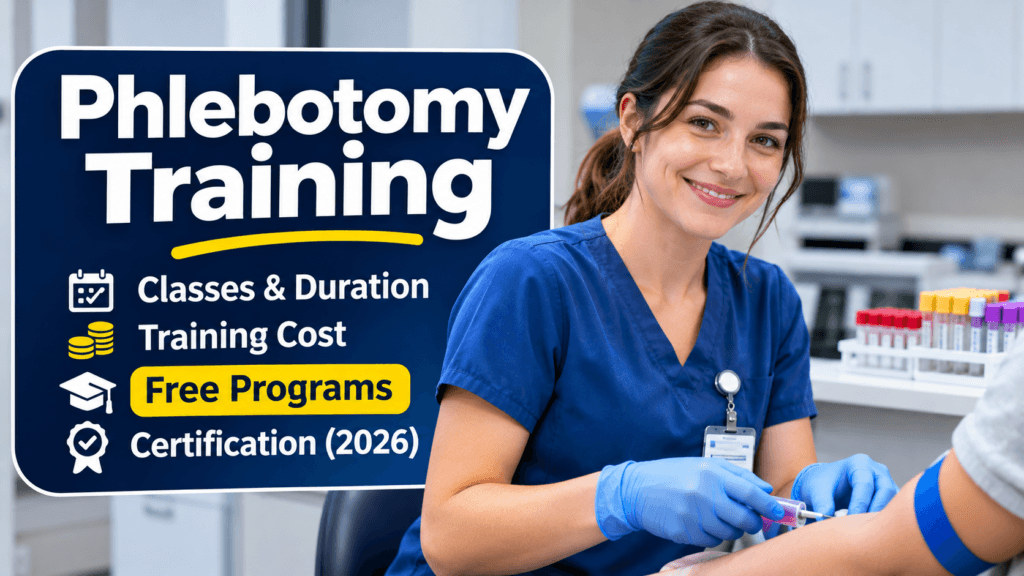
Searching for phlebotomy classes near me is a great first step if you want to start a healthcare career without spending several years in college. Phlebotomy technicians are trained healthcare professionals who collect blood samples for laboratory testing, medical diagnosis, and patient care. Training programs are available through community colleges, technical schools, private healthcare institutions, and some hospital-sponsored programs across the United States. Whether you are looking for affordable phlebotomy classes, free training near you, or a short certification program, this guide will help you understand how to find the right local course in 2026.
How to Find Phlebotomy Classes Near Me
Finding phlebotomy classes near you starts with searching local colleges, healthcare training centers, hospitals, and technical schools. Use Google Maps or Google Search with your city name or ZIP code to identify nearby training providers. Compare their course schedules, tuition fees, practical training arrangements, and certification eligibility before applying. You should also contact local hospitals and diagnostic laboratories because some employers offer paid training or help candidates obtain the practical experience needed for entry-level positions.
Here are some useful ways to find local training:
- Search Google for “phlebotomy classes near me” along with your ZIP code.
- Check nearby community colleges and technical schools.
- Visit local hospital and healthcare system career pages.
- Contact diagnostic laboratories and outpatient clinics.
- Search the National Healthcareer Association (NHA) and ASCP websites for certification information.
- Ask your local American Job Center about eligible workforce-funded training programs.
When comparing schools, prioritize programs that include supervised venipuncture practice and clinical experience rather than choosing a course based only on its advertised duration or low price.
What Are Phlebotomy Classes?
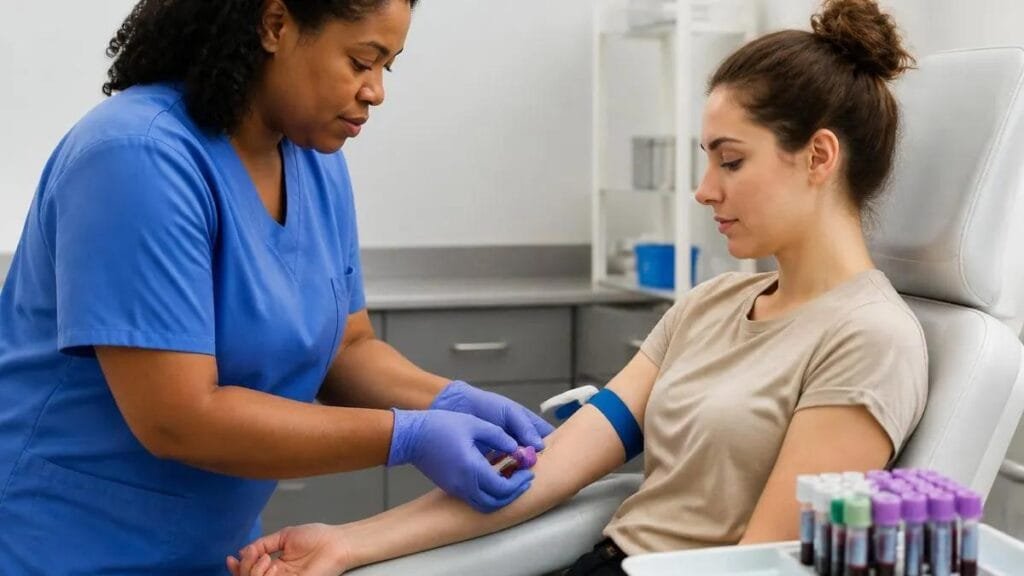
Phlebotomy classes teach students how to collect blood safely and accurately from patients using appropriate medical equipment. The training covers venipuncture, capillary puncture, patient identification, specimen labeling, infection prevention, and blood sample handling. Students also learn how to communicate with patients, prepare collection equipment, and follow workplace safety procedures. Most career-focused programs combine classroom instruction with practical laboratory training and supervised clinical experience.
Types of Phlebotomy Classes Available Near You
When searching for phlebotomy training near me, you may find several types of programs depending on your location and educational background. Community colleges usually provide structured certificate courses, while private career schools may offer accelerated training schedules. Hospitals and healthcare employers sometimes provide paid or employer-sponsored programs for selected candidates. Choosing the right format depends on your budget, available study time, and the certification requirements in your state.
1. Community College Phlebotomy Classes
Community colleges are a popular option for students looking for affordable phlebotomy classes. These institutions often provide structured coursework, laboratory instruction, and clinical training through healthcare partners. Some colleges also offer financial aid or workforce funding to eligible students. Before enrolling, check the total program cost, admission requirements, and whether the course prepares you for a recognized certification examination.
2. Phlebotomy Classes at Technical Schools
Technical schools and career training institutions offer programs designed to prepare students for entry-level healthcare positions. These courses may include anatomy, blood collection procedures, specimen handling, infection control, and hands-on practice. Some programs offer evening or weekend schedules for students who are already working. Verify the school’s approval status and clinical arrangements before paying tuition.
Phlebotomy Training in the USA: Classes, Cost, Free Programs, and Certification (2026)
3. Hospital-Based Phlebotomy Training
Some hospitals and healthcare systems provide phlebotomy training through employment-based programs or partnerships with educational institutions. These opportunities can be attractive because selected candidates may receive paid training, tuition assistance, or a pathway to employment. However, availability and eligibility vary by employer and location. Check hospital career pages for terms such as “phlebotomy trainee,” “paid phlebotomy training,” and “phlebotomy apprenticeship.”
4. Private Phlebotomy Training Programs
Private phlebotomy schools may offer flexible schedules, shorter courses, and smaller class sizes. Some provide accelerated programs for students who want to complete training quickly. However, tuition can vary significantly, and not every private course meets the requirements of every state or certification organization. Confirm the program’s clinical hours, practical blood collection requirements, and certification eligibility before registering.
How Much Do Phlebotomy Classes Cost Near Me?
The cost of phlebotomy classes near you depends on the type of school, location, course length, and clinical training included. Public community colleges are often less expensive than private career schools, particularly for students who qualify for in-state tuition. In addition to tuition, you may need to pay for textbooks, uniforms, background checks, immunizations, laboratory supplies, and certification examinations. Always ask the school for a complete cost breakdown before enrolling.
For example, Pima Community College in Arizona lists an estimated 2026–2027 phlebotomy certificate program cost of $1,590.50 based on in-state tuition. Manchester Community College in New Hampshire lists a six-week phlebotomy certification training program costing $1,500, with some additional expenses potentially applying.
| Training Provider | Program | Published Cost |
|---|---|---|
| Pima Community College, Arizona | Phlebotomy Certificate | $1,590.50 |
| Manchester Community College, New Hampshire | Phlebotomy Technician | $1,500 |
These are individual school examples, not nationwide average prices. Your actual tuition may differ depending on residency, financial aid, enrollment status, and additional fees.
Free Phlebotomy Classes Near Me: How to Find Them
Free phlebotomy classes near me are an attractive option for people who want to enter healthcare without paying significant upfront tuition. Some hospitals, diagnostic laboratories, workforce development organizations, and community colleges offer funded or employer-sponsored training opportunities. Certain programs cover tuition and learning materials, while others hire trainees and pay them during training. However, free programs may have limited seats, eligibility conditions, or employment commitments.
Try these options when looking for free training:
- Local hospitals offering employer-sponsored phlebotomy training.
- American Job Centers providing workforce development assistance.
- Community colleges participating in state-funded training programs.
- Healthcare employers offering paid trainee positions.
- Nonprofit organizations supporting healthcare career education.
- Workforce Innovation and Opportunity Act (WIOA)-funded training providers.
You can visit the official CareerOneStop American Job Center Finder to locate workforce assistance near your ZIP code. Ask whether phlebotomy training is available through an eligible funding program in your area.
Phlebotomy Classes Online vs. In-Person Training
Online phlebotomy classes can help students learn theoretical subjects such as anatomy, medical terminology, infection control, and specimen handling from home. However, blood collection is a practical clinical skill that requires supervised hands-on training. In-person classes allow students to practice venipuncture, capillary puncture, patient preparation, and safe equipment handling. Some schools offer hybrid courses that combine online lessons with in-person laboratory sessions and clinical placements.
| Feature | Online Classes | In-Person Classes |
|---|---|---|
| Theory lessons | Available | Available |
| Flexible schedule | Often | Depends on school |
| Hands-on practice | Requires separate practical training | Usually included |
| Clinical experience | Must be arranged | Often organized by school |
| Patient interaction | Limited online | Available during practical training |
| Suitable for certification preparation | Depends on program | Depends on program |
If your goal is to become a working phlebotomy technician, choose a program that includes appropriate practical experience rather than relying on online lessons alone.
How Long Do Phlebotomy Classes Take?
The duration of phlebotomy classes varies by school and training format. Some accelerated programs can be completed in approximately six weeks, while other certificate programs may take several months. Part-time courses can take longer because students attend evening or weekend classes. Clinical requirements can also affect the total completion time, especially when students need to arrange supervised blood collection practice.
For example, Manchester Community College in New Hampshire advertises a six-week program with 80 total instructional hours, including 40 hours of classroom instruction and 40 hours of practical training. Always check the current schedule and clinical requirements of your chosen school.
Best Places to Find Phlebotomy Classes in the USA
If you are searching for phlebotomy classes near me, start with established community colleges and training institutions that publish clear program information. The following examples can help you understand the different types of training available across the country.
1. Pima Community College – Arizona
Pima Community College in Tucson offers a Phlebotomy Certificate program through its health sciences division. The program provides an educational pathway for students interested in laboratory and blood collection work. Its published 2026–2027 estimated program cost is $1,590.50 for eligible in-state students, although some additional expenses may vary. Visit the official college website to review admission requirements, schedules, and program availability.
Official website: https://www.pima.edu/academics-programs/degrees-certificates/health-sciences/phlebotomy/
2. Manchester Community College – New Hampshire
Manchester Community College offers a Phlebotomy Technician certification training program with classroom instruction and practical experience. Its listed six-week program includes 80 hours of instruction, divided between classroom learning and supervised practical training. The published program cost is $1,500, although students may need to cover additional expenses such as scrubs, insurance, or examination fees. Check the college’s website for upcoming enrollment dates.
Official website: https://mccnh.edu/program/wdc-phlebotomy-technician-certification/
3. Central Alabama Community College – Alabama
Central Alabama Community College offers phlebotomy education through its healthcare training programs. Students can learn blood collection techniques, specimen handling, and related laboratory procedures. Program costs, schedules, and admission requirements should be confirmed directly with the college because they can change between academic periods.
Official website: https://www.cacc.edu/programs/phlebotomy
4. Kankakee Community College – Illinois
Kankakee Community College offers phlebotomy training listed through the Illinois workforce training system. Its published program information includes classroom instruction, laboratory learning, and career-related preparation. The listed training cost and course duration may change, so students should contact the college before applying.
Official website: https://www.kcc.edu/
Phlebotomy Classes Near Me by State
Training opportunities vary across the United States, and some states have additional rules for phlebotomy education or certification. When searching locally, include your state or city in the search phrase to find programs that match your location. For example, students in California should pay particular attention to state-approved training programs because California has specific requirements for phlebotomist certification.
Some useful location-based searches include:
| Location | Suggested Search Keyword |
|---|---|
| New York | Phlebotomy classes near me NYC |
| California | Phlebotomy classes near me California |
| Texas | Phlebotomy classes near me Texas |
| Florida | Phlebotomy classes near me Florida |
| Arizona | Phlebotomy classes near me Arizona |
| Georgia | Phlebotomy classes near me Georgia |
| Illinois | Phlebotomy classes near me Chicago |
| New Jersey | Phlebotomy classes near me NJ |
| Pennsylvania | Phlebotomy classes near me Philadelphia |
| Utah | Phlebotomy classes near me Utah |
These are search suggestions rather than confirmed lists of available schools. Check the institution’s official website for current enrollment and location information.
Phlebotomy Training Requirements: What Do You Need to Enroll?
Most entry-level phlebotomy programs require applicants to have a high school diploma or GED, although requirements differ between institutions. Some schools also require students to be at least 18 years old and submit health records, immunization documentation, or background checks. Programs involving patient contact may require drug screening and CPR or Basic Life Support certification. Before applying, ask the school for its complete admission checklist.
Common requirements may include:
- High school diploma or GED.
- Minimum age specified by the school.
- Government-issued identification.
- Background check.
- Drug screening, if required.
- Immunization records or health clearance.
- CPR or BLS certification, if required.
- Completion of any required prerequisite courses.
What Will You Learn in Phlebotomy Classes?
A professional phlebotomy course teaches students how to collect blood samples safely while following healthcare standards. Training includes anatomy, circulatory system basics, venipuncture, capillary puncture, patient identification, and infection prevention. Students also learn specimen labeling, blood collection equipment, medical waste disposal, and patient communication. Practical training helps students develop the confidence and technical skills required in clinical environments.
| Course Subject | Skills You Learn |
|---|---|
| Human Anatomy | Understanding veins and the circulatory system |
| Venipuncture | Collecting blood from veins |
| Capillary Puncture | Finger-stick blood collection |
| Patient Care | Preparing and communicating with patients |
| Infection Control | Preventing contamination and infection |
| Specimen Handling | Labeling and processing samples |
| Medical Equipment | Using needles, tubes, and collection devices |
| Safety Procedures | Sharps disposal and workplace safety |
Phlebotomy Certification After Completing Classes
Completing phlebotomy classes is an important step, but a course completion certificate is not necessarily the same as professional certification. Students may pursue credentials through organizations such as the National Healthcareer Association (NHA), American Society for Clinical Pathology (ASCP), or American Medical Technologists (AMT), depending on their education and experience. Each organization has its own eligibility rules, examination requirements, and application process. Some states also have additional licensing or certification requirements.
Radiology Technician Salary in the US: Pay by State, Specialty, and Setting (2026)
For example, the NHA offers the Certified Phlebotomy Technician (CPT) credential. The ASCP offers the Phlebotomy Technician (PBT) credential through specific eligibility pathways. California separately requires applicants to meet state certification requirements and complete training through an approved program.
Before choosing your classes, confirm that graduates are eligible for the certification pathway you intend to follow.
How to Choose the Best Phlebotomy Classes Near You
Choosing the right phlebotomy school is important because the quality of your practical training can influence your readiness for employment. Do not select a program only because it is cheap or promises a very short completion time. Compare the school’s approval status, clinical training, instructor qualifications, examination preparation, and total fees. You should also ask whether the school helps students find clinical placements or employment opportunities after graduation.
Use this checklist before enrolling:
- Verify the school’s approval or accreditation status.
- Confirm that hands-on training is included.
- Ask how many venipunctures and skin punctures students must complete.
- Check whether clinical placements are guaranteed or arranged by the student.
- Compare the complete tuition and additional fees.
- Confirm certification examination eligibility.
- Review the class schedule and upcoming start dates.
- Ask about career assistance and employer partnerships.
Career Opportunities After Phlebotomy Classes
After completing suitable training and meeting the necessary employer and certification requirements, graduates can apply for entry-level phlebotomy positions in different healthcare environments. Phlebotomy technicians work in hospitals, diagnostic laboratories, outpatient clinics, physician offices, and blood donation centers. Some professionals gain additional experience and move into laboratory support or other healthcare roles. Employment opportunities and salary levels vary by location, employer, and experience.
Common workplaces include:
- Hospitals and medical centers.
- Diagnostic and clinical laboratories.
- Outpatient healthcare facilities.
- Physician offices.
- Blood donation centers.
- Community health clinics.
- Reference laboratories.
Final Thoughts on Phlebotomy Classes Near Me
Finding the right phlebotomy classes near you can be the first step toward starting a career in healthcare. Community colleges, technical schools, hospitals, and private training institutions offer different learning pathways depending on your budget and schedule. Before enrolling, compare course costs, practical training hours, clinical experience, and certification eligibility. A program with proper hands-on instruction and recognized training standards can help you build the skills needed to pursue phlebotomy employment in the United States.
This article is for educational and informational purposes only and is not a substitute for professional medical advice, diagnosis, or treatment. Always consult a qualified healthcare professional for advice about your individual health.