

During pregnancy, amniotic fluid plays an essential role in protecting the baby and supporting healthy growth inside the womb. This fluid surrounds the baby throughout pregnancy and helps with movement, lung development, temperature control, and overall safety. When the amount of amniotic fluid becomes lower than normal, the condition is known as Oligohydramnios.
Many pregnant women become anxious after seeing terms like “Low AFI,” “Reduced Liquor,” or “Oligohydramnios” in their ultrasound reports. However, not every case is dangerous. In many situations, low amniotic fluid can be managed successfully with proper monitoring, hydration, nutrition, and medical care.
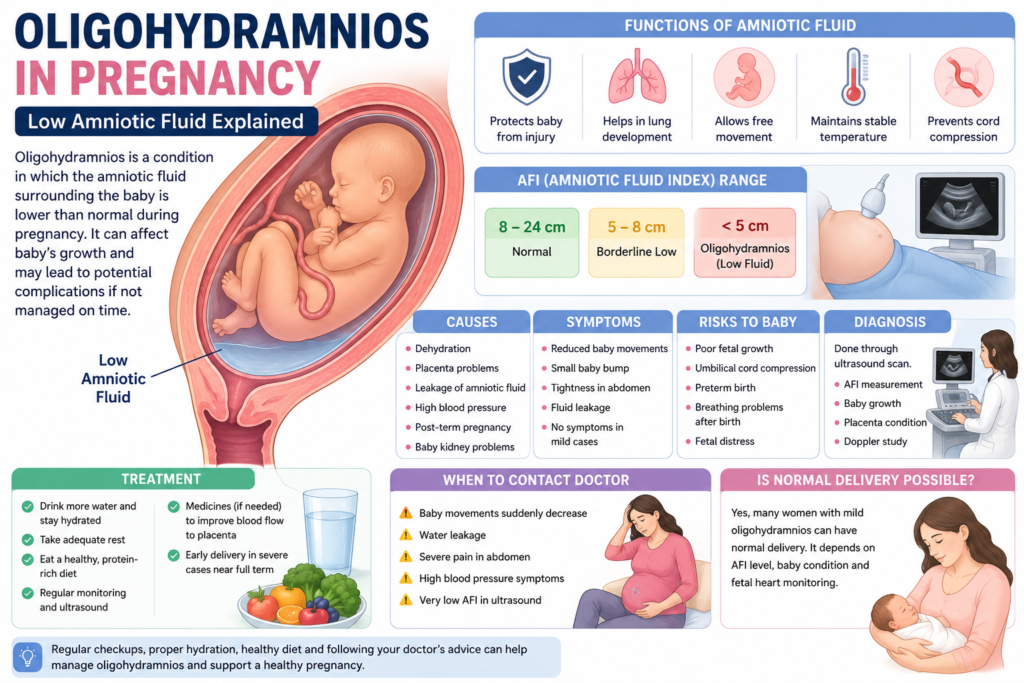
In this article, we’ll explain everything you need to know about oligohydramnios, including its causes, symptoms, AFI range, risks, treatment options, and when medical attention may be necessary.
What is Oligohydramnios?
Oligohydramnios is a pregnancy condition in which the amount of amniotic fluid surrounding the baby becomes lower than normal. Amniotic fluid is extremely important for the baby’s development because it provides protection and allows the baby to move freely inside the uterus.
Doctors usually detect oligohydramnios during an ultrasound scan. The fluid level is measured using AFI (Amniotic Fluid Index) or SDP/SLP (Single Deepest Pocket). If the fluid level is significantly low, the report may mention terms such as:
- Low AFI
- Reduced liquor
- Low amniotic fluid
- Oligohydramnios
The severity of the condition depends on how low the fluid is and how advanced the pregnancy has become.
Why is Amniotic Fluid Important During Pregnancy?
Amniotic fluid is much more than just water around the baby. It plays a major role in maintaining a healthy pregnancy and supporting fetal development.
This fluid helps protect the baby from external pressure and injury inside the womb. It also supports proper lung development, allows free movement for muscle and bone growth, and helps maintain a stable temperature around the baby. In addition, amniotic fluid prevents compression of the umbilical cord, which carries oxygen and nutrients from the mother to the baby.
Also Reads : Ectopic Pregnancy Ultrasound – What It Shows
When the fluid level becomes too low, these important functions may be affected, especially in severe cases.
Normal AFI Range in Pregnancy
AFI, or Amniotic Fluid Index, is used during ultrasound to measure the amount of amniotic fluid.
In most pregnancies, the normal AFI range is considered between 8 cm and 24 cm.
Generally:
- AFI below 5 cm is diagnosed as Oligohydramnios
- AFI between 5–8 cm may be considered borderline low fluid
- AFI above 24 cm is called Polyhydramnios
It’s important to remember that AFI values can vary depending on the stage of pregnancy, so doctors always evaluate the report along with baby growth and other ultrasound findings.
Causes of Oligohydramnios
There are several possible reasons why amniotic fluid levels become low during pregnancy. In many mild cases, dehydration can contribute to reduced fluid levels. Not drinking enough water may affect overall fluid balance in the body.
Placenta-related problems are another common cause. If the placenta is not supplying enough blood and nutrients to the baby, the baby may produce less urine, which can reduce amniotic fluid levels.
Sometimes, there may be a slow leakage of amniotic fluid due to rupture of membranes. Certain medical conditions such as high blood pressure, diabetes, or kidney-related issues in the baby may also lead to oligohydramnios.
Low fluid is also more common in post-term pregnancies, especially after 40 weeks, when amniotic fluid naturally starts decreasing.
Symptoms of Low Amniotic Fluid
Some women with oligohydramnios may not experience any obvious symptoms, and the condition is often detected during routine ultrasound examinations.
However, possible symptoms may include:
- Reduced baby movements
- Tightness in the abdomen
- Smaller baby bump compared to pregnancy week
- Fluid leakage from the vagina
If a pregnant woman notices decreased fetal movement or possible fluid leakage, immediate medical consultation is recommended.
Can Oligohydramnios Harm the Baby?
The effect of oligohydramnios depends on how severe the condition is and at what stage of pregnancy it occurs.
Mild cases often improve with proper hydration and medical monitoring. Many women with mild low fluid go on to have healthy pregnancies and normal deliveries.
Also Read : USG at 6 Weeks Pregnant – What to Expect
However, severe oligohydramnios may increase the risk of complications such as:
- Poor fetal growth
- Umbilical cord compression
- Preterm birth
- Breathing difficulties after birth
- Fetal distress during labor
This is why regular follow-up scans and proper monitoring are extremely important once low amniotic fluid is diagnosed.
How is Oligohydramnios Diagnosed?
Doctors diagnose oligohydramnios through ultrasound imaging. During the scan, they measure the AFI level and assess the overall health of the baby.
Additional evaluations may include:
- Baby growth assessment
- Placenta condition
- Doppler blood flow study
- Fetal heart monitoring
In many cases, repeat ultrasounds are recommended to monitor changes in fluid levels over time.
Treatment for Oligohydramnios
Treatment depends on the severity of the condition and the pregnancy week.
In mild cases, doctors often recommend increasing water intake, taking adequate rest, and following a healthy diet. Proper hydration may help improve amniotic fluid levels in some pregnancies.
Foods rich in protein, fruits, green vegetables, coconut water, and milk may support overall pregnancy health. In certain situations, medications may be prescribed to improve blood circulation to the placenta.
If the pregnancy is near full term and fluid levels become dangerously low, doctors may recommend early delivery for the safety of the baby.
Can Amniotic Fluid Increase Again?
Yes, in many mild and moderate cases, amniotic fluid levels can improve with hydration, rest, nutrition, and regular medical care.
Doctors often advise repeat ultrasound scans to track AFI levels and monitor the baby’s condition. This is why a single low AFI report does not always mean a serious emergency.
When Should You Contact a Doctor?
Medical attention should be taken immediately if:
- Baby movements suddenly decrease
- Water leakage is suspected
- Severe abdominal pain develops
- High blood pressure symptoms appear
- AFI becomes critically low
Early medical evaluation can help prevent complications and improve pregnancy outcomes.
Is Normal Delivery Possible with Oligohydramnios?
Yes, many women with mild oligohydramnios are able to have a normal vaginal delivery.
The mode of delivery depends on several factors, including:
- Baby’s condition
- AFI level
- Pregnancy week
- Fetal heart monitoring during labor
If the baby remains healthy and labor progresses normally, vaginal delivery may still be safely possible.

