
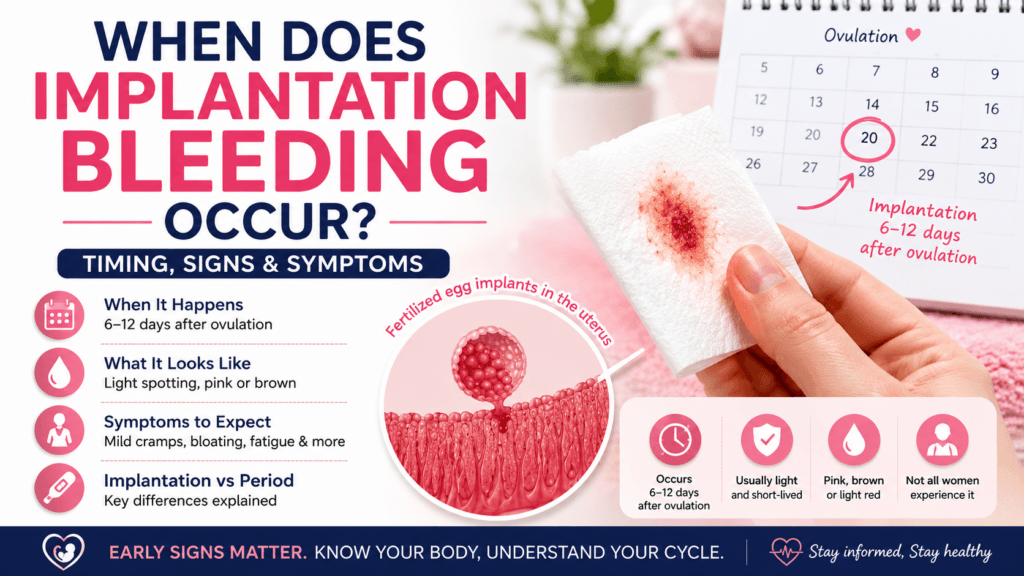
If you’re trying to conceive, noticing light spotting before your expected period can be both exciting and confusing. Many women wonder whether the spotting is an early sign of pregnancy or simply the beginning of their menstrual cycle. One of the most common questions is, “When does implantation bleeding occur?”
Implantation bleeding usually happens 6 to 12 days after ovulation, when a fertilized egg attaches to the lining of the uterus. This light spotting is considered a normal part of early pregnancy for some women. However, not everyone experiences implantation bleeding, and its absence does not mean you’re not pregnant.
Understanding the timing, appearance, and symptoms of implantation bleeding can help you recognize one of the earliest possible signs of pregnancy.
What Is Implantation Bleeding?
Implantation bleeding is light vaginal spotting that may occur when a fertilized egg implants into the uterine lining. After fertilization, the embryo travels through the fallopian tube toward the uterus. Once it reaches the uterus, it attaches to the thick endometrial lining, where it begins to grow and develop.
During this implantation process, tiny blood vessels within the uterine lining may break. This can cause a small amount of blood to leave the body, resulting in light spotting. Unlike a menstrual period, implantation bleeding is usually very light and lasts only a short time.
It is important to know that implantation bleeding is completely normal and is not considered harmful to either the mother or the developing embryo.
When Does Implantation Bleeding Occur?
The most common time for implantation bleeding is 6 to 12 days after ovulation. In women with a regular 28-day menstrual cycle, this usually occurs around day 20 to day 26, just a few days before the expected period.
Also Read : 10 Early Pregnancy Symptoms Most Women Miss
Because implantation occurs shortly before menstruation is expected, many women mistake implantation bleeding for the beginning of their period.
Timeline After Ovulation
Understanding the pregnancy timeline makes implantation easier to understand.
| Event | Typical Timing |
|---|---|
| Ovulation | Day 14 |
| Fertilization | Within 24 hours |
| Embryo travels to uterus | 3–5 days |
| Implantation | 6–12 days after ovulation |
| Implantation bleeding | During implantation |
| Pregnancy test becomes positive | Usually after a missed period |
Since every woman has a different menstrual cycle, implantation bleeding may occur earlier or later depending on the day of ovulation.
Can Implantation Bleeding Occur Before Your Period?
Yes. In fact, implantation bleeding usually appears one to three days before your expected menstrual period. This is why many women initially believe they are starting their period.
Unlike menstrual bleeding, implantation spotting usually remains light and does not become heavier over time.
What Does Implantation Bleeding Look Like?
Many women are unsure whether their spotting is implantation bleeding or menstrual bleeding. While every pregnancy is different, implantation bleeding has several common characteristics.
Color
The color is often:
- Light pink
- Brown
- Rust-colored
- Light red
Brown spotting is especially common because the blood takes longer to leave the uterus and becomes oxidized before it appears.
Flow
Implantation bleeding is much lighter than a menstrual period.
Most women notice only:
- A few drops of blood
- Light spotting while wiping
- Small stains on underwear
- Little or no need for a sanitary pad
Heavy bleeding is generally not considered implantation bleeding.
Duration
Implantation bleeding usually lasts:
- A few hours
- One day
- Occasionally up to two days
Bleeding that continues for several days or becomes progressively heavier is more likely to be menstrual bleeding or another medical condition.
Implantation Bleeding vs. Period
Although implantation bleeding and menstrual bleeding may occur around the same time, they have several important differences.
| Implantation Bleeding | Menstrual Period |
|---|---|
| Very light spotting | Moderate to heavy flow |
| Pink or brown | Bright or dark red |
| Lasts a few hours to 2 days | Usually lasts 3–7 days |
| No large clots | Clots may be present |
| Mild cramping or none | Moderate to severe cramps |
| Does not become heavier | Flow usually increases before decreasing |
If your bleeding becomes heavy enough to fill a pad every few hours, it is less likely to be implantation bleeding.
Common Symptoms That May Occur Along With Implantation Bleeding
Some women notice additional early pregnancy symptoms around the same time as implantation bleeding. These symptoms occur because hormone levels begin to change shortly after implantation.
Common symptoms include:
- Mild lower abdominal cramping
- Breast tenderness
- Fatigue
- Bloating
- Mood changes
- Increased sensitivity to smells
- Nausea developing over the following days
- Frequent urination later in early pregnancy
However, it is important to remember that many women experience no symptoms at all during implantation.
These early signs vary greatly from person to person, and the absence of symptoms does not indicate that a pregnancy is unhealthy.

