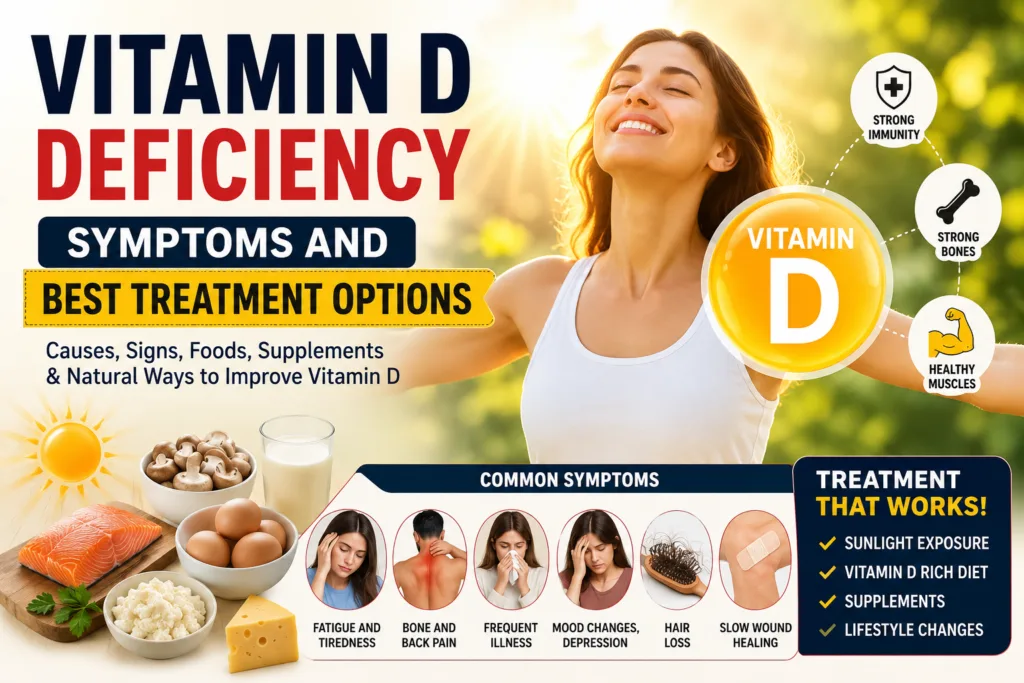

Vitamin D deficiency is a common nutritional problem that can affect bone health, muscles, and overall health. Some people with low vitamin D have no obvious symptoms, while others may develop fatigue, muscle weakness, muscle aches, or bone pain.
Because many vitamin D deficiency symptoms can also occur with other health conditions, symptoms alone cannot confirm a deficiency. A blood test called 25-hydroxy vitamin D [25(OH)D] is commonly used to evaluate vitamin D status when testing is medically appropriate.
Quick Answer: What Are the Symptoms of Vitamin D Deficiency?
Common symptoms and health effects associated with vitamin D deficiency may include:
- Bone pain
- Muscle weakness
- Muscle aches or discomfort
- Weak or fragile bones
- Increased risk of fractures
- Fatigue or feeling tired
However, many people with low vitamin D do not have noticeable symptoms. Severe deficiency in adults can cause osteomalacia, a condition in which bones become softer and weaker.
What Is Vitamin D Deficiency?
Vitamin D is a fat-soluble vitamin that helps the body absorb calcium and supports normal bone health. It also plays roles in muscle, nerve, and immune function.
Vitamin D comes from three main sources:
- Sun exposure
- Food
- Dietary supplements
The body can produce vitamin D when skin is exposed to sunlight. However, relying on increased sun exposure to correct a deficiency is not generally recommended because excessive UV exposure increases the risk of skin damage and skin cancer. Food and supplements can provide safer sources when appropriate.
Symptoms of Vitamin D Deficiency in Adults
1. Bone Pain
Bone pain can occur when vitamin D deficiency becomes significant enough to affect bone mineralization.
Severe vitamin D deficiency in adults can lead to osteomalacia, which causes softened and weakened bones.
2. Muscle Weakness
Muscle weakness is another possible sign of significant vitamin D deficiency.
Some people may notice difficulty with activities that require muscle strength, such as climbing stairs or getting up from a chair.
However, muscle weakness has many possible causes, so it should not automatically be attributed to low vitamin D.
3. Muscle Aches
Some people with vitamin D deficiency may experience muscle aches or discomfort.
Again, this symptom is nonspecific. Problems involving muscles, medications, physical activity, nutrition, and other medical conditions can also cause muscle pain.
4. Fatigue
Fatigue is frequently searched as a possible symptom of low vitamin D, but fatigue by itself does not establish vitamin D deficiency.
Tiredness can be caused by many conditions, including poor sleep, anemia, thyroid disorders, infections, stress, medications, and other nutritional deficiencies.
If persistent fatigue is affecting daily life, a healthcare professional can determine whether testing is appropriate.
5. Weak Bones and Fractures
Long-term vitamin D deficiency can contribute to weakened bones.
Vitamin D helps the body absorb calcium, which is essential for maintaining normal bone structure. Severe deficiency can lead to osteomalacia in adults and can increase problems related to bone weakness.
Low Vitamin D Symptoms in Females
There is no completely different set of vitamin D deficiency symptoms that applies only to women.
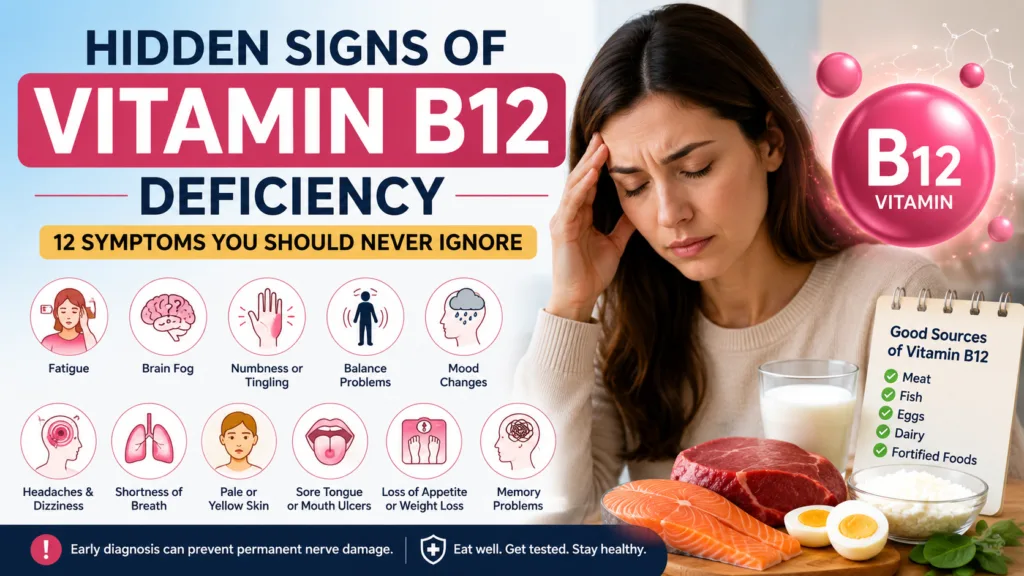
Also Read : Hidden Signs of Vitamin B12 Deficiency: 12 Symptoms You Should Never Ignore
Women with low vitamin D may experience the same symptoms seen in other adults, including:
- Fatigue
- Muscle weakness
- Muscle aches
- Bone pain
- Weak bones
- Increased fracture risk
Women may be particularly concerned about vitamin D because bone health becomes increasingly important with age and around and after menopause.
However, symptoms such as tiredness, hair changes, mood changes, or weight changes are not specific enough to diagnose vitamin D deficiency.
A healthcare professional may recommend testing based on individual risk factors and symptoms.
Can Vitamin D Deficiency Cause Fatigue?
Vitamin D deficiency can be associated with fatigue, but fatigue alone is not a reliable way to diagnose low vitamin D.
If you regularly feel tired, it is important to consider other possible causes rather than assuming you need a vitamin D supplement.
Depending on your symptoms and medical history, your healthcare professional may consider conditions such as anemia, thyroid problems, sleep disorders, nutritional deficiencies, or other health conditions.
What Causes Vitamin D Deficiency?
Several factors can contribute to low vitamin D levels.
Limited Sun Exposure
People who spend little time outdoors may produce less vitamin D through their skin.
However, intentionally increasing sun exposure is not the preferred treatment for vitamin D deficiency because excessive UV exposure can damage the skin and increase skin cancer risk.
Low Vitamin D Intake
Only a limited number of foods naturally contain substantial amounts of vitamin D.
Fatty fish, egg yolks, beef liver, and some mushrooms contain vitamin D. Many foods, including milk and some cereals and plant-based beverages, are fortified with vitamin D.
Problems Absorbing Vitamin D
Certain digestive conditions can interfere with absorption of vitamin D.
Examples include:
- Crohn’s disease
- Ulcerative colitis
- Celiac disease
- Other conditions that interfere with fat absorption
People who have undergone gastric bypass surgery may also have difficulty absorbing enough vitamin D.
Kidney or Liver Problems
The body must process vitamin D through several steps before it can use it effectively.
Certain kidney or liver conditions can interfere with this process and contribute to low vitamin D levels.
Certain Medications
Some medications can affect vitamin D absorption or metabolism. Examples include certain anticonvulsants and other medications.
If you take prescription medications and have concerns about vitamin D, ask your healthcare professional whether they could affect your vitamin D status.
Who Is at Higher Risk of Vitamin D Deficiency?
Some people have a higher risk of low vitamin D, including:
- Older adults
- People with limited sun exposure
- People with darker skin
- People with obesity
- People who have had gastric bypass surgery
- People with conditions affecting nutrient absorption
- People with certain kidney or liver conditions
- People taking certain medications
Risk does not mean that someone definitely has a deficiency. Testing should be based on the individual’s health situation.
How Is Vitamin D Deficiency Diagnosed?
Symptoms alone cannot confirm vitamin D deficiency.
Also Read: Thorne Vitamin B12 Methylcobalamin Review: Benefits, Uses, Dosage, and Side Effects
When testing is appropriate, the usual blood test is 25-hydroxy vitamin D [25(OH)D].
It measures the main circulating form of vitamin D and is considered the best indicator of vitamin D status.
What Vitamin D Level Is Considered Low?
Vitamin D results can be interpreted differently depending on the guideline and clinical situation.
According to the National Academies reference values cited by MedlinePlus:
- Below 12 ng/mL: generally considered too low and associated with deficiency
- 12 to less than 20 ng/mL: may be inadequate for some people
- 20 ng/mL or higher: generally adequate for most people
Individual interpretation can vary, and a healthcare professional should consider the patient’s overall health rather than relying on one number alone.
Vitamin D Deficiency Treatment
Treatment depends on how low the vitamin D level is, why it is low, and the person’s overall health.
Vitamin D Supplements
Vitamin D supplements are commonly used to treat confirmed vitamin D deficiency.
Vitamin D supplements are available as vitamin D2 (ergocalciferol) and vitamin D3 (cholecalciferol). Both can raise blood vitamin D levels, although NIH notes that vitamin D3 generally raises and maintains blood levels more effectively than vitamin D2.
The appropriate treatment dose is not the same for everyone.
People with significant deficiency may be prescribed a higher dose for a limited period, followed by a maintenance dose. The exact regimen should be determined by a healthcare professional based on laboratory results and individual factors.
Diet
Increasing vitamin D-containing foods can also help improve intake.
Good sources include:
- Salmon
- Trout
- Tuna
- Egg yolks
- Beef liver
- Fortified milk
- Fortified cereals
- Fortified yogurt
- Fortified plant-based beverages
- Some UV-treated mushrooms
Calcium
Vitamin D and calcium work together to support bone health.
If your diet does not provide enough calcium, your healthcare professional may recommend dietary changes or supplementation depending on your individual needs.
How Much Vitamin D Do Adults Need?
For generally healthy adults, the recommended dietary allowance is:
- Adults ages 19–70: 600 IU (15 mcg) per day
- Adults over 70: 800 IU (20 mcg) per day
These are general dietary reference amounts, not treatment doses for diagnosed deficiency. People with a confirmed deficiency may need a different amount under medical supervision.
Can You Take Too Much Vitamin D?
Yes.
More vitamin D is not necessarily better. Excessive vitamin D supplementation can cause vitamin D toxicity and lead to dangerously high calcium levels in the blood.
Possible symptoms include:
- Nausea
- Vomiting
- Poor appetite
- Constipation
- Weakness
- Excessive thirst
- Frequent urination
- Confusion
Severe toxicity can damage the kidneys and cause other serious complications.
For this reason, avoid taking very high doses of vitamin D unless they have been recommended and monitored by a healthcare professional.
When Should You See a Doctor?
Consider talking with a healthcare professional if you have:
- Persistent bone pain
- Unexplained muscle weakness
- Recurrent muscle aches
- A history of fractures
- Conditions that interfere with nutrient absorption
- Limited sun exposure combined with other risk factors
- A previous low vitamin D test result
- A medical condition or medication that may affect vitamin D metabolism
Not everyone needs routine vitamin D testing. Your healthcare professional can determine whether a blood test is appropriate based on your risk factors and symptoms.
What are the most common symptoms of vitamin D deficiency?
Possible symptoms include bone pain, muscle weakness, muscle aches, and weakened bones. However, many people have no noticeable symptoms.
What are the symptoms of vitamin D deficiency in adults?
Adults with significant vitamin D deficiency may experience bone pain, muscle weakness, muscle aches, and problems related to weakened bones. Fatigue is also commonly reported but is not specific to vitamin D deficiency.
Can low vitamin D cause tiredness?
Low vitamin D may be associated with fatigue, but tiredness has many possible causes. A blood test may be needed when deficiency is suspected.
What are low vitamin D symptoms in females?
Women can experience the same vitamin D deficiency symptoms as other adults, including muscle weakness, muscle aches, bone pain, and bone weakness. Symptoms alone cannot diagnose deficiency.
How is vitamin D deficiency treated?
Confirmed deficiency is commonly treated with vitamin D supplements, along with dietary changes when appropriate. The dose and duration depend on the severity of the deficiency and individual health factors.
Is vitamin D3 better than vitamin D2?
Both vitamin D2 and D3 can increase blood vitamin D levels. NIH notes that vitamin D3 generally raises blood levels more effectively and maintains them longer than vitamin D2.
Can I treat vitamin D deficiency with sunlight alone?
Sunlight helps the body make vitamin D, but deliberately increasing sun exposure is not generally recommended as a treatment because excessive UV exposure increases skin cancer risk. Food and supplements are safer ways to increase vitamin D intake when medically appropriate.