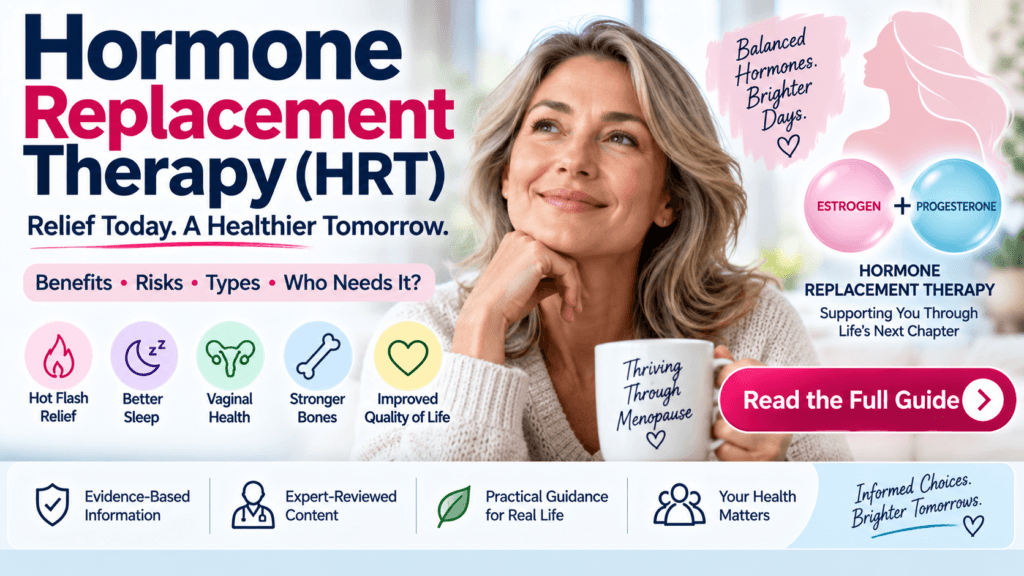
Hormone replacement therapy (HRT), also called menopausal hormone therapy (MHT), is a treatment used to replace hormones that decline during menopause. It is primarily used to relieve bothersome menopause symptoms such as hot flashes, night sweats, vaginal dryness, and painful sex. It can also help prevent bone loss in certain women.
HRT is not right for everyone. The benefits and risks depend on factors such as age, time since menopause, type of hormone therapy, dose, route of administration, medical history, and whether the uterus is present.
Hormone replacement therapy is prescription treatment that provides hormones such as estrogen and, when needed, progestogen to help manage symptoms caused by declining hormone levels during menopause.
Women who still have a uterus generally need a progestogen along with systemic estrogen because estrogen alone can stimulate the uterine lining and increase the risk of endometrial cancer. Women who have had a hysterectomy may be able to use estrogen alone, depending on their individual situation.
What Is Hormone Replacement Therapy?
During menopause, the ovaries gradually produce less estrogen and progesterone. This hormonal change can cause hot flashes, night sweats, vaginal dryness, sleep problems, and other symptoms.
HRT works by providing hormones to help reduce these symptoms.
The term “hormone replacement therapy” is still commonly used, although healthcare professionals may also call it menopausal hormone therapy (MHT).
HRT can be given in several forms, including:
- Pills
- Skin patches
- Gels
- Sprays
- Creams
- Vaginal tablets or inserts
- Vaginal rings
The best option depends on the symptoms being treated and the person’s health history.
Why Is HRT Used?
HRT is primarily used when menopause symptoms are bothersome enough to affect daily life, sleep, work, relationships, or overall quality of life.
Also Read: What Is PCOS? Symptoms, Causes, Diagnosis & Treatment
Common reasons for considering HRT include:
- Moderate to severe hot flashes
- Night sweats
- Vaginal dryness
- Pain during sex
- Certain urinary or genitourinary symptoms
- Prevention of bone loss in appropriate patients
- Symptoms related to early menopause or premature loss of ovarian function
Systemic estrogen is considered the most effective medication treatment for menopausal hot flashes and night sweats.
Common Symptoms HRT Can Treat
Hot Flashes
Hot flashes are sudden feelings of warmth, often affecting the face, neck, or chest. They may occur with sweating and can interfere with sleep.
Estrogen therapy is highly effective for reducing hot flashes and night sweats.
Night Sweats
Night sweats can wake someone repeatedly and contribute to daytime tiredness. Hormone therapy can reduce these vasomotor symptoms.
Vaginal Dryness
Lower estrogen levels can cause vaginal tissues to become thinner and drier.
This may result in:
- Vaginal dryness
- Burning or irritation
- Pain during sex
- Urinary symptoms
Low-dose vaginal estrogen can be particularly useful when symptoms are limited mainly to the vagina and urinary tract.
Bone Loss
Estrogen therapy can slow bone loss after menopause and may reduce the risk of fractures in appropriate patients. However, HRT is not automatically the first choice for osteoporosis treatment in every woman.
Types of Hormone Replacement Therapy
There are several forms of menopause hormone therapy.
1. Systemic Estrogen Therapy
Systemic estrogen enters the bloodstream and can treat symptoms throughout the body.
It may be available as:
- Oral tablets
- Transdermal patches
- Gels
- Sprays
- Certain systemic vaginal rings
Systemic therapy is commonly used for hot flashes and night sweats.
2. Low-Dose Vaginal Estrogen
Low-dose vaginal estrogen is designed mainly to treat vaginal and urinary symptoms.
It may be available as:
- Vaginal cream
- Vaginal tablet
- Vaginal insert
- Vaginal ring
Because the dose is low and treatment is local, systemic exposure is generally lower than with systemic estrogen therapy.
3. Estrogen Plus Progestogen
Women who still have a uterus generally need a progestogen when using systemic estrogen.
The progestogen helps protect the endometrium, or uterine lining, from excessive estrogen stimulation.
4. Estrogen Alone
Estrogen-only therapy may be appropriate for some women who have had their uterus removed.
The exact treatment should be determined by a healthcare professional based on the individual’s history.
What Are the Benefits of HRT?
Depending on the individual, HRT may:
- Reduce hot flashes
- Reduce night sweats
- Improve menopause-related vaginal symptoms
- Reduce pain associated with vaginal dryness
- Help prevent bone loss
- Improve quality of life when symptoms are significantly affecting daily activities
For healthy women who are younger than 60 or within 10 years of menopause onset, the overall benefit-risk balance may be more favorable when there are no major contraindications. However, treatment must still be individualized.
What Are the Risks of HRT?
HRT is not completely risk-free.
Also Read : Thorne Vitamin B12 Methylcobalamin Review: Benefits, Uses, Dosage, and Side Effects
Depending on the type of therapy and individual health factors, hormone therapy may increase the risk of:
- Blood clots
- Stroke
- Gallbladder disease
- Breast cancer with certain hormone regimens
- Endometrial cancer when systemic estrogen is used without adequate progestogen in women with a uterus
The risk varies according to the formulation, dose, route, duration, age, and individual medical history.
HRT and Breast Cancer
Breast cancer risk is not the same for every form of HRT. The type and duration of therapy matter.
Women should discuss their personal breast cancer risk and screening history with their healthcare professional before starting treatment.
Importantly, in 2026 the FDA approved labeling changes for several menopausal hormone therapy products. The FDA removed certain cardiovascular disease, breast cancer, and probable dementia statements from the boxed warning, while risks remain addressed elsewhere in labeling. This change does not mean that HRT has no risks; it reflects updated FDA communication about benefit-risk considerations.
Who Should Not Take HRT?
HRT may not be appropriate for women with certain medical conditions.
The FDA advises against menopause hormone therapy in women with certain histories or conditions, including:
- Unexplained vaginal bleeding
- Certain breast or uterine cancers
- Previous blood clots
- Stroke or heart attack
- Certain bleeding disorders
- Liver disease
- Pregnancy
This list is not exhaustive, and individual medications may have additional contraindications.
Is HRT Safe After Age 60?
Age alone does not determine whether HRT is appropriate.
However, starting systemic hormone therapy at age 60 or older or more than 10 years after menopause may have a different benefit-risk profile than starting it closer to menopause.
The decision should consider:
- Current symptoms
- Age
- Time since menopause
- Cardiovascular risk
- Blood clot risk
- Breast cancer risk
- Bone health
- Type and route of HRT
Women already using HRT should periodically review treatment with their healthcare professional.
How Long Can You Take HRT?
There is no single duration that applies to every woman.
Treatment should be individualized and periodically reassessed. The goal is generally to use the appropriate dose and formulation for the symptoms and health needs of the individual.
A healthcare professional may adjust the dose, change the route of administration, or discontinue treatment when appropriate.
The FDA recommends discussing the benefits and risks of hormone therapy with a healthcare provider rather than following a fixed duration for everyone.
HRT for Vaginal Dryness
Not every woman with vaginal symptoms needs systemic HRT.
When symptoms are mainly vaginal or urinary, low-dose vaginal estrogen may be an option.
It can help improve:
- Vaginal dryness
- Burning
- Vaginal irritation
- Pain during intercourse
- Some urinary symptoms associated with menopause
A healthcare professional can determine whether local or systemic treatment is more appropriate.
What About “Bioidentical” Hormones?
The term bioidentical hormones can be confusing because it may refer to FDA-approved hormone products or compounded products.
FDA-approved hormone medications containing hormones that are chemically identical to naturally occurring hormones are available.
However, the FDA states that it does not have evidence that compounded “bioidentical” hormone products are safer or more effective than FDA-approved hormone therapy.
Patients should discuss the specific product, dose, source, and evidence with their healthcare professional rather than assuming that “natural” or “bioidentical” automatically means safer.
What is hormone replacement therapy used for?
HRT is primarily used to treat bothersome menopause symptoms such as hot flashes, night sweats, vaginal dryness, and painful sex. It may also help prevent bone loss in selected women.
Is HRT the same as estrogen therapy?
Not always. HRT may contain estrogen alone or estrogen combined with a progestogen. The appropriate treatment depends partly on whether the uterus is present.
Do you need progesterone with estrogen?
If you still have a uterus and are using systemic estrogen, a progestogen is generally added to protect the uterine lining.
Is HRT safe?
HRT can be appropriate for some women, but it is not suitable for everyone. Risks and benefits depend on age, timing, formulation, dose, route, duration, and medical history.
Can HRT help with hot flashes?
Yes. Systemic estrogen is one of the most effective treatments for moderate to severe menopausal hot flashes and night sweats.
Does HRT cause weight gain?
Weight changes during midlife can have many causes. HRT is not generally prescribed as a weight-loss treatment, and individual responses can vary.
Can you start HRT years after menopause?
It may be possible for some women, but the benefit-risk profile changes with age and time since menopause. A healthcare professional should assess individual risks before treatment.
Medical Disclaimer
Medical Disclaimer: This article is for educational and informational purposes only and is not a substitute for professional medical advice, diagnosis, or treatment. Always consult a qualified healthcare professional before starting, changing, or stopping hormone replacement therapy.