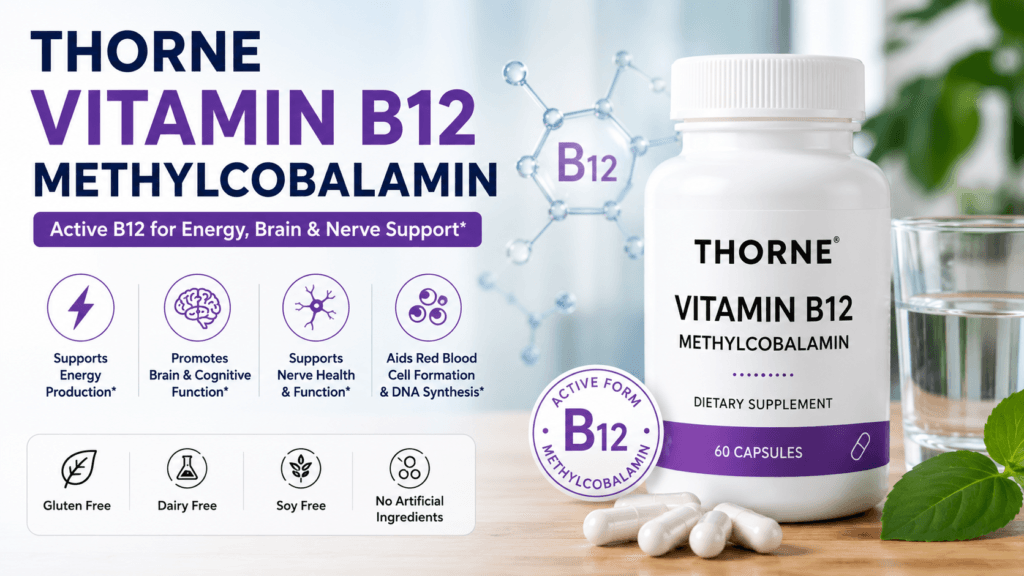
Vitamin B12 is an essential nutrient that helps keep your blood cells and nervous system healthy. It also plays an important role in DNA production and normal nerve function.
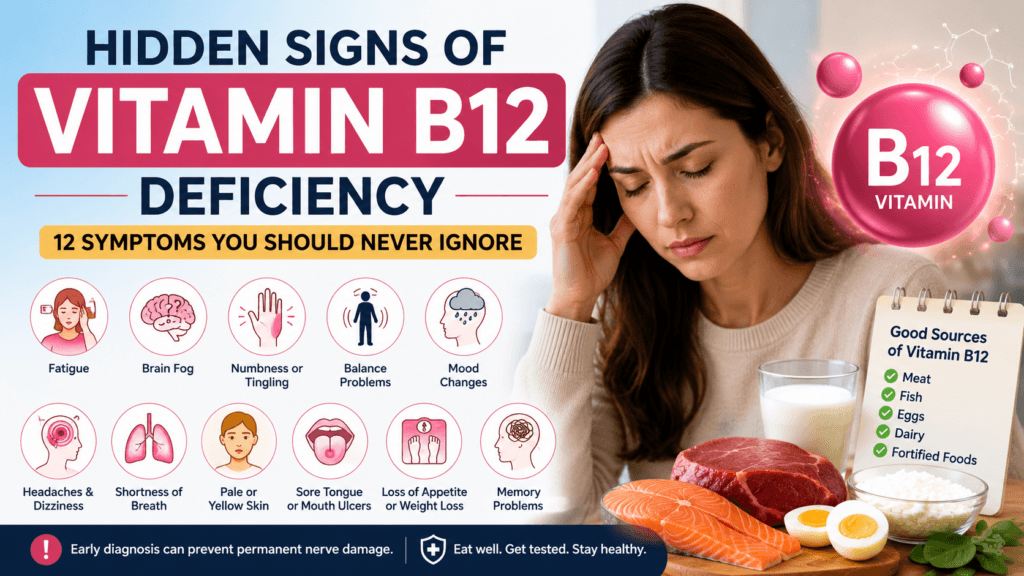
When vitamin B12 levels become too low, the symptoms may be easy to overlook. Some people develop fatigue or weakness, while others notice numbness, balance problems, changes in memory, or a sore tongue.
Because vitamin B12 deficiency can affect the nervous system even without anemia, recognizing possible warning signs and getting appropriate testing can be important.
What Is Vitamin B12?
Vitamin B12 is a water-soluble vitamin that the body needs for healthy red blood cells, DNA production, and normal nervous-system function.
Adults generally need about 2.4 micrograms (mcg) of vitamin B12 per day. Requirements increase during pregnancy and breastfeeding.
The body can store a large amount of vitamin B12, so deficiency symptoms may take years to develop after intake or absorption becomes inadequate.
Also Read : Thorne Vitamin B12 Methylcobalamin Review: Benefits, Uses, Dosage, and Side Effects
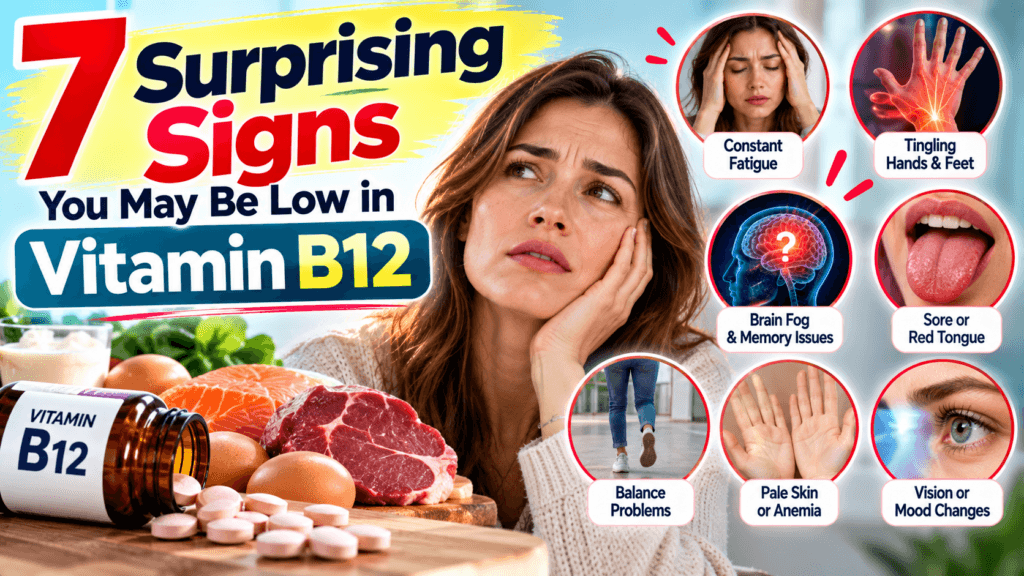
7 Surprising Signs You May Be Low in Vitamin B12
1. You Feel Extremely Tired or Weak
Feeling tired after a poor night’s sleep is common, but persistent fatigue can sometimes be associated with vitamin B12 deficiency.
B12 is needed to produce healthy red blood cells. A significant deficiency can lead to megaloblastic anemia, which reduces the blood’s ability to carry oxygen efficiently. This can contribute to tiredness, weakness, dizziness, or shortness of breath.
However, fatigue is extremely common and can also result from sleep problems, iron deficiency, thyroid disorders, infections, stress, medications, and many other conditions.
2. Your Hands or Feet Tingle or Feel Numb
One of the more distinctive signs of B12 deficiency is a sensation of pins and needles, tingling, or numbness.
These symptoms can occur because vitamin B12 is important for normal nervous-system function. Long-term deficiency can cause nerve damage, and neurological symptoms may occur even when a person does not have anemia.
If numbness or tingling is persistent or getting worse, it should not be ignored.
3. You Start Having Balance or Coordination Problems
Vitamin B12 deficiency can affect the nervous system and may lead to problems with balance and coordination.
Some people may feel unsteady when walking or have difficulty with normal coordination. In more severe cases, neurological problems can interfere with movement.
Balance problems have many possible causes, so medical evaluation is important rather than assuming that low B12 is responsible.
4. You Notice Brain Fog or Memory Changes
Difficulty concentrating, poor memory, confusion, or changes in thinking can occur with vitamin B12 deficiency.
These symptoms may be subtle at first. Someone may feel unusually forgetful or have difficulty concentrating on everyday tasks.
Importantly, these symptoms do not prove that you have a B12 deficiency. Sleep problems, medications, depression, anxiety, thyroid disease, and other medical conditions can also affect memory and concentration.
5. Your Tongue Becomes Sore or Red
A less obvious sign of vitamin B12 deficiency is a change in the mouth.
Some people develop a sore, swollen, or red tongue, sometimes accompanied by mouth ulcers or other oral discomfort.
These symptoms can also occur with other nutritional deficiencies and oral conditions, so persistent changes should be evaluated by a healthcare professional.
Also Read : Vitamin D Deficiency Symptoms: Signs, Causes, Treatment & What to Do
6. You Become Pale, Short of Breath, or Notice a Racing Heart
Vitamin B12 deficiency can cause megaloblastic anemia. As anemia develops, symptoms may include pale skin, weakness, shortness of breath, dizziness, or heart palpitations.
The heart may beat faster as the body attempts to deliver enough oxygen to tissues.
If you experience significant shortness of breath, chest pain, fainting, or severe or persistent palpitations, seek prompt medical attention rather than assuming the symptoms are caused by vitamin deficiency.
7. You Notice Mood or Vision Changes
B12 deficiency can sometimes affect the nervous system and may be associated with mood changes such as depression or anxiety. More severe deficiency can cause confusion and other neurological problems.
Vision problems can also occur with B12 deficiency, although they are less common and can have many other causes.
New or unexplained vision changes should always be evaluated because several eye and neurological conditions can require prompt treatment.
What Causes Vitamin B12 Deficiency?
Vitamin B12 deficiency is not always caused by simply failing to eat enough B12.
Possible causes include:
- Following a strict vegetarian or vegan diet without reliable B12-fortified foods or supplements
- Pernicious anemia
- Conditions that interfere with absorption, such as Crohn’s disease or celiac disease
- Certain stomach or intestinal surgeries
- Atrophic gastritis and reduced stomach acid
- Long-term use of certain acid-reducing medications
- Long-term use of metformin
- Other gastrointestinal conditions that interfere with absorption
This is why identifying the cause of a low B12 level is an important part of treatment.
Who Is More Likely to Have Low Vitamin B12?
Certain groups have a higher risk of B12 deficiency.
These include:
- Older adults
- People following vegan or vegetarian diets
- People with gastrointestinal disorders
- People who have had certain gastrointestinal surgeries
- People with pernicious anemia
- People taking metformin for long periods
- People taking certain acid-reducing medications
How Is Vitamin B12 Deficiency Diagnosed?
Symptoms alone cannot reliably diagnose vitamin B12 deficiency.
A healthcare professional may order a blood test to measure vitamin B12. A complete blood count (CBC) may also help identify anemia or changes in red blood cells.
When the B12 result is borderline or does not clearly explain the symptoms, additional testing such as methylmalonic acid (MMA) may help confirm deficiency. NIH guidance identifies MMA as a sensitive marker of B12 status.
The exact interpretation of a B12 result depends on the laboratory, symptoms, medical history, and other test results.
How Is Vitamin B12 Deficiency Treated?
Treatment depends on why the deficiency occurred and how severe it is.
For some people with diet-related deficiency, oral vitamin B12 supplements may be sufficient. People who have significant absorption problems or certain medical conditions may need vitamin B12 injections.
Treatment can restore B12 levels and improve many symptoms. However, neurological problems caused by prolonged deficiency can sometimes become permanent, which is why early diagnosis and treatment are important.
Do not start high-dose supplements simply because you have symptoms. Testing and professional guidance can help determine whether B12 deficiency is actually present.
Foods High in Vitamin B12
Vitamin B12 naturally occurs mainly in animal-derived foods.
Good sources include:
- Beef
- Fish
- Shellfish
- Poultry
- Eggs
- Milk and dairy products
Fortified breakfast cereals and fortified nutritional yeast can also provide vitamin B12, making them useful options for people who eat little or no animal food.
Plant foods generally do not naturally contain vitamin B12 unless they are fortified.
When Should You See a Doctor?
Consider talking with a healthcare professional if you have persistent fatigue, numbness, tingling, balance problems, unexplained weakness, memory changes, or other symptoms that could be related to vitamin B12 deficiency.
Seek prompt medical care for severe symptoms such as significant weakness, difficulty walking, severe confusion, fainting, chest pain, or sudden vision changes.
Early evaluation is especially important when neurological symptoms are present because prolonged B12 deficiency can cause potentially permanent nerve damage.