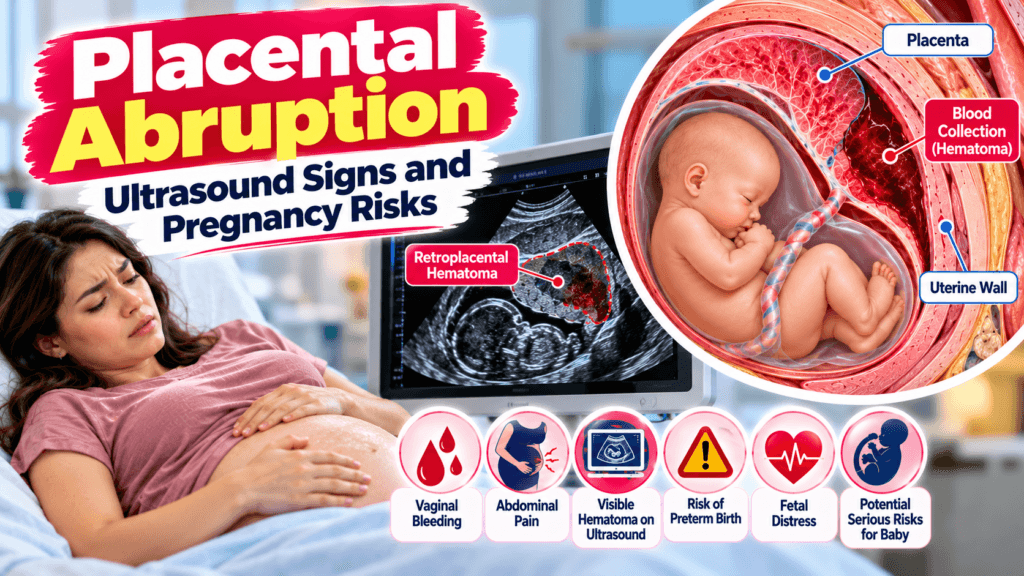
Placental abruption is a pregnancy complication in which the placenta partially or completely separates from the uterine wall before the baby is born. Because the placenta supplies the baby with oxygen and nutrients, premature separation can reduce the baby’s oxygen supply and may cause significant bleeding for the pregnant person.
Placental abruption most often occurs later in pregnancy and can develop suddenly. Ultrasound can sometimes identify signs of an abruption, particularly when there is a visible hematoma or abnormal blood collection near the placenta. However, ultrasound does not detect every case, so a normal scan does not completely rule out placental abruption.
Understanding the symptoms, ultrasound findings, risk factors, and warning signs can help patients recognize when urgent medical evaluation is needed.
What Is Placental Abruption?
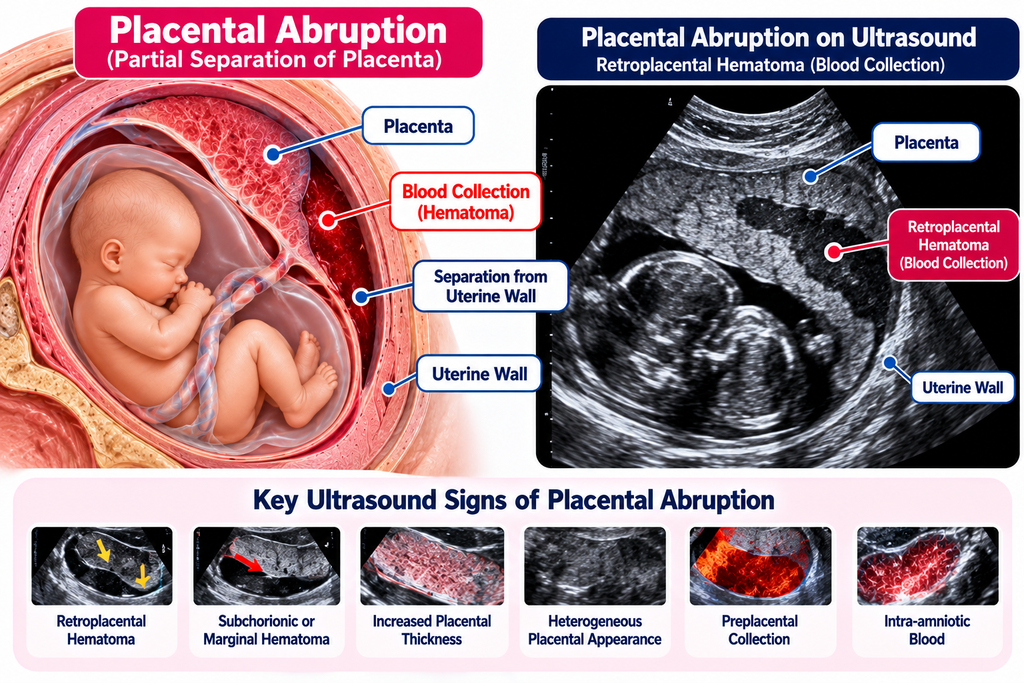
Placental abruption, also called abruptio placentae, occurs when the placenta separates from the inner wall of the uterus before delivery.
The placenta normally remains attached to the uterus throughout pregnancy and transfers oxygen and nutrients to the fetus. When part of the placenta separates prematurely, maternal blood can collect between the placenta and uterus, creating a hematoma.
The separation can be partial or extensive. The severity depends on factors such as how much of the placenta has separated, where the separation occurs, how quickly it develops, and the condition of the mother and baby.
Placental abruption can sometimes cause obvious vaginal bleeding. However, blood may remain trapped behind the placenta, meaning that a person can have a significant abruption without visible vaginal bleeding.
What Causes Placental Abruption?
The exact cause is not always known.
Placental abruption may occur in association with conditions or events that affect the placenta or blood vessels supplying it.
Potential contributors and risk factors include:
- High blood pressure
- Preeclampsia
- Previous placental abruption
- Abdominal trauma
- Smoking
- Cocaine use during pregnancy
- Premature rupture of membranes
- Certain uterine or placental problems
- Infection involving the uterus
- Older maternal age
Abruption can also occur without an obvious trigger.
Placental Abruption Risk Factors
Some pregnancies have a higher risk of placental abruption.
Important risk factors include:
Previous Placental Abruption
A previous abruption increases the risk of another abruption in a future pregnancy.
High Blood Pressure
Chronic hypertension and pregnancy-related hypertensive disorders, including preeclampsia, are important risk factors.
Abdominal Trauma
A car accident, fall, or direct blow to the abdomen can cause placental separation.
Smoking
Smoking during pregnancy is associated with increased placental complications, including abruption.
Cocaine Use
Cocaine can cause significant changes in blood vessels and is associated with placental abruption.
Premature Rupture of Membranes
Early loss of amniotic fluid can also be associated with placental abruption.
Symptoms of Placental Abruption
The symptoms can vary considerably.
Common symptoms include:
- Vaginal bleeding
- Sudden abdominal pain
- Back pain
- Uterine tenderness
- A firm or rigid uterus
- Frequent or painful contractions
- Reduced fetal movement
- Abnormal fetal heart rate
One important point is that the amount of visible vaginal bleeding does not necessarily reflect the severity of the abruption.
Blood can remain behind the placenta, producing a concealed hemorrhage. Therefore, severe placental abruption can occasionally occur with little or no visible vaginal bleeding.
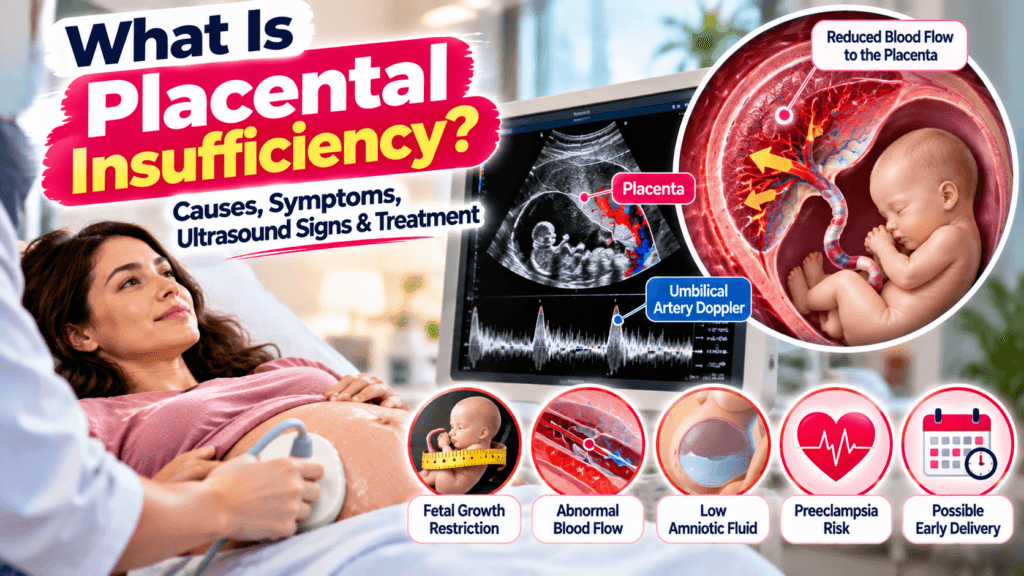
Also Read : What Is Placental Insufficiency? Causes, Symptoms, Ultrasound Signs & Treatment
Can Ultrasound Detect Placental Abruption?
Yes, but ultrasound has important limitations.
Ultrasound is commonly used when placental abruption is suspected because it can evaluate:
- Placental location
- Placental appearance
- Blood collections around the placenta
- Amniotic fluid
- Fetal growth
- Fetal movement
- Fetal heart activity
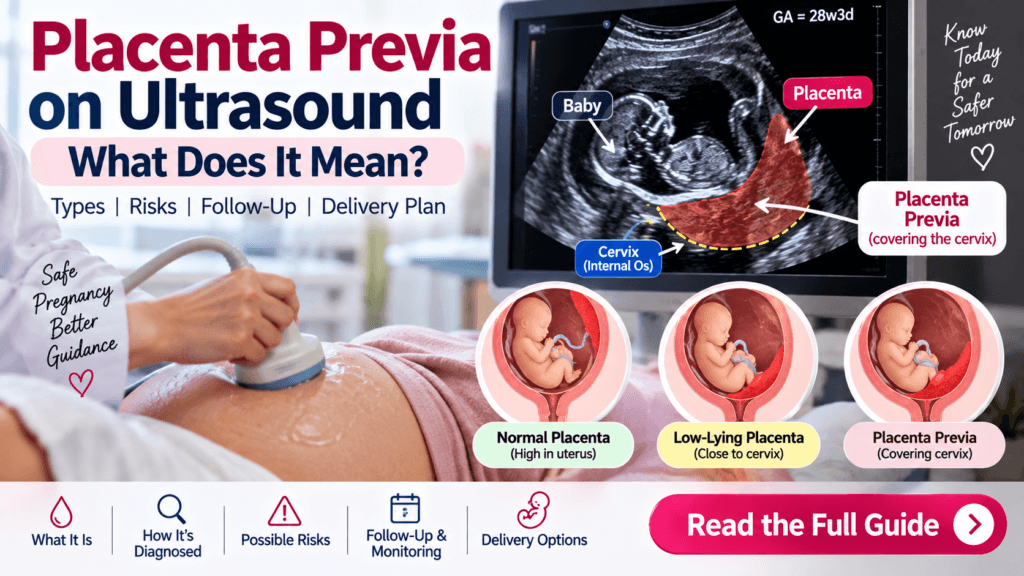
Ultrasound is particularly useful for identifying other causes of bleeding, such as placenta previa.
However, placental abruption remains primarily a clinical diagnosis. A normal ultrasound does not exclude it.
This is because fresh blood may have an echogenicity similar to the placenta and may be difficult to distinguish from normal placental tissue.
Ultrasound Signs of Placental Abruption
The ultrasound appearance depends on the location and age of the hemorrhage.
1. Retroplacental Hematoma
A retroplacental hematoma is a collection of blood between the placenta and uterine wall.
It may appear as:
- Hypoechoic collection
- Heterogeneous collection
- Lentiform or crescent-shaped area
- Abnormal thickening behind the placenta
This is one of the classic findings associated with placental abruption.
2. Preplacental Collection
Blood may sometimes collect along the fetal surface of the placenta.
A preplacental collection can appear as an abnormal fluid or complex collection anterior to the placenta.
3. Marginal Hematoma
Blood may collect near the edge of the placenta.
A marginal hematoma may appear as a crescent-shaped collection along the placental margin.
4. Subchorionic Hematoma
A subchorionic blood collection may occur between the chorion and uterine wall.
Depending on its size, location, and gestational age, it may be associated with placental bleeding or abruption.
5. Increased Placental Thickness
A hematoma can sometimes make the placenta appear unusually thick.
In some reported cases, placental thickness greater than approximately 5 cm has been described in association with abruption, but placental thickness should always be interpreted in relation to gestational age and the overall ultrasound appearance.
6. Heterogeneous Placental Appearance
The placenta may appear heterogeneous because of blood products, infarction, edema, or other changes.
A heterogeneous placenta by itself does not diagnose placental abruption.
7. Intra-Amniotic Hematoma
Blood may enter the amniotic cavity and appear as echogenic or complex material within the amniotic fluid.
8. Abnormal Chorionic Plate Movement
Some cases may demonstrate unusual or “jelly-like” movement of the chorionic plate with fetal movement.
This is an uncommon finding and should be interpreted together with the clinical presentation.
Why Can Ultrasound Miss a Placental Abruption?
This is one of the most important things to understand.
Ultrasound does not detect all cases of placental abruption.
Fresh hemorrhage can initially have an echogenicity similar to the placenta. Small hematomas may also be difficult to visualize.
In addition, blood may be concealed behind the placenta rather than forming an obvious collection.
For this reason:
Normal ultrasound ≠ No placental abruption.
If a pregnant patient has significant abdominal pain, uterine tenderness, vaginal bleeding, contractions, fetal movement changes, or an abnormal fetal heart rate, clinical evaluation remains essential even when ultrasound does not show an obvious hematoma.
Placental Abruption vs Placenta Previa
These two conditions can both cause bleeding during pregnancy, but they are different.
| Feature | Placental Abruption | Placenta Previa |
|---|---|---|
| Main problem | Placenta separates prematurely | Placenta lies over or near the cervix |
| Typical symptom | Pain and/or bleeding | Often painless bleeding |
| Placental position | Usually normally located | Low-lying or covering the cervical opening |
| Ultrasound role | May show hematoma or blood collection | Determines placental relationship to cervix |
| Diagnosis | Primarily clinical | Primarily imaging-based |
| Emergency risk | Maternal bleeding and fetal compromise | Severe maternal bleeding and delivery complications |
Because vaginal bleeding can have several causes, ultrasound is often important for determining placental location and evaluating the pregnancy.
Pregnancy Risks of Placental Abruption
Placental abruption can affect both the pregnant person and the baby.
Risks to the Mother
Possible complications include:
- Significant blood loss
- Anemia
- Hemorrhagic shock
- Blood-clotting abnormalities
- Blood transfusion
- Kidney or other organ complications
- Emergency delivery
- Rarely, hysterectomy when bleeding cannot be controlled
Risks to the Baby
Potential fetal and neonatal complications include:
- Reduced oxygen supply
- Fetal distress
- Fetal growth problems
- Preterm birth
- Low birth weight
- NICU admission
- Stillbirth in severe cases
The risk depends on the size and location of the separation, gestational age, speed of bleeding, and fetal condition.
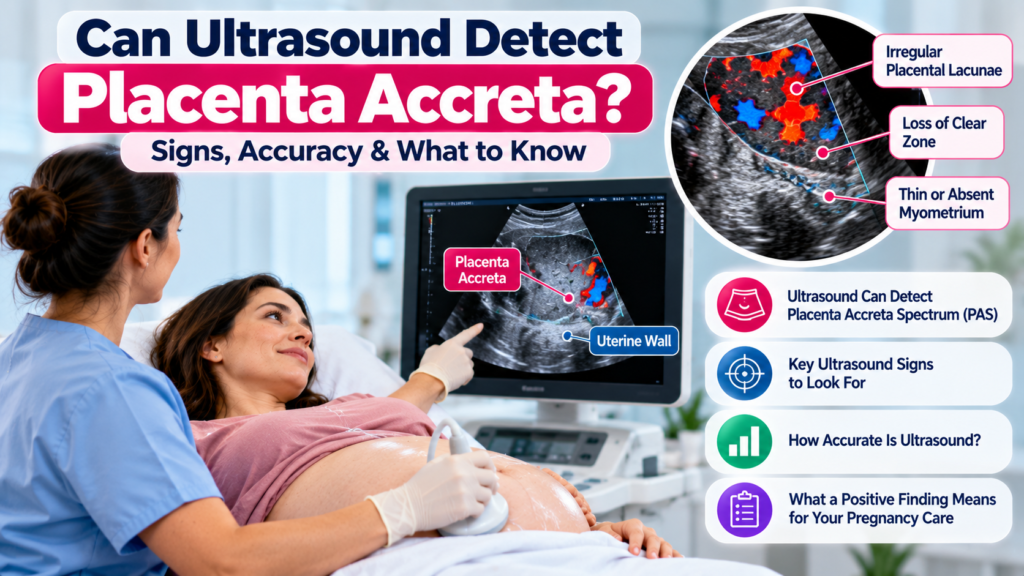
Also Read : Can Ultrasound Detect Placenta Accreta?
How Is Placental Abruption Diagnosed?
There is no single ultrasound measurement or laboratory test that can definitively diagnose every case.
Healthcare professionals may evaluate:
Medical History
The clinician may ask about:
- Vaginal bleeding
- Abdominal or back pain
- Trauma
- Contractions
- Fetal movement
- Previous placental abruption
- High blood pressure
- Other pregnancy complications
Physical Examination
The uterus may be assessed for tenderness, firmness, and contractions.
Vital signs are also important because significant internal bleeding can occur even when vaginal bleeding is limited.
Fetal Monitoring
When appropriate based on gestational age, fetal heart rate monitoring can help identify fetal compromise.
Ultrasound
Ultrasound can evaluate the placenta, fetal condition, amniotic fluid, placental location, and possible hematomas.
Blood Tests
Blood testing may be used to assess anemia, blood type, coagulation status, and the effects of blood loss.
Treatment and Management
Treatment depends on several factors, including:
- Gestational age
- Severity of bleeding
- Maternal condition
- Fetal condition
- Degree of placental separation
- Presence of contractions or labor
- Fetal heart rate pattern
If the pregnancy is preterm and the mother and baby are stable, close hospital monitoring may sometimes be appropriate.
Depending on gestational age and the risk of early delivery, medications may be given to help prepare the fetus for premature birth.
If there is severe bleeding, maternal instability, significant fetal compromise, or another indication for urgent delivery, emergency delivery may be necessary.
A cesarean delivery may be required when rapid delivery is needed and vaginal delivery is not appropriate.
The management decision must be individualized by the obstetric team.
When to Seek Emergency Care
Seek urgent medical evaluation during pregnancy if you experience:
- Vaginal bleeding
- Sudden abdominal pain
- Persistent back pain
- Severe uterine tenderness
- Frequent contractions
- A firm or rigid abdomen
- Decreased or absent fetal movement
- Dizziness, fainting, weakness, or signs of significant blood loss
- Vaginal bleeding after a fall, accident, or abdominal injury
Do not wait for an ultrasound appointment if symptoms suggest a possible placental abruption.
Placental abruption can progress quickly, and visible bleeding may underestimate the amount of blood loss.
Medical Disclaimer
Medical Disclaimer: This article is for educational and informational purposes only and is not a substitute for professional medical advice, diagnosis, or treatment. Always consult a qualified healthcare professional for advice about your individual health or pregnancy.
Sources
Mayo Clinic — Placental Abruption: Symptoms & Causes; Diagnosis & Treatment
NCBI Bookshelf / StatPearls — Placental Abruption
PubMed — Clinical utility and diagnostic performance of sonography for placental abruption
Peer-reviewed literature on ultrasound findings and hemorrhagic placental lesions