
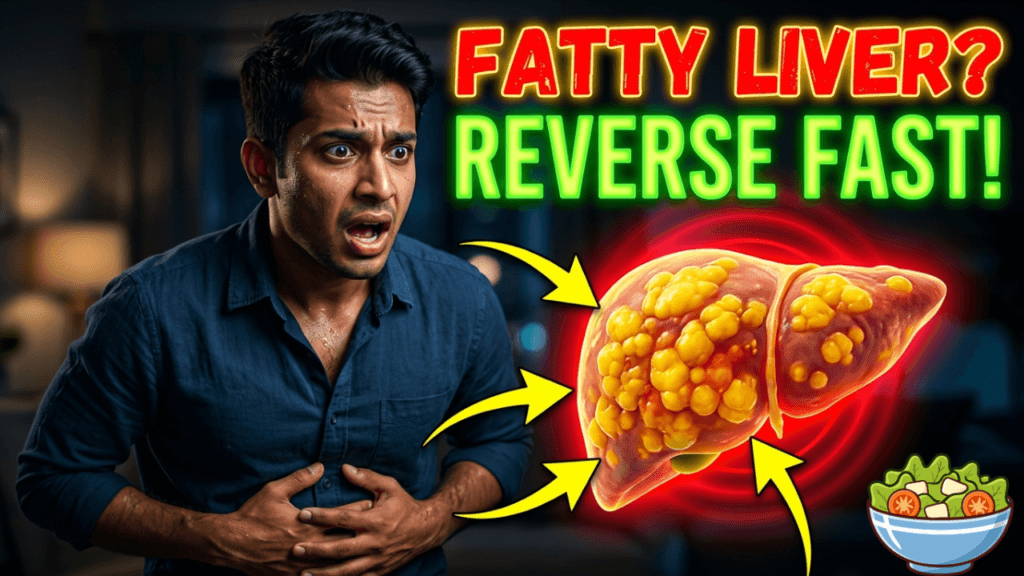
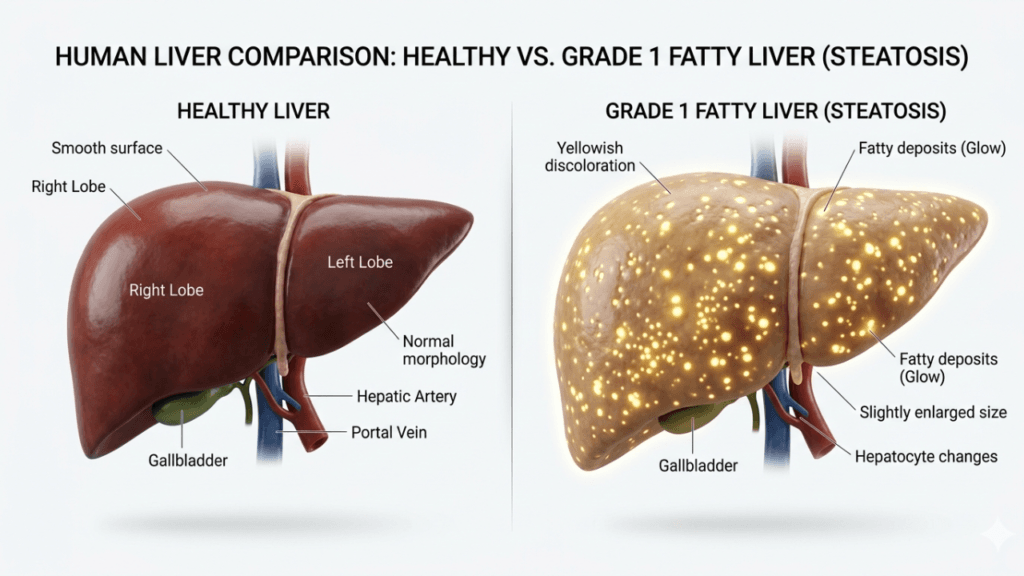
Grade 1 fatty liver is the earliest and mildest stage of fatty liver disease, a condition in which a small amount of fat starts accumulating in liver cells. In most cases, people are not even aware that they have this condition because it usually does not show clear symptoms in the beginning. It is often detected accidentally during a routine health check-up or an ultrasound scan.
Even though Grade 1 fatty liver is considered mild and not immediately dangerous, it should not be ignored. If left untreated, it can gradually progress to more serious liver conditions. The good news is that at this stage, fatty liver is completely reversible with proper lifestyle changes, diet control, and regular exercise.
This article will help you understand everything about Grade 1 fatty liver in simple language, including its causes, symptoms, diagnosis, treatment, and prevention.
What is Grade 1 Fatty Liver?
Grade 1 fatty liver means that a small amount of fat has started accumulating in the liver. At this stage, the liver usually continues to function normally, and there is minimal or no damage.
Doctors generally classify fatty liver disease into three stages:
Grade 1 (Mild): Small fat accumulation, no significant damage
Grade 2 (Moderate): Increased fat with inflammation
Grade 3 (Severe): Heavy fat accumulation with risk of liver damage
Many people often ask, “Is Grade 1 fatty liver dangerous?” The answer is that it is not dangerous at this stage, but it can become serious if ignored. Early management is the key to preventing complications.
Main Causes of Grade 1 Fatty Liver
Fatty liver develops mainly due to unhealthy lifestyle habits and metabolic problems. Below are the most common causes:
1. Poor Diet and Unhealthy Eating Habits
Eating excessive junk food, fried items, sugary drinks, and processed food leads to fat accumulation in the liver. High sugar intake is especially harmful because it converts into fat.
ALso Read : What to Eat During Pregnancy – Complete Nutrition Guide
2. Obesity and Overweight
Being overweight is one of the biggest risk factors. Extra body fat increases fat storage in the liver, leading to fatty liver disease.
3. Lack of Physical Activity
A sedentary lifestyle slows down metabolism, which causes fat buildup in the body and liver. People who do not exercise regularly are at higher risk.
4. Diabetes and High Blood Sugar
People with diabetes or insulin resistance are more likely to develop fatty liver because excess sugar is converted into fat.
5. High Cholesterol and Triglycerides
Increased levels of bad cholesterol and triglycerides contribute directly to fat deposition in liver cells.
6. Alcohol Consumption
Excessive alcohol intake damages liver cells and leads to alcoholic fatty liver disease. Even moderate drinking can worsen the condition.
Symptoms of Grade 1 Fatty Liver
One of the biggest challenges with Grade 1 fatty liver is that it usually shows no clear symptoms. Many people live with it without knowing.
However, some mild signs may appear:
Fatigue or weakness
Mild pain or heaviness in the right side of the abdomen
Bloating and indigestion
Unexplained weight gain
Loss of appetite in some cases
Because these symptoms are very mild, most people ignore them. That is why regular health check-ups are important.
How is Grade 1 Fatty Liver Diagnosed?
Doctors diagnose fatty liver using simple and non-invasive tests:
1. Ultrasound Scan
Ultrasound is the most common method used to detect fat in the liver. It clearly shows fatty changes.
2. Blood Tests
Liver Function Tests (LFT) are done to check how well the liver is working. Sometimes liver enzymes may be slightly elevated.
3. Medical History and Physical Examination
Doctors ask about diet, lifestyle, alcohol consumption, and existing medical conditions like diabetes or obesity.
Also Read : 7 Ultrasound Results That Need Immediate Attention
Most cases are detected during routine check-ups rather than due to symptoms.
Can Grade 1 Fatty Liver Be Reversed?
Yes, Grade 1 fatty liver is completely reversible. This is the most important point to understand. With early action and proper lifestyle changes, the liver can return to normal.
Here are the most effective ways to reverse it:
1. Maintain Healthy Weight
Gradual weight loss helps reduce liver fat. Losing even 5–10% of body weight can make a big difference.
2. Follow a Balanced Diet
A healthy diet plays the most important role. Include:
Fruits and vegetables
Whole grains
Lean protein (dal, eggs, chicken, fish)
Healthy fats (nuts, seeds)
Avoid:
Fried food
Sugar and sweets
Cold drinks
Processed and packaged food
3. Exercise Regularly
At least 30 minutes of daily physical activity is recommended. Walking, jogging, cycling, or yoga can significantly improve liver health.
4. Control Blood Sugar and Cholesterol
Managing diabetes and cholesterol levels helps prevent further fat accumulation.
5. Avoid Alcohol Completely
Alcohol slows down liver recovery. Avoiding it completely gives the liver time to heal.
6. Stay Hydrated
Drinking enough water helps flush toxins from the body and supports liver function.
What Happens if Grade 1 Fatty Liver is Ignored?
If not treated, Grade 1 fatty liver can progress to more serious conditions:
Grade 2 fatty liver (increased fat and inflammation)
Steatohepatitis (liver inflammation)
Fibrosis (scar tissue formation)
Cirrhosis (severe liver damage)
In advanced stages, liver damage can become permanent and life-threatening. That is why early prevention is very important.
Best Diet Plan for Fatty Liver
A proper diet can completely reverse fatty liver. Here is a simple guideline:
Morning: Warm water + lemon, oats or fruits
Lunch: Roti + sabzi + dal + salad
Evening: Green tea + nuts
Dinner: Light food like soup or vegetables
Foods to Eat:
Green leafy vegetables
Fruits like apple, papaya
Whole grains
Lean protein
Healthy fats
Foods to Avoid:
Fried items
Sugar and sweets
White bread and refined carbs
Soft drinks
Alcohol
Lifestyle Tips to Keep Your Liver Healthy
Follow these simple habits to protect your liver:
Eat a balanced diet
Exercise daily
Maintain healthy weight
Reduce sugar intake
Avoid alcohol
Get regular check-ups
These small steps can make a big difference in long-term liver health.
Conclusion
Grade 1 fatty liver is a warning sign from your body. While it is not dangerous at the early stage, ignoring it can lead to serious complications in the future. The good news is that it is completely reversible with the right lifestyle changes.
By maintaining a healthy diet, staying active, controlling weight, and avoiding harmful habits, you can easily cure Grade 1 fatty liver and keep your liver healthy for life.
If you have been diagnosed with fatty liver, do not panic. Take it as an opportunity to improve your lifestyle and protect your health.

