A chipped tooth can happen unexpectedly while eating, playing sports, or biting something hard. Even a small chip can make your tooth feel rough, sensitive, or uncomfortable. The good news is that most chipped teeth can be repaired by a dentist, and treatment may be relatively simple depending on how much of the tooth is damaged.
If you have a chipped tooth, understanding the available treatment options and their costs can help you prepare for your dental appointment. In this guide, you’ll learn what causes chipped teeth, how dentists repair them, how much treatment may cost in the United States, and when to seek urgent dental care.
What Is a Chipped Tooth?
A chipped tooth occurs when a small or large piece of the tooth breaks away. The damage may affect only the outer enamel or extend into the deeper layers of the tooth, including dentin and dental pulp.
Minor chips may not cause pain, while deeper fractures can lead to tooth sensitivity, discomfort when chewing, or persistent pain. A dentist needs to examine the tooth to determine the extent of the damage and recommend appropriate treatment.
What Causes a Chipped Tooth?
Several everyday activities and dental conditions can cause a tooth to chip.
- Biting hard foods: Chewing ice, hard candy, popcorn kernels, or hard nuts can damage tooth enamel.
- Accidents and injuries: Falls, sports injuries, and facial impacts can break or chip teeth.
- Teeth grinding: Repeated pressure from grinding or clenching can weaken teeth over time.
- Tooth decay: Cavities can weaken the tooth structure, making it more likely to break.
- Old dental fillings: Teeth with large or weakened restorations may become more vulnerable to fractures.
- Using teeth as tools: Opening packages or biting hard objects can cause unexpected damage.
Chipped Tooth Treatment Options
The best treatment depends on the size and location of the chip, the condition of the remaining tooth, and whether the inner pulp is affected.
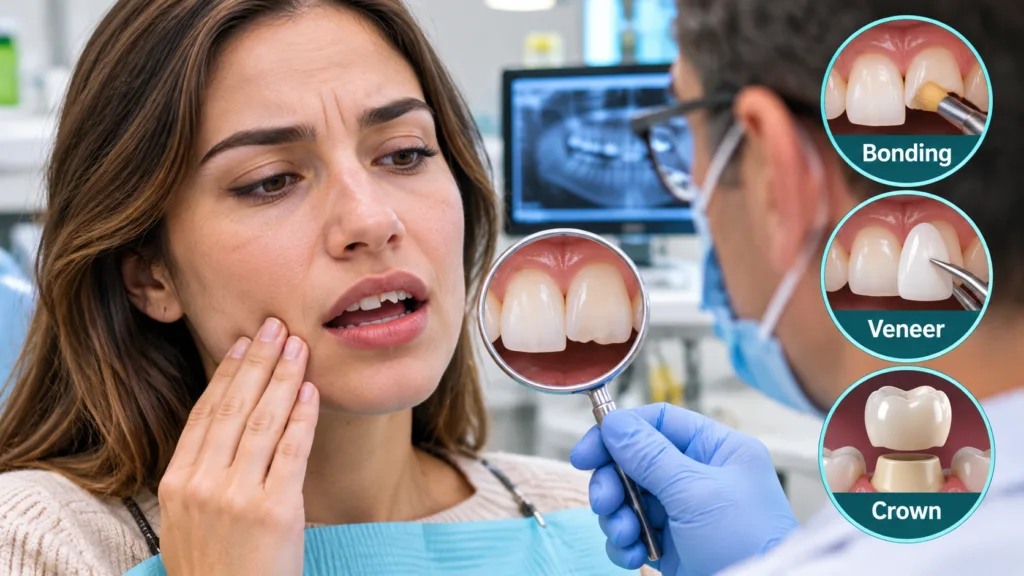
1. Dental Bonding
Dental bonding is commonly used for small and moderate chips, especially on front teeth. The dentist applies a tooth-colored composite resin to the damaged area, shapes it, and hardens it with a special curing light.
Bonding can restore the appearance of a tooth in many cases without removing much natural tooth structure.
Estimated US cost: Approximately $288–$915 per tooth.
2. Dental Filling
A composite filling may be recommended when a chip affects a chewing surface or leaves a defect that needs restoration. The dentist prepares the damaged area and fills it with a suitable dental material.
Estimated US cost: Approximately $173–$439 for some composite filling procedures. Actual fees depend on the tooth and the number of surfaces involved.
3. Dental Veneers
A dental veneer is a thin shell, often made of porcelain, placed over the front surface of a tooth. It may be considered for a larger cosmetic defect affecting a visible front tooth.
Veneers are not appropriate for every chipped tooth. The dentist must evaluate the remaining tooth structure and bite before recommending one.
Estimated US cost: Approximately $1,020–$2,506 per tooth for porcelain veneers in some published cost estimates.
4. Dental Crown
A dental crown covers most or all of the visible portion of a damaged tooth. It may be recommended when a large fracture leaves the tooth structurally weak.
Crowns can be made from porcelain, ceramic, metal, or combinations of materials.
Estimated US cost: Approximately $915–$3,254 per tooth.
5. Root Canal Treatment
A root canal may be necessary when a fracture exposes or damages the dental pulp. During the procedure, the dentist or endodontist removes damaged or infected pulp tissue, cleans the inside of the tooth, and seals it.
A crown may also be needed to protect the remaining tooth.
Estimated US cost: Approximately $776–$1,911 for some front-tooth root canal procedures, before any additional restoration.
These prices are general estimates, not guaranteed fees or personalized treatment recommendations.
Chipped Tooth Repair Cost Without Insurance
The cost of repairing a chipped tooth in the United States varies depending on the treatment, dentist, location, and severity of the damage.
| Treatment | Estimated cost per tooth |
|---|---|
| Dental bonding | $288–$915 |
| Composite filling | $173–$439 |
| Porcelain veneer | $1,020–$2,506 |
| Dental crown | $915–$3,254 |
| Front-tooth root canal | $776–$1,911 |
Additional expenses may include the dental examination, X-rays, anesthesia, and follow-up visits. If a crown is needed after root canal treatment, the total cost will be higher.
Does Dental Insurance Cover a Chipped Tooth?
Dental insurance may cover some chipped tooth treatments, but coverage depends on your individual plan. Procedures considered medically necessary to restore a damaged tooth may receive different coverage from cosmetic treatments. For example, a plan may cover part of a filling or crown while offering limited or no benefits for a cosmetic veneer.
Before scheduling treatment, check:
- Your annual dental insurance maximum.
- Your remaining deductible.
- Whether the procedure is covered.
- Your coinsurance or copayment.
- Waiting periods and exclusions.
- Whether your dentist is in-network.
Ask your dental office for a written treatment estimate and insurance preauthorization when available. Preauthorization is not always a guarantee of payment.
How to Care for a Chipped Tooth Before Seeing a Dentist
If you chip a tooth, contact your dentist and arrange an examination as soon as possible. Until your appointment:
- Rinse your mouth gently with warm water.
- Avoid chewing on the damaged side.
- Eat soft foods and avoid hard or sticky foods.
- Apply a cold compress to the outside of your cheek if swelling occurs.
- Save any broken tooth fragments and bring them to your dentist.
- Use dental wax to cover a sharp edge if it is irritating your tongue or cheek.
Do not try to glue the broken piece back yourself or file down the tooth.
When Is a Chipped Tooth a Dental Emergency?
Not every small chip requires emergency treatment, but certain symptoms need prompt attention. Contact a dentist urgently if you experience severe pain, increasing sensitivity, bleeding from the tooth, swelling, or pain when biting. A large fracture or a visible pink or red area inside the broken tooth also needs prompt evaluation. If you have severe facial trauma, uncontrolled bleeding, difficulty breathing or swallowing, or significant facial swelling, seek emergency medical care.
This article is for educational and informational purposes only and is not a substitute for professional medical advice, diagnosis, or treatment. Always consult a qualified healthcare professional for advice about your individual health.